

If your Pinterest boards are suddenly full of tweed blazers, old libraries, and moody autumn light, you’re not alone. Learning how to dress like dark academia is one of the most common style questions on the platform right now, and this guide breaks it down into pieces you can actually shop for, mix, and wear on an ordinary week — not just admire in a mood board.
By the end of this, you’ll know exactly which five pieces to buy first, how to build a color palette that always looks intentional, and how to adapt the whole thing for both warm and cold weather.
What Is the Dark Academia Aesthetic, Really?
Dark academia draws its visual language from old university buildings, secondhand bookshops, and early-20th-century scholarly dress. Think less “costume” and more “someone who has spent a lot of time in libraries and owns exactly one very good coat.” The style first took shape online as an internet aesthetic and subculture centered on romanticized higher education and classic literature, which is why so much of learning how to dress like dark academia comes down to studying old photographs and film stills rather than current runway trends.
The aesthetic isn’t tied to a single era. It borrows tailoring cues from 1920s–1940s academic wear, then filters them through a modern, wearable lens. That’s why it works so well as an everyday style rather than just a themed outfit — the pieces (blazers, turtlenecks, loafers) are things most wardrobes already have room for. If you’re already into Old Money Style, you’ll notice a lot of overlap — both lean on tailored, timeless pieces over trend-driven ones.
How to Dress Like Dark Academia: The Color Palette
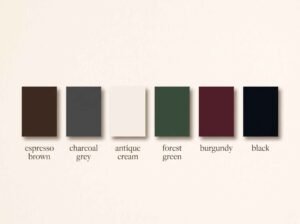
Before buying anything, get the palette right — it does more visual work than any single piece.
- Base neutrals: espresso brown, charcoal grey, black, antique cream
- Accent tones: forest green, burgundy, mustard, deep navy
- What to avoid: bright primary colors, neon, anything overly pastel — they pull the whole look out of the aesthetic
A simple rule: if you can picture the color on an old library shelf or a worn leather book cover, it belongs.
5 Wardrobe Staples to Buy First
You don’t need a full closet overhaul. These five pieces cover most outfit combinations on their own.
- A structured blazer — tweed, herringbone, or plaid, in brown or charcoal
- A fitted turtleneck — black or cream, works as a base layer under everything
- Tailored trousers or a pleated skirt — wool or corduroy, in a dark neutral
- A chunky knit sweater or sweater vest — layers over a collared shirt
- Leather loafers or oxford shoes — the single detail that reads “academia” fastest
How to Build 3 Complete Outfits
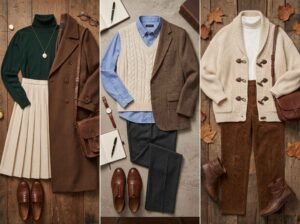
1. The Library Look (casual daily wear) Turtleneck + pleated skirt or trousers + long wool coat + loafers. Add a leather crossbody bag and round glasses if you wear them.
2. The Lecture Hall Look (smart-casual) Collared shirt + sweater vest + trousers + blazer layered over the top. Finish with a thin leather belt and ankle boots.
3. The Weekend Reading Look (relaxed) Oversized cardigan + turtleneck + straight-leg trousers + flat boots. This is the easiest combination to build from pieces you likely already own.
Dark Academia on a Budget

This aesthetic has a reputation for looking expensive, but most of it is achievable secondhand:
- Search thrift and vintage listings for “tweed blazer,” “wool trousers,” and “cable knit sweater” specifically — the search term matters more than the store
- Prioritize the blazer and coat first; they carry the most visual weight and are hardest to fake with fast fashion
- Basics like turtlenecks and collared shirts are easy to find new for a fraction of the cost of “aesthetic” branded pieces
Accessories That Finish the Look
Clothes get you most of the way there, but accessories are what make an outfit read as intentional rather than accidental. A few worth adding, roughly in order of impact:
- A leather satchel or messenger bag — worn-in brown leather works better than anything structured and glossy
- A simple analog watch — leather strap, small face, nothing sporty
- Round or oval glasses — even non-prescription, these are one of the fastest visual shortcuts to the aesthetic
- A locket necklace or thin gold rings — subtle jewelry reads better than anything large or statement-making
- A scarf in a matching neutral — wool or cashmere, worn loosely rather than tied tight
None of these are required to start. Add one at a time as you build the wardrobe out, prioritizing the bag and glasses first since they’re visible in almost every outfit photo.
Common Mistakes to Avoid
A few things consistently pull an outfit out of the aesthetic, even when every individual piece is right:
- Mixing in bright colors. One neon or pastel item is enough to break the whole palette — keep even your shoes and bag within the neutral range.
- Going full costume. Dark academia works because it’s wearable. Adding an actual academic robe or overly theatrical pieces tips it into cosplay territory instead of everyday style.
- Ignoring fit. Oversized blazers and trousers are part of the look, but “oversized” still means tailored-oversized, not simply too big. A blazer that’s genuinely the wrong size reads sloppy rather than intentional.
- Skipping texture. A monochrome outfit in all smooth cotton looks flat. Mixing tweed, wool, and knit in the same outfit is what gives it visual depth.
- Forgetting the coat. In colder months, the outer layer is doing half the work. A plain puffer jacket over an otherwise perfect outfit undoes the whole effect — invest in the coat before anything else if budget is tight.
Dark Academia for Different Body Types and Genders
The aesthetic isn’t gendered by its source material — academic tailoring has always existed for both men and women — but the modern styling splits slightly:
- For women: pleated skirts and midi dresses are more common, often paired with tights and a blazer
- For men: the look leans more heavily on trousers, waistcoats, and layered knitwear
- Both versions share the same core: tailored silhouettes, muted palette, and heavy natural fabrics like wool and tweed
Adapting Dark Academia for Warm Weather
The biggest complaint about this aesthetic is that it reads as “winter-only.” A few adjustments fix that:
- Swap wool for linen or lightweight cotton in the same color palette
- Short-sleeve collared shirts under a lightweight vest keep the layered look without the heat
- Rolled trousers with loafers (no socks) reads dark academia without overheating
FAQ
What’s the fastest way to start dressing dark academia?
Buy one structured blazer in brown or charcoal first. It instantly shifts any basic outfit — jeans and a t-shirt included — toward the aesthetic.
Is dark academia expensive to pull off?
Not necessarily. The core pieces (blazers, turtlenecks, wool trousers) are common secondhand finds. The expense comes from buying everything new and branded rather than sourcing thoughtfully.
Can I wear dark academia in summer?
Yes — swap heavy wool for linen and lightweight cotton in the same color palette, and drop a layer or two while keeping the silhouette.
Does dark academia have to be all black?
No. The palette is built on browns, greens, and creams as much as black. An all-black outfit reads more “minimalist” than “academia” on its own.
What shoes work best with this aesthetic?
Leather loafers, oxford shoes, or simple ankle boots. Avoid sneakers and anything with visible branding — it breaks the vintage feel.