
A good dark academia study desk setup works because it solves two problems at once: it supports your body for long, focused sessions, and it surrounds you with warm wood, low light, and meaningful objects that make you want to stay. Start with ergonomics, then layer the mood — never the other way round.
That order matters more than any single purchase. A beautiful desk at the wrong height will leave your neck aching within an hour, while a plain desk set up correctly can feel scholarly with just a brass lamp and a stack of well-loved books.

Think in Zones, Not in Shopping Lists
Most desk makeovers fail because they start with decor. A more reliable approach is to build your desk as a small system of zones, each with one job to do.
Zone one is your foundation: chair, desk height, and screen position. Zone two is the work surface itself. Zone three is light. Zone four is the scholar’s layer — the books, tools, and textures that give the space its character.
Zone One: The Foundation — Sit Well Before You Style Anything
Your chair decides how long you can study in comfort. Choose the darkest, most atmospheric chair you like, but only after it passes a simple posture test.
The 90-90-90 check
Sit back fully, with your lower back supported. Your feet should rest flat on the floor, your knees bent at roughly 90 degrees, and your elbows also at about 90 degrees with forearms level.
Leave a gap of two to three fingers between the edge of the seat and the back of your knees. If your feet dangle because the desk is tall, add a footrest or a sturdy stack of books rather than perching on the edge.
A vintage wooden chair or a velvet-upholstered seat can work beautifully here. Add a slim lumbar cushion in a deep green or oxblood fabric if the back is flat — support first, upholstery second.
Desk and screen height
Standard desks sit around 72 to 76 cm high, which suits most people when the chair is adjusted correctly. Your keyboard should sit at or just below elbow height, with wrists straight and shoulders relaxed.
For a screen, place it directly in front of you, about an arm’s length away — roughly 50 to 100 cm. The top of the screen should be at or slightly below eye level, so your gaze falls naturally downward.
The Mayo Clinic’s office ergonomics guide gives the same clear benchmarks, including keeping frequently used objects close to avoid repeated reaching. It is worth checking your setup against it once, before you style anything.
If you work on a laptop, raise it on a stand or a pile of large hardcovers so the screen reaches eye level. Pair it with a separate keyboard — otherwise you will hunch, no matter how lovely the desk looks.
Zone Two: The Work Surface — Protect the Centre, Stage the Edges
Think of your desktop in three bands. The centre band, directly in front of you, is for active work only: your book, notebook, or keyboard, and nothing else competing for attention.
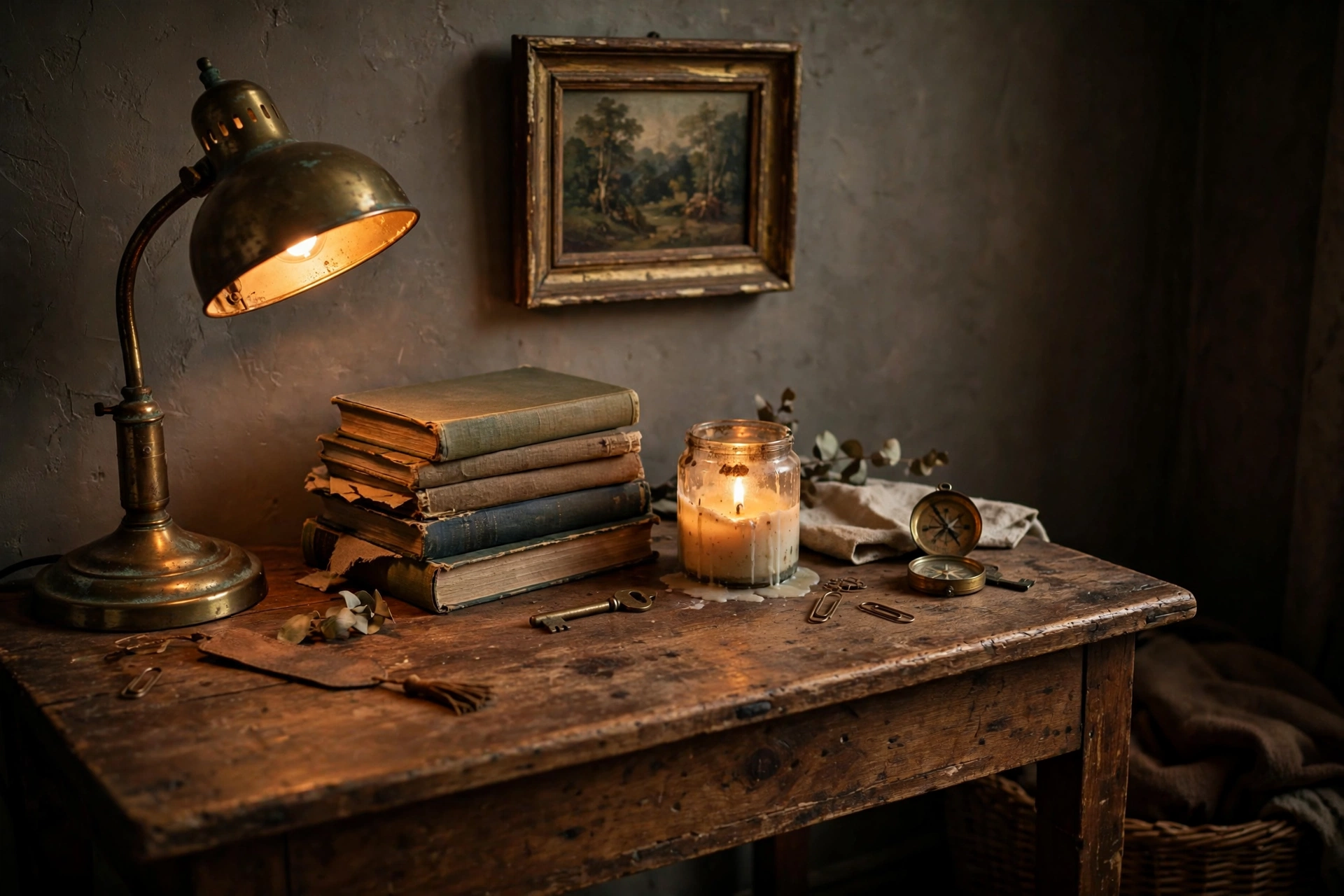
The second band, within easy reach to either side, holds your current tools — a fountain pen, a mug, your reading glasses. The outer edges are where styling belongs: book stacks, a small globe, a candle, framed art leaning against the wall.
This simple zoning is what separates a desk that photographs well from one you can actually use for three hours. Ordered edges, empty centre.

Choose wood with weight and grain
Dark academia lives in walnut, mahogany, and ebonised oak. Visible grain, a matte or hand-rubbed finish, and a sense of weight matter far more than ornate carving.
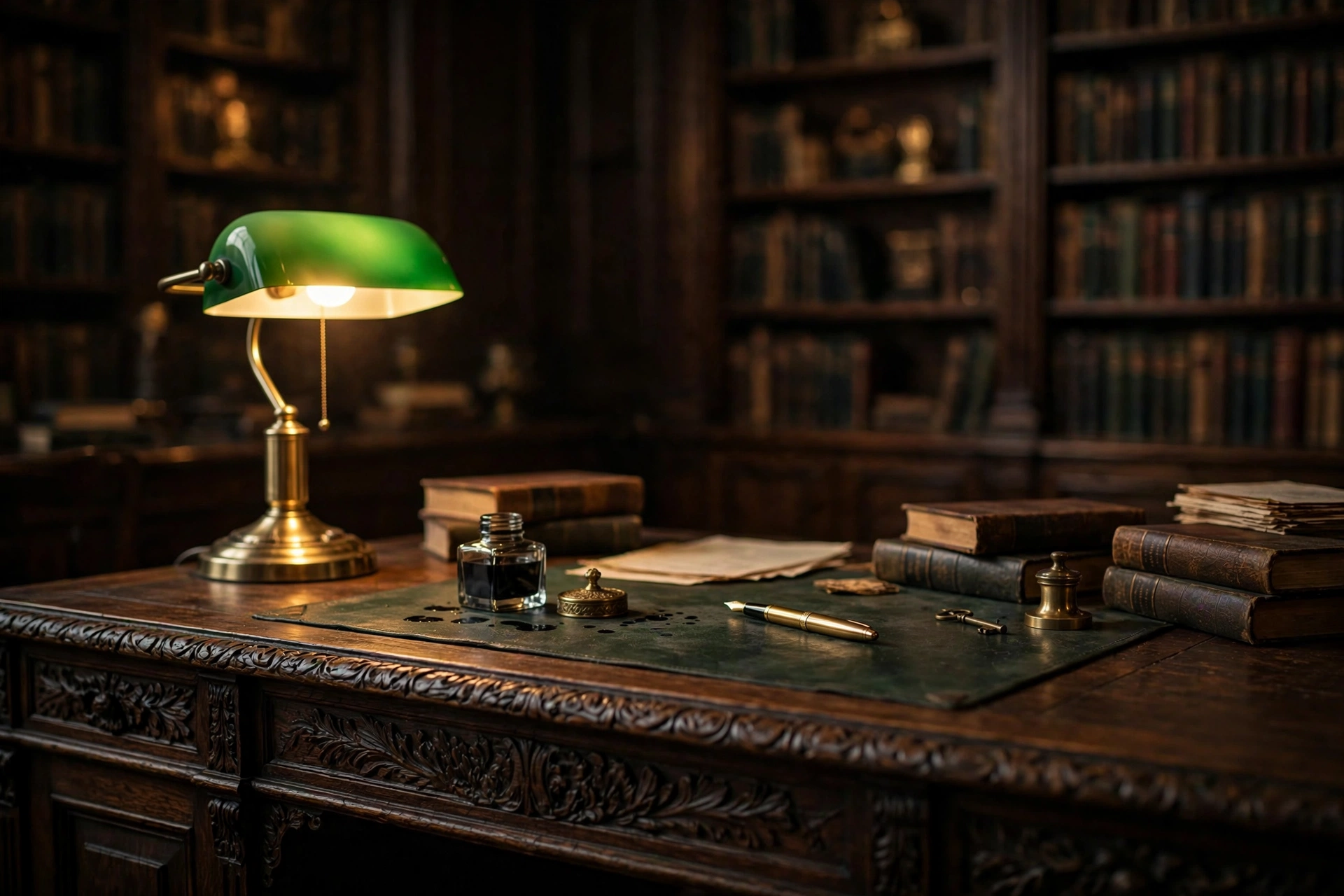
If you are buying secondhand, look past scratches. Honest wear suits this aesthetic, and a leather or felt desk blotter will cover the most worn patch while giving your forearms a softer, quieter surface to write on.
Paper needs a home
Loose paper is the fastest way to lose the mood. Give every category a container: a tray for incoming work, a closed journal for notes, and a drawer or letter holder for anything waiting.
Keep the books you are actually reading within arm’s reach, not displayed across the room. Our guide to essential dark academia books worth keeping on your desk is a useful place to build that short, working stack.
Zone Three: Lighting — Warmth for Mood, Clarity for Work
Lighting is where this aesthetic is won or lost. A single harsh ceiling light flattens dark wood and makes the whole desk feel like an office. Layered, lower light does the opposite.
Build three layers of light
Start with task light: one focused lamp aimed at your page or keyboard. A brass banker’s lamp with its green glass shade is the classic choice because it pools light exactly where you write without flooding the room.
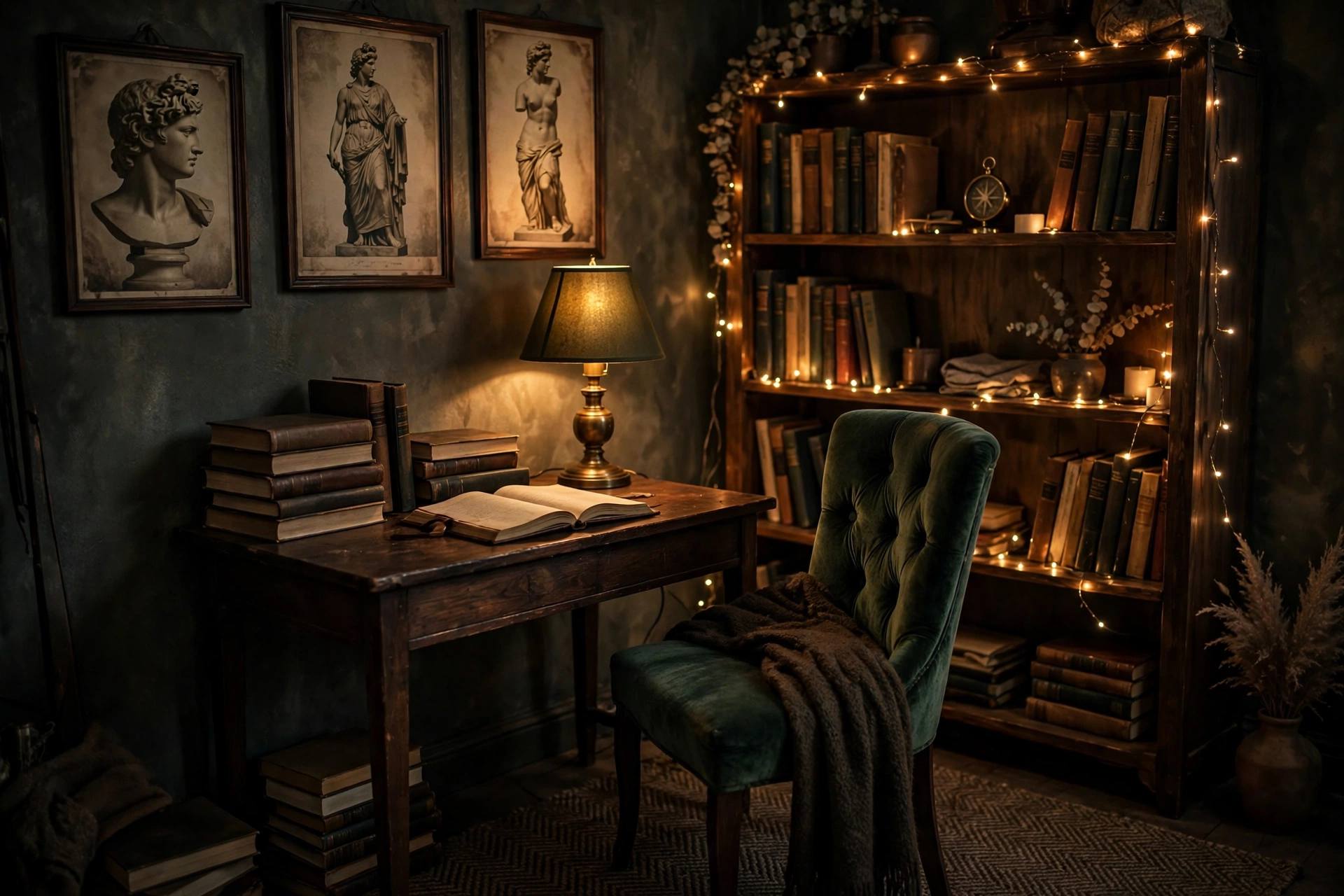
Add ambient light next — a low floor lamp, wall sconce, or soft fairy lights along a shelf. This gentle fill stops the contrast between a bright desk and a dark room from tiring your eyes.
Finish with accent light if you like: a candle or two for evening writing. Treat candles as atmosphere, never as your only source for reading small print.
Get the colour temperature right
Warm bulbs in the 2700K to 3000K range give that golden, library-like glow and are kind for evening reading and winding down. They also help colours like walnut, brass, and deep green look rich rather than grey.
For demanding daytime work — detailed diagrams, colour-critical notes, or long screen sessions — many people focus better with a slightly brighter, more neutral task bulb. An adjustable lamp solves the conflict: warm and low at night, clearer and brighter when the work requires it.
Position the lamp on the opposite side to your writing hand, so your hand does not cast a shadow across the page. Aim it at the work, not at your eyes, and keep screens away from direct glare from a window behind you.
Use daylight deliberately
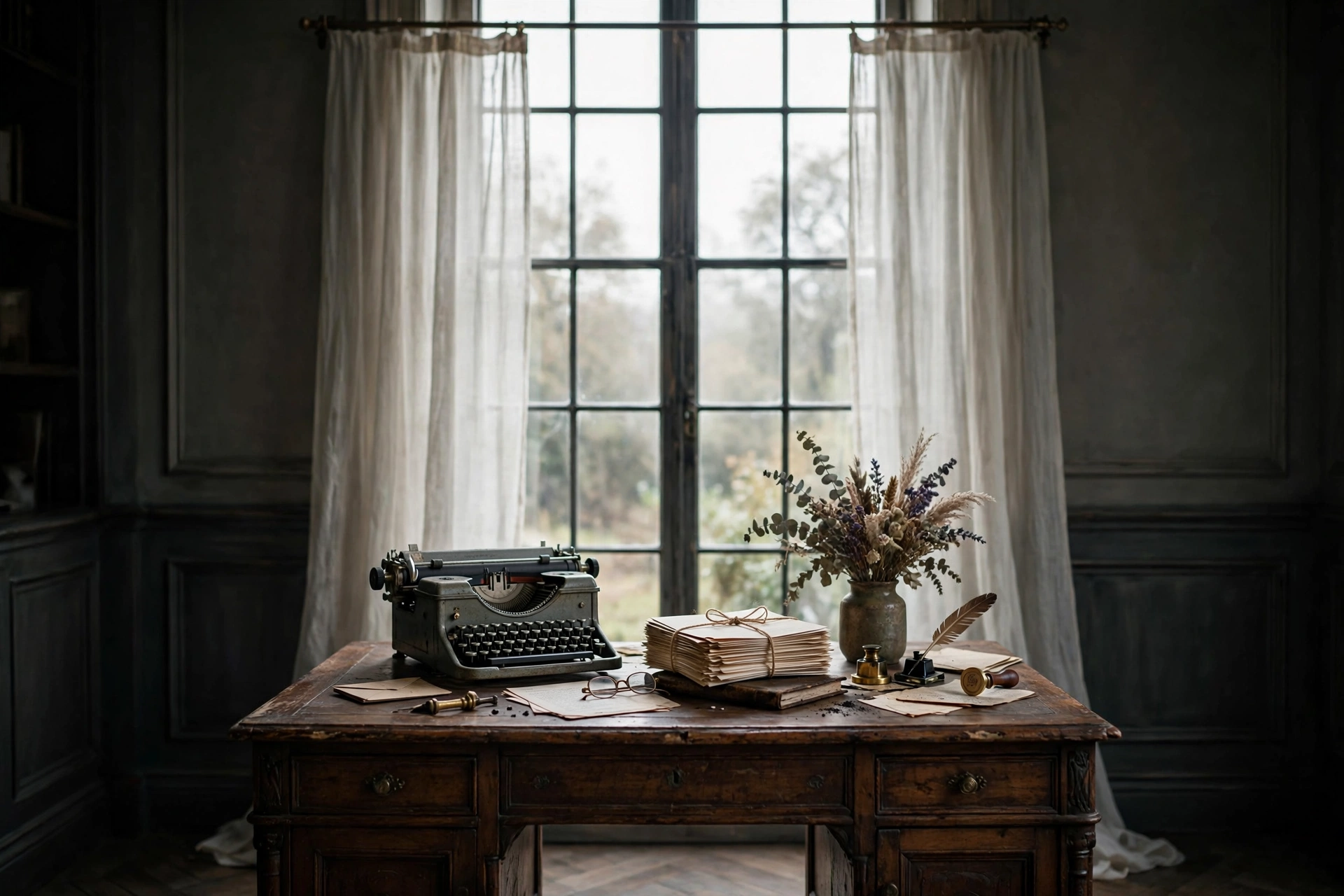
A desk near a window is a gift for daytime writing, especially with soft, indirect light. Sit side-on to the window where you can, so daylight falls across the page without bouncing straight off your screen.
Zone Four: The Scholar’s Details — Objects That Earn Their Place
Once posture, surface, and light are right, the final zone is personality. The rule here is strict: every object should be useful, meaningful, or beautiful enough to justify the space it takes.

Start with tools, not ornaments
A fountain pen you actually write with, a brass letter opener, a magnifying glass for small print, a pocket watch or small clock — these feel authentic because they belong to the work itself.
Paper goods carry the aesthetic further than almost any prop. A journal left open, letters tied with string, sheet music, or an annotated page left under a paperweight all suggest a mind in progress.
Materials that belong together
Brass, leather, dark wood, glass, and aged paper form a natural family. Against walnut or mahogany, antique brass drawer pulls, candlesticks, and picture frames look warm and settled.
Chrome, glossy plastic, and bright white organisers tend to break the spell. If a modern item must stay — a phone charger, a speaker, headphones — tuck it into a drawer, behind a book stack, or into a dark wooden box with a lid.
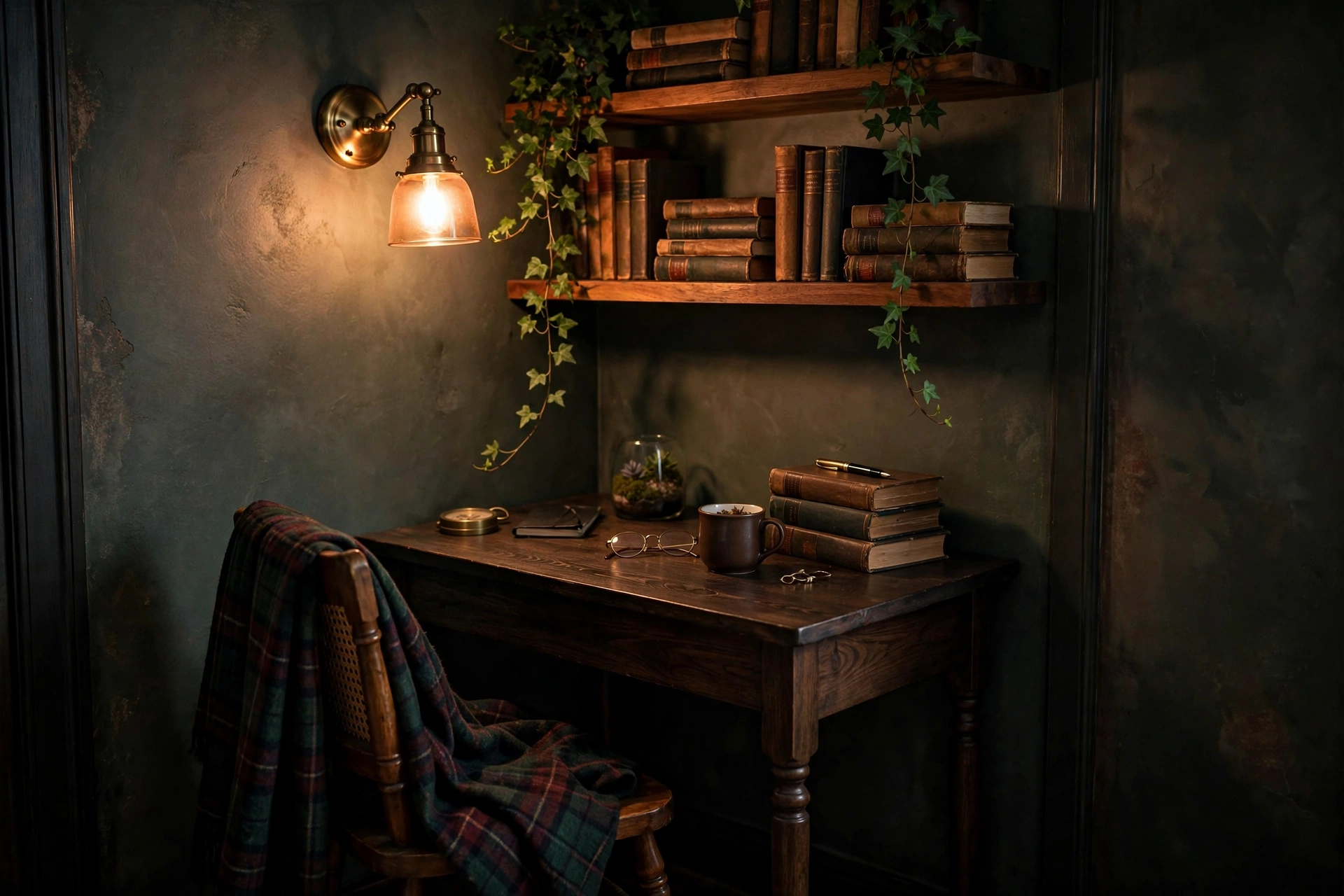
Textiles soften the hardness of wood and metal. A wool throw, a faded rug underfoot, or a velvet cushion adds warmth and dampens sound.

Maximalist or minimalist? Control the density
A fuller desk can work wonderfully — towers of clothbound books, apothecary bottles with dried flowers, a small telescope. It succeeds only when everything shares the same palette and nothing plastic or unrelated sneaks in.
A restrained desk works just as well, and is easier to keep tidy: one lamp, three to five books, one framed print, and a clear centre. If you get distracted easily, choose restraint. Calm is a feature, not a lack of style.
The aesthetic also travels well beyond the desk itself. If you enjoy carrying the same mood into what you wear to study or write in, our notes on how to dress like dark academia in everyday life cover the fabrics and silhouettes that match this world.
Adapting the Blueprint to Your Space
Small rooms and dorms
Go vertical. Floating shelves above the desk hold books and a trailing plant, while a wall-mounted swing-arm sconce frees the entire desktop for work.
Choose a compact desk with drawers so storage is built in, not added on top. A secretary desk is especially clever here — open it to work, close it and the whole session disappears behind a handsome wooden front.

Teen and shared bedrooms
You do not need a separate study to make this work. A single corner, a compact dark wood desk, and a defined rug or curtain line can separate study from sleep surprisingly well.
Keep school or work materials in one closed box at the end of the day. That small closing ritual — books away, lamp off, candle out — helps your brain treat the corner as a place with opening and closing hours.
Building it on a budget
This is one of the few aesthetics where thrifted genuinely beats new. Secondhand solid wood has the grain and patina that flat-pack furniture tries to imitate, and it usually costs less.
Spend first on the lamp bulb and the chair comfort, not on decor. A five-dollar thrifted brass lamp with a good warm bulb will do more for the room than several new ornaments bought in a hurry.
Common Mistakes That Quietly Ruin a Desk
Styling before ergonomics. A low vintage chair and a laptop flat on the desk look romantic for a photo. After an hour of hunching, the romance is gone. Raise the screen and support your back first.
Only one light source in a dark room. A single lamp in an otherwise black room creates harsh contrast and eye strain. Add a soft ambient layer behind or beside you.
Cool-white bulbs. Blue-toned light makes walnut look grey and brass look cheap. Check the Kelvin number on the box — for the evening mood, stay in that warm 2700K to 3000K range for ambient light.
Too much decor in the centre. If you have to move three objects to open a notebook, the desk is a display, not a workspace. Move the styling to the edges and keep the middle ruthlessly clear.
Hiding nothing modern. Visible cable nests, plastic trays, and glowing chargers undo careful styling in seconds. One drawer, one lidded box, and a cable tucked behind the desk leg solve most of it.
Never changing position. Even a perfect setup needs movement. Stand, stretch, or look into the distance every 30 to 45 minutes — your eyes and back will let you work far longer overall.
Frequently Asked Questions
What size desk do I actually need for studying?
A top around 100 to 120 cm wide and 60 cm deep is enough for a laptop or open book, a lamp, and a notebook side by side. Depth matters more than width — you need room to rest your forearms without the book sitting at the very edge.
Is warm light really okay for long study sessions?
Yes, for reading and writing, provided it is bright enough and aimed well. Warm 2700K to 3000K light feels restful in the evening, but if you notice squinting, raise the brightness or switch your task lamp to a clearer setting for that session.
How do I make a modern desk look dark academia?
Cover the top with a dark leather or felt blotter, swap any chrome lamp for a brass or black one with a warm bulb, and add a small stack of clothbound books. Those three changes alone shift a plain modern desk surprisingly far.
Can I use a laptop without ruining the look?
Absolutely. Raise it on a stand hidden behind or built from large books, use a separate keyboard, and close or slide it aside when you finish. The desk returns to analogue the moment the lid goes down.
What colours work best around the desk?
Deep forest green, oxblood, chocolate brown, charcoal, and warm cream are the core palette, with brass or aged gold as the accent metal. Keep walls and textiles in that family and let the wood grain provide the pattern.
A Desk You Will Actually Return To
The test of a study desk is not how it looks on the day you arrange it. It is whether, on an ordinary tired evening, you still choose it over the sofa.
Build the foundation for your body, keep the centre clear for real work, light it in warm layers, and then let a few honest, well-used objects tell the story. That is when a desk stops being a styled corner and becomes a habit.