
The best old money winter outfits for men are not complicated: a heavy wool overcoat, a fine merino or cashmere knit underneath, flannel or wool trousers, and polished leather boots, all in muted colours like navy, camel, charcoal and brown.
That simple formula stays warm, avoids logos and trends, and looks refined in almost any winter setting.
Winter rewards this approach more than any other season. Heavy cloth drapes better, textures read clearly in flat light, and layering gives you a way to look deliberate rather than bundled up.
This guide works differently from a shopping list. Instead of chasing ten separate looks, you will learn a layering system, the fabrics behind it, and a handful of repeatable formulas you can adjust by temperature.

Why Winter Suits This Style Best
Summer dressing is mostly about staying cool. Winter dressing is about choosing the right materials, and that is where a quieter wardrobe pulls ahead.
Wool, tweed, flannel and cashmere were developed for cold, damp northern climates long before technical sportswear existed. They insulate, breathe, and resist odour in ways cheap synthetics still struggle to match.
There is also a visual reason. A long coat creates a clean vertical line, knitwear adds texture without pattern, and leather footwear grounds the whole outfit. Nothing needs to shout.
The Three-Layer System That Actually Works
Forget piling on random jumpers. A reliable winter outfit uses three distinct layers, each with a job to do.
When each layer does its job, you stay warm without bulk. When layers overlap in function, you overheat indoors and still feel cold outside.
Layer One: The Base Next to Your Skin
Start with merino wool. Fine merino, usually around 17 to 19 microns, feels soft against skin and pulls moisture away before it can chill you.
Merino can absorb a surprising amount of moisture, roughly up to 30 percent of its weight, without feeling damp. That matters on a commute that mixes a cold platform with a heated train.
A long-sleeve merino crew or a thin roll neck in navy, charcoal or cream is enough. Cotton works poorly here because it holds sweat and goes cold.
Layer Two: Insulation and Character
The middle layer traps warm air. This is where your knitwear, flannel shirt, or tweed jacket sits, and where most of the personality comes from.
Keep this layer fitted, not tight. If it is too thick, your coat will pull across the chest. If it is too loose, it bunches at the waist and ruins the line.
For most days, one good knit is enough. On colder days, pair a fine knit over an Oxford or flannel shirt, letting a little collar show at the neck.
Layer Three: The Coat That Faces the Weather
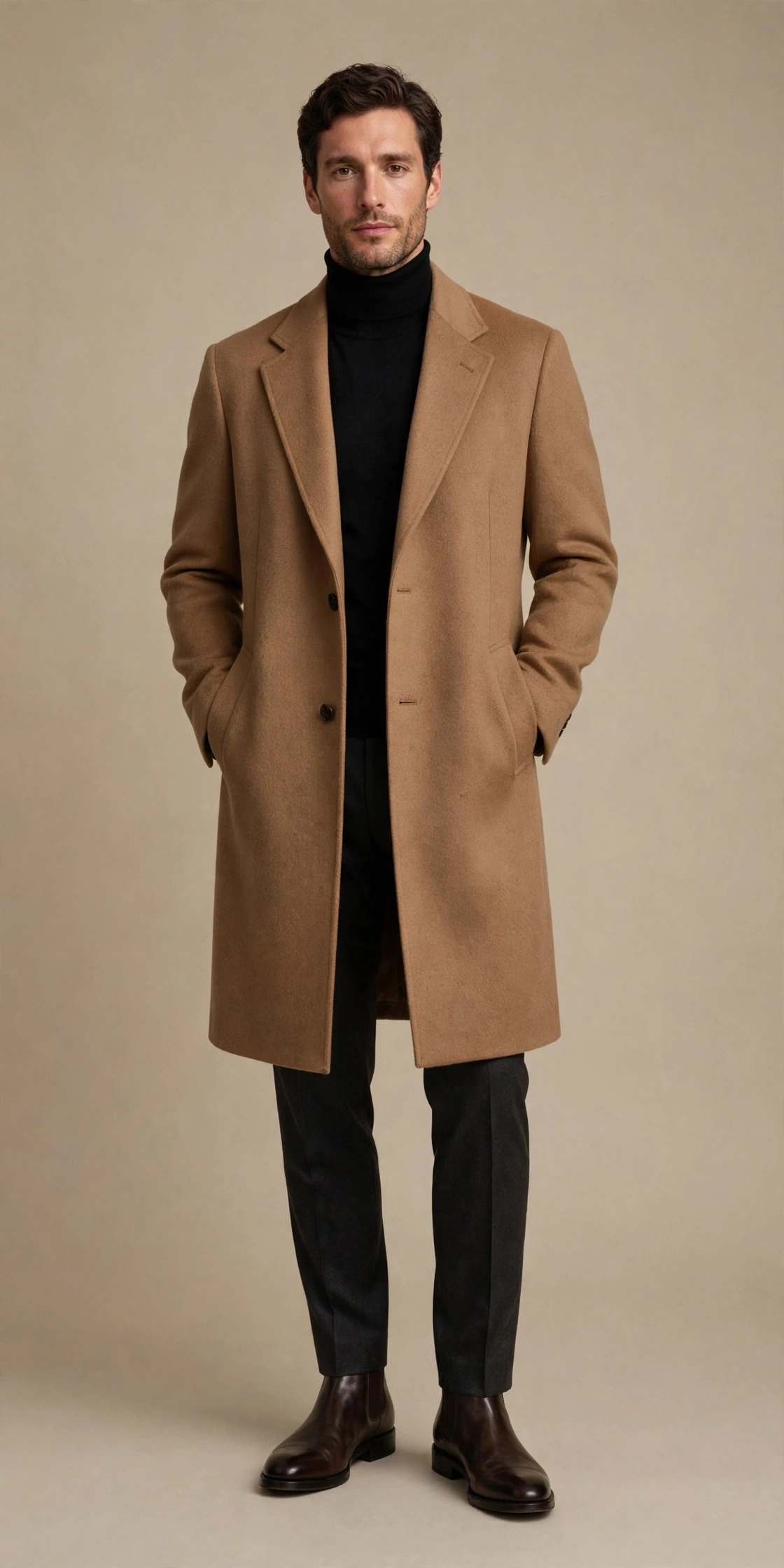
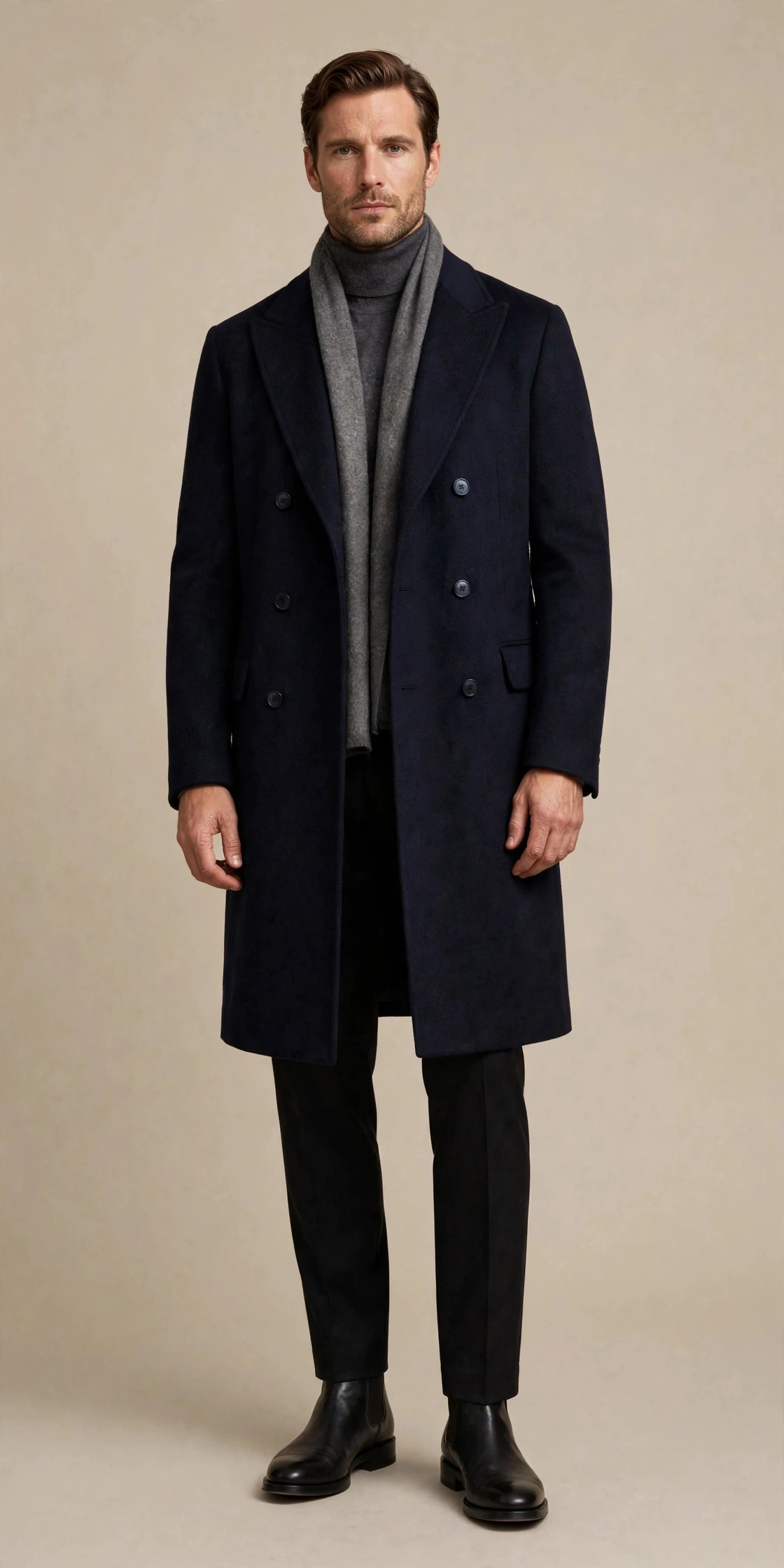
Your outer layer blocks wind and frames everything underneath. In this style, that almost always means a wool coat cut to the knee or just below it.
Look for substantial cloth. Tailors often talk about winter suiting at 340 grams and above, tweeds running roughly 320 to 500 grams, and serious overcoating heavier still. Thin, papery coats rarely keep their shape.
Try any coat on over your thickest knit before you buy it. You should be able to button it, raise your arms, and sit down without strain.
Fabrics Worth Understanding Before You Buy
You do not need a textile degree, but a few fabric facts will save you money. The right cloth in the right place matters more than brand names.
Merino for Movement, Cashmere for Still Days
Cashmere fibres are finer than merino, typically around 14 to 19 microns, which is why cashmere feels softer and warmer for its weight.
That softness comes with a trade-off. Cashmere pills more easily, loses shape faster in high-friction areas, and needs rest days between wears.
Merino is tougher, wicks better, and resists odour for longer. Use merino for everyday layers and travel, and save cashmere knits and scarves for calmer, drier days.
In rough price terms, a decent merino sweater often sits around $100 to $200, while a comparable pure cashmere piece is commonly $250 to $600. Treat those as broad market ranges, not fixed prices.
Tweed, Flannel and Melton: The Heavy Trio
Tweed is a rough, woollen cloth, traditionally in herringbone or check, built for country wear. Its uneven yarns trap air and shrug off light rain and wear.
Flannel is softer and brushed, usually in grey or navy for trousers. Wool flannel at winter weights drapes beautifully and pairs with almost any knit or jacket.
Melton is dense, smooth and wind-resistant, which is why it appears in peacoats and formal overcoats. If a coat needs to look sharp in a city, melton is a safe bet.
Shearling and Down, Used Carefully
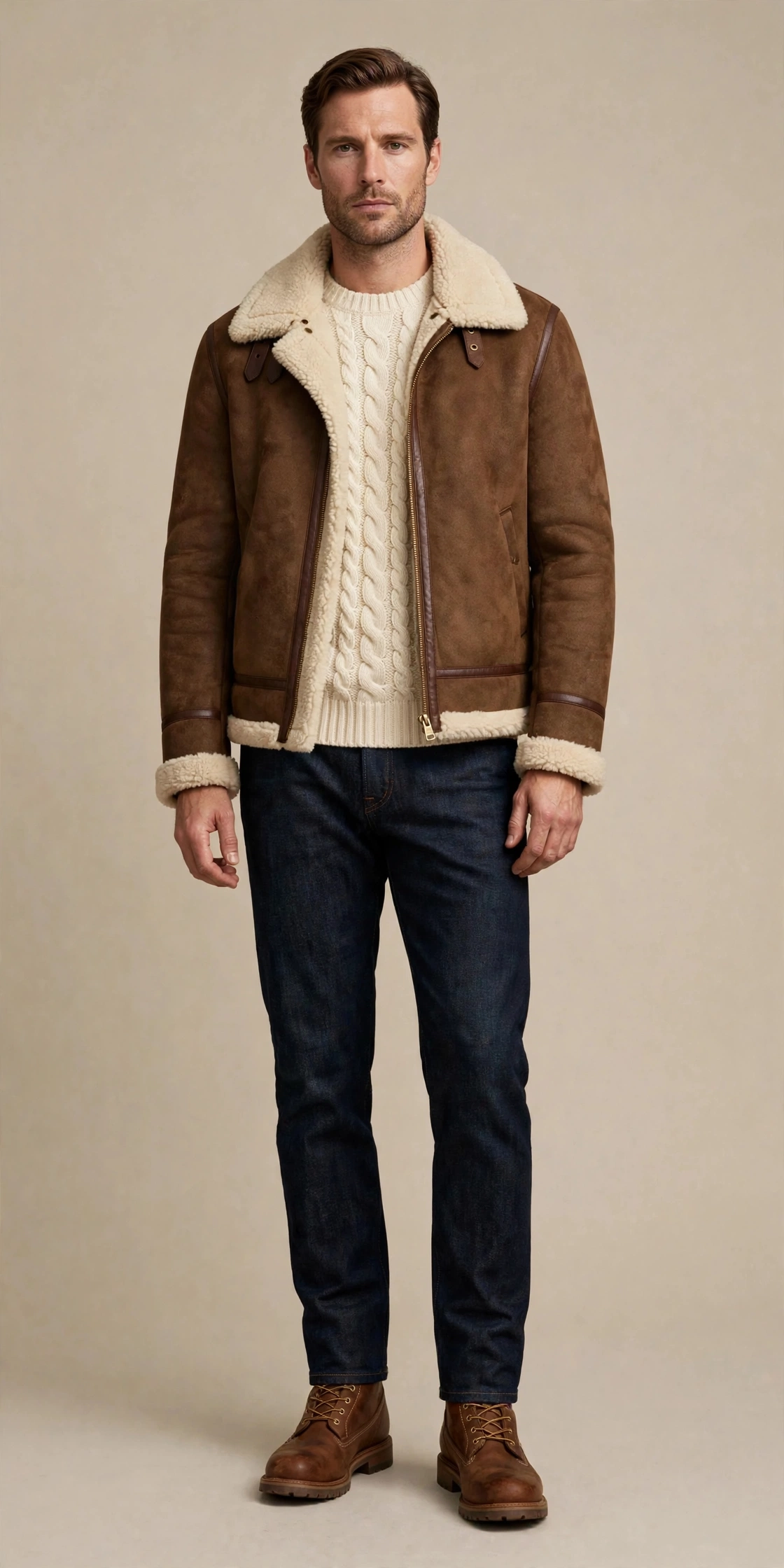
Shearling, which is sheepskin with the wool left on, is exceptionally warm and naturally windproof. It suits casual outfits with jeans and boots, not tailored trousers.
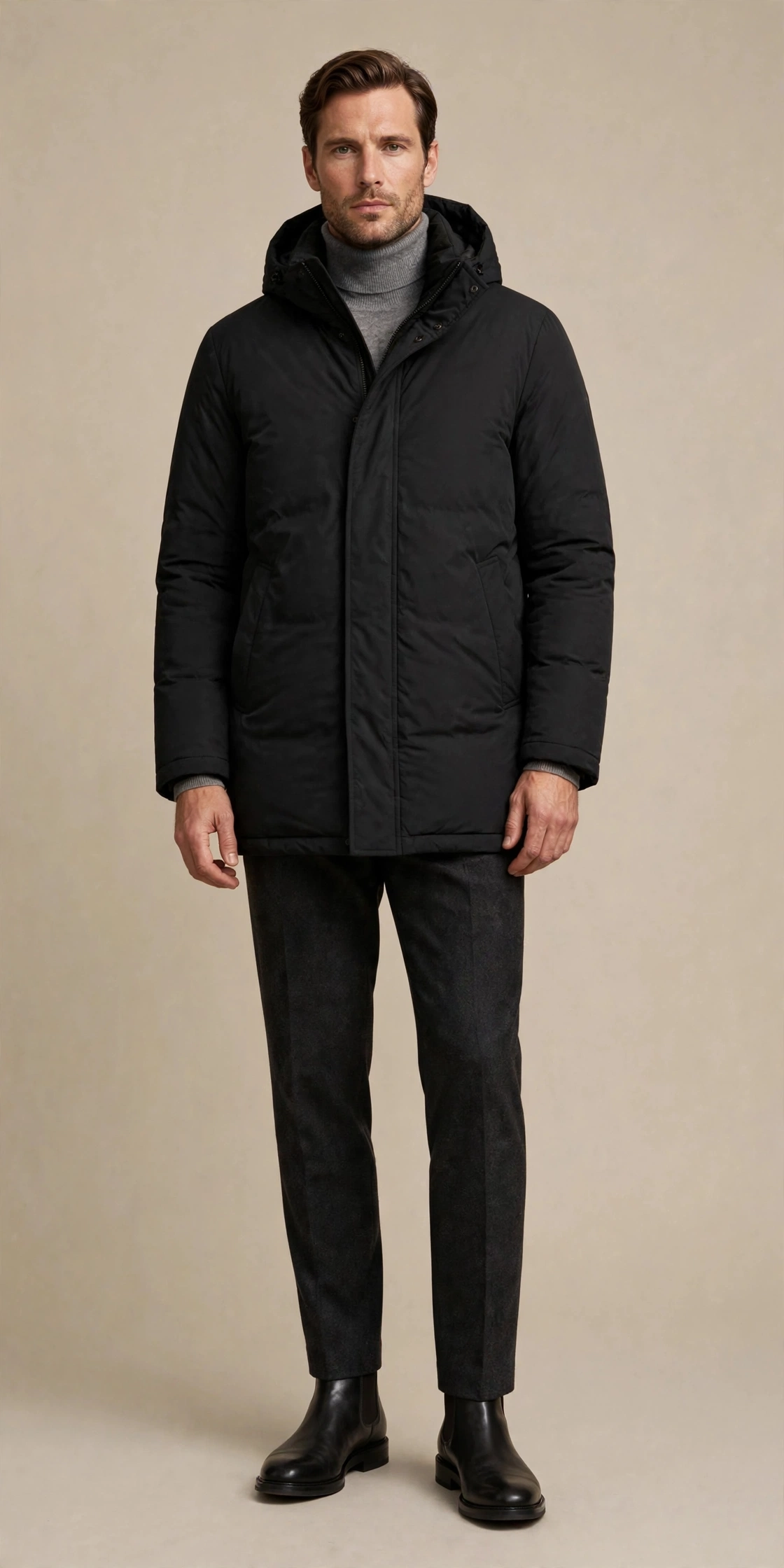
Down can work too, but only in a restrained form. Choose a matte finish, a dark colour, and a clean cut with no visible branding or novelty trim.
Outfit Formulas by Temperature
Temperature is a better guide than the calendar. The same coat can feel perfect at 2 degrees and stifling at 11 degrees, depending on what sits underneath.
Mild Winter: Around 5 to 10 Degrees Celsius
Wear a merino crew over a collared shirt, with flannel trousers and a tweed jacket or lighter wool overcoat. You may not need a scarf until the evening.
This is also the weather for a peacoat. Its shorter, double-breasted cut, inherited from naval uniform, works well over a knit for town and weekend wear.

Proper Cold: Around Minus 5 to 5 Degrees
Add the full system: merino base, cashmere or lambswool knit, and a heavy overcoat. Add a wool or cashmere scarf and leather gloves.
Swap cotton chinos for flannel trousers or corduroy. Keep footwear in leather with a proper sole, so meltwater and salt do not soak through in minutes.
Deep Cold: Below Minus 5 Degrees
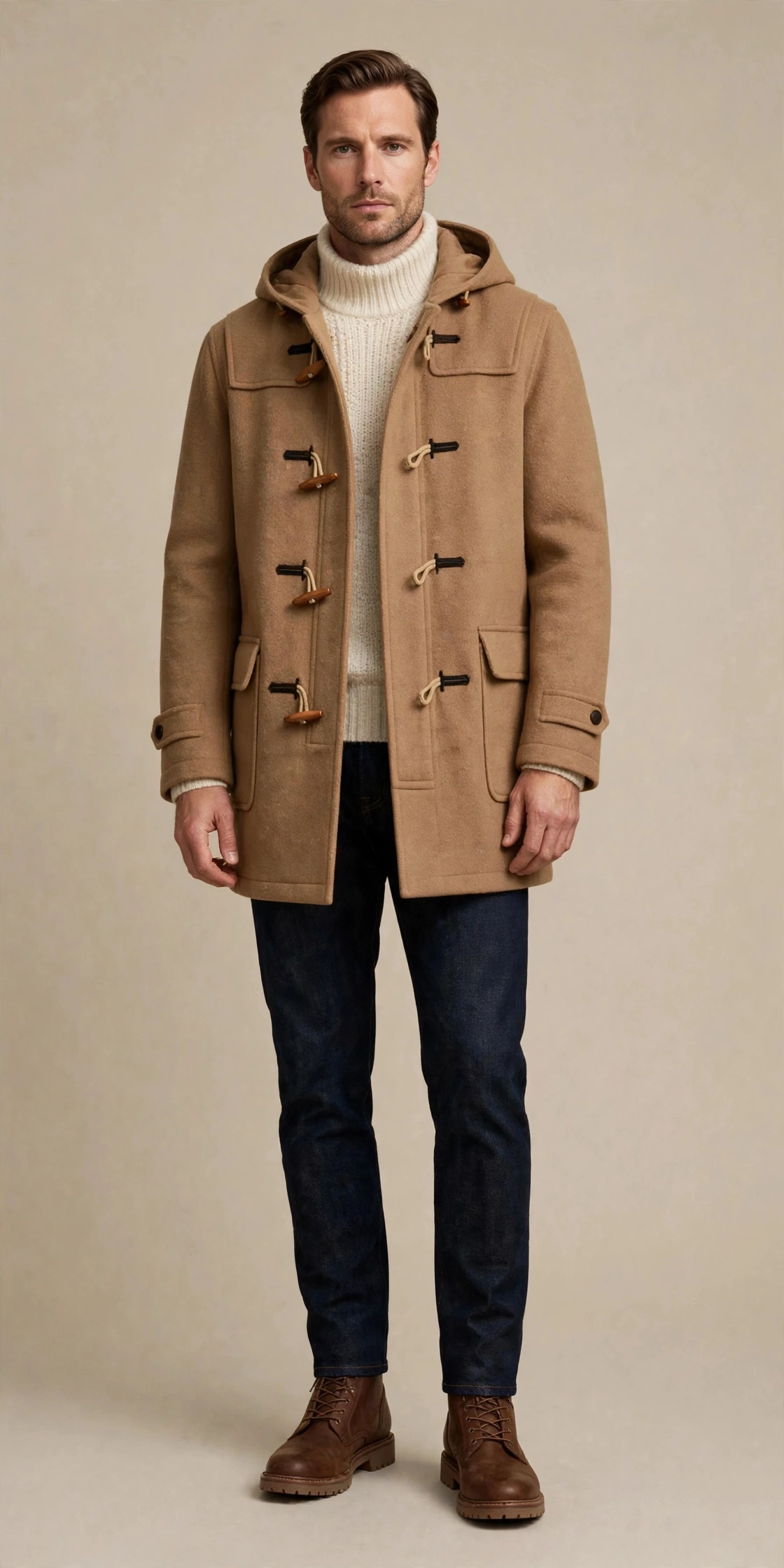
Now warmth has to lead. A shearling jacket or a long duffle coat over a chunky knit will outperform a slim fashion coat every time.
The duffle deserves its reputation. Standardised by the British Royal Navy in the Second World War, it was cut loose for layering, hooded for deck work, and fastened with toggles that could be handled with gloves on.
Five Formulas You Can Rotate All Winter
Once the system makes sense, you only need a few combinations on rotation. Each formula below uses the same core wardrobe in a different balance.
The Town Formula
Camel or navy overcoat, dark roll neck, charcoal flannel trousers, and black Chelsea boots. Add a plain scarf in grey or burgundy if the wind picks up.
This is the most versatile combination in the wardrobe. It works for work, dinner, and travel days when you want one outfit to do everything.
The Tailored Day Formula
Tweed blazer, charcoal roll neck or fine knit, flannel trousers, and brown brogues. Wear an overcoat on top for the journey, then the blazer carries the look indoors.
Tweed keeps this from feeling like a summer suit in darker colours. The texture does the work that pattern would do in warmer months.

The Evening Formula
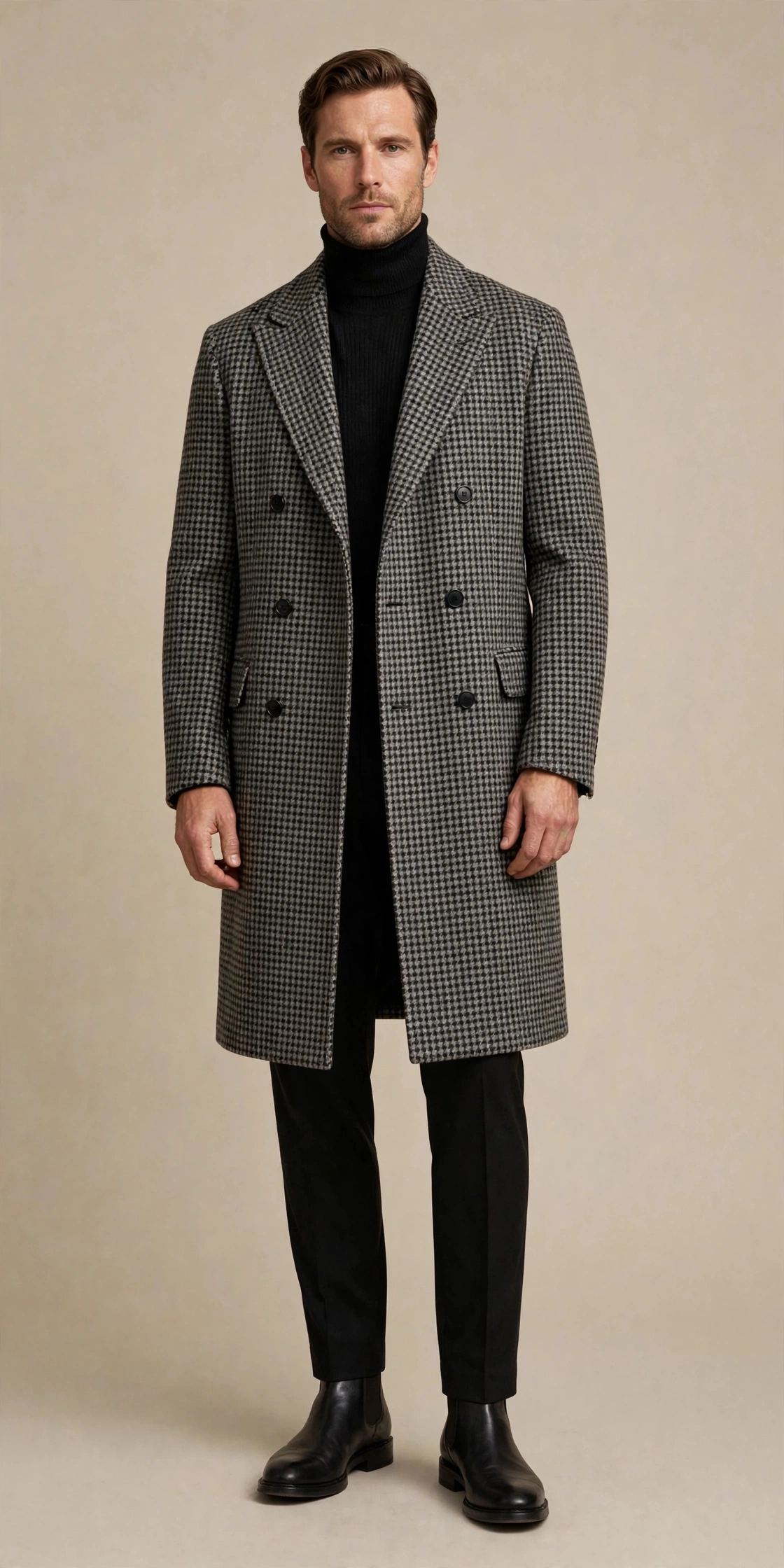
Dark double-breasted overcoat over a navy suit, white shirt, and black Oxford shoes. Keep gloves in dark leather and skip the scarf if the coat collar sits high.
Evening winter dressing is about restraint. One dark palette, clean shoes, and a coat that covers the suit jacket completely will always look correct.
For footwear choices that hold up across formal and smart-casual winter looks, see our guide to classic old money shoes for men that work through winter.

The Casual Cold-Day Formula
Shearling jacket or restrained down parka, chunky fisherman or cable knit, dark straight jeans, and brown leather boots with a lugged sole.
The rule here is balance. If the outer layer leans sporty or rugged, everything underneath should stay neat, dark, and free of distressing or graphics.
The Fireside Formula
Shawl-collar cardigan, flannel shirt, corduroy trousers, and suede chukka boots. No coat is needed indoors, but the cardigan must be heavy enough to feel substantial.
The shawl collar matters. It gives a cardigan structure around the neck, so it reads as intentional knitwear rather than something worn only at home.

Colour, Fit and Proportion Rules
Build around a narrow palette first: navy, charcoal, camel, chocolate, cream and burgundy. These colours mix without effort and suit winter light.
Use one accent at a time. A burgundy scarf with a navy coat, or brown gloves with a charcoal coat, is enough. Two competing accents quickly look busy.
Fit should allow layering without swelling. Coat shoulders should end where your shoulders end, sleeves should cover the knit cuff slightly, and trousers should sit cleanly over boots.
If you are building this wardrobe from a small base, our breakdown of an old money capsule wardrobe for men built around versatile core pieces shows how few items you actually need.
Footwear and Finishing Details
Winter is unforgiving to thin shoes. Choose leather boots or sturdy brogues for most days, and keep formal Oxfords for dry pavements and evenings.
Chelsea boots suit overcoats and tailored trousers. Brogue boots and chukkas suit tweed, corduroy and denim. Suede looks excellent, but protect it before wet weather arrives.
Finish with simple details: a plain wool scarf with no oversized fringe, leather gloves, and no visible logos. Small things are noticed more in winter because the palette is quiet.
If you want a broader overview of cloth, weight and fit before investing in a coat, the FashionBeans guide to men’s overcoats and how to choose one is a useful companion read.
Common Mistakes That Make Winter Outfits Look Cheap
The first mistake is buying a thin coat that looks right on a hanger. Lightweight fashion coats crease, flap in wind, and offer little insulation.
The second is wearing cotton as a base layer. A cotton T-shirt under an expensive knit still gets damp, feels cold, and undermines the whole system.
The third is mixing too many casual signals at once. A parka, distressed jeans, trainers and a beanie together pull the outfit away from tailored winter dressing.
The fourth is ignoring proportion. A short jacket over long, baggy trousers, or a bulky knit forced under a slim coat, will look off even if each piece is good.
The fifth is neglecting shoes and scarves. Salt-stained boots or a novelty scarf can undo an otherwise excellent coat and knit combination in seconds.
Looking After Heavy Winter Clothes
Rest knitwear for at least a day, ideally 48 hours, between wears. Fold cashmere and heavy knits rather than hanging them, so shoulders do not stretch.
Brush wool coats after wear and let them air before returning them to the wardrobe. Dry cleaning once at the end of the season is usually enough for a coat in normal use.
Wipe salt from leather footwear the same day, stuff wet shoes with newspaper, and let them dry away from radiators. Direct heat cracks leather faster than cold does.
Store winter clothes clean, in breathable bags, with cedar or another moth deterrent. Moths target soiled natural fibres far more than clean ones.
Frequently Asked Questions
What is the single best coat to buy first?
A knee-length wool overcoat in navy, charcoal or camel is the best first purchase. It covers suits and knitwear, works day and evening, and will outlast trend-led jackets.
How do I layer without looking bulky?
Use thin, warm layers in order: merino base, fitted knit, then coat. Keep each layer close to the body and let a little of each show at the neck or cuff.
Is cashmere really better than merino?
Cashmere is softer and warmer for its weight, but merino is more durable, wicks moisture better, and handles frequent wear. Most wardrobes need merino for daily use and cashmere as a calmer-day upgrade.
Can I wear jeans in this style during winter?
Yes, if they are dark indigo or black, straight or slim, and free of fading or rips. Pair them with boots and a substantial knit or shearling, never with formal shoes.
What colours work best together in winter?
Start with navy, charcoal, camel and brown, then add cream for knitwear and burgundy as a single accent. That palette mixes easily and avoids the harsh contrast of pure black and white alone.
Winter dressing does not need more clothes. It needs the right cloth, in the right order, worn on repeat until it becomes second nature.