
An old money bedroom looks expensive for one simple reason: everything in it is natural, heavy and calm. Solid dark wood instead of flat-pack panels, linen and wool instead of polyester, warm lamplight instead of one glaring ceiling bulb — and almost nothing in the room that has not earned its place.
That is the whole secret behind these old money bedroom ideas for men. You do not need antiques, a mansion or a decorator. You need five elements handled in the right order: color, the bed, wood furniture, lighting, and textiles.
Get those five right and even a small rented room reads as established and masculine. This guide works through the room element by element, like a blueprint.
The Blueprint: The 5 Elements That Matter Most
Before the detail, here is the whole system on one screen. If you only remember the proportions, remember this: the bed does most of the visual work, color sets the mood, and everything else supports those two.
- Color palette — one deep heritage color (forest green, navy, charcoal or burgundy) carried by warm neutrals: cream, warm white, taupe, camel.
- The bed and bedding — layered like a good hotel bed: crisp natural-fiber sheets, a generously sized duvet, pillows stacked tall to short, a wool throw at the foot.
- Furniture and wood tones — solid walnut, mahogany or oak, all in one wood-tone family, with closed storage so surfaces stay clear.
- Lighting — three low, warm sources instead of one overhead light: bedside lamps, a floor lamp or sconces, all around 2700K.
- Textiles and finishing details — a wool rug under the bed, linen curtains hung ceiling to floor, framed art, and a nightstand kept to three objects.
Work in that order — paint and bedding change a room in a weekend; furniture and details can follow slowly over months.
Element 1: The Color Palette
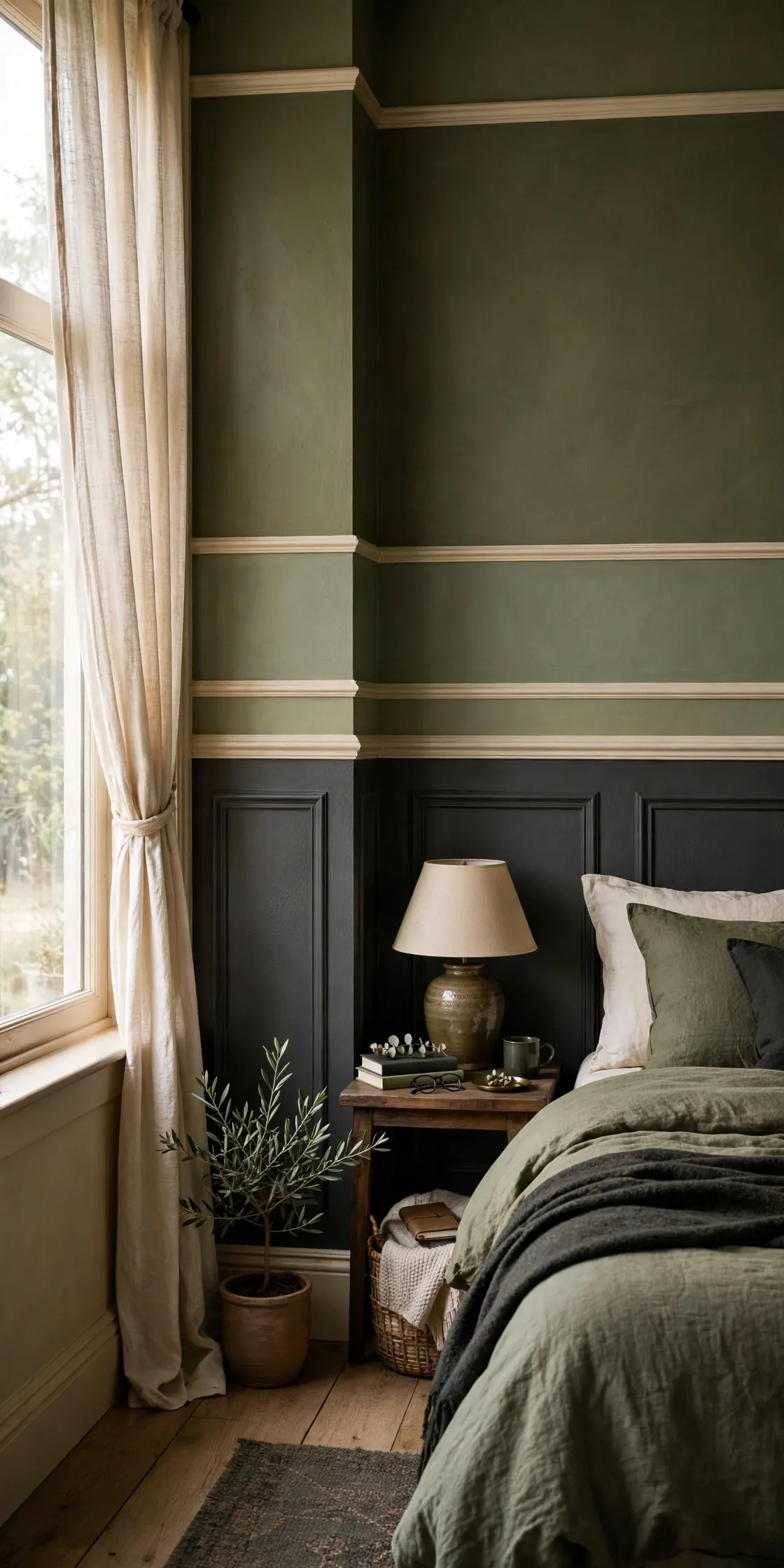
Old money color is quiet on purpose. Designers who work in this style consistently build on the same foundation: warm neutrals as the background, then one — only one — deep heritage color where the room can support it.
The combinations that never fail
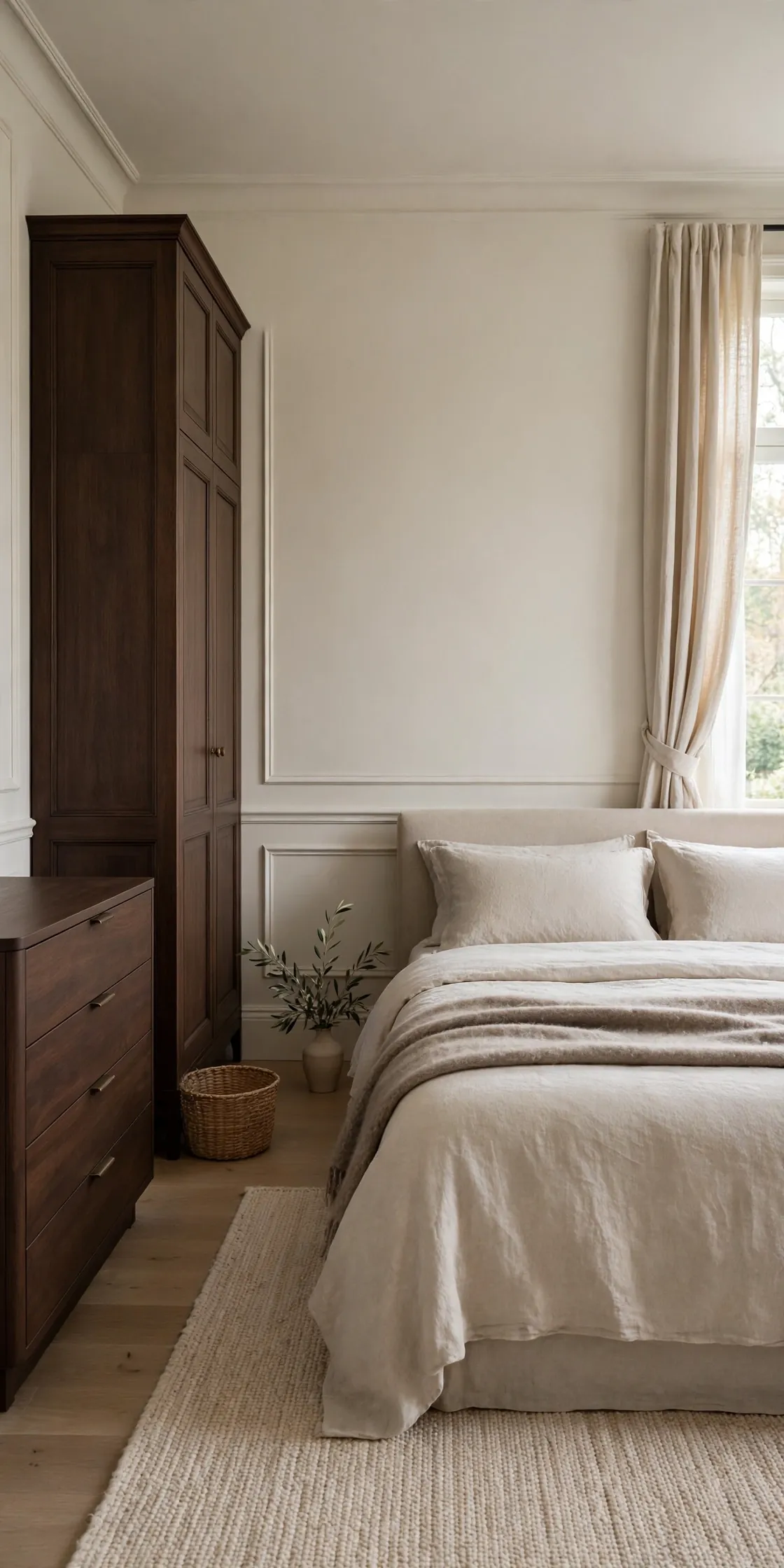
Three pairings cover almost every room. Cream walls, walnut furniture and a forest green accent. Warm white with navy and antique brass, which reads cleaner and suits newer homes. Or taupe and dark brown lifted by burgundy, for a moodier, library-like feel.
Specific paints worth knowing: Benjamin Moore “White Dove” and “Swiss Coffee” are the warm whites designers reach for again and again, while Farrow & Ball’s “Hague Blue” is the benchmark deep navy-green for an accent wall.
How to apply it without regrets
Use the deep color on one wall — usually the one behind the bed — or on upholstery and bedding accents, not on all four walls plus the furniture. One accent color is discipline; three competing dark tones is a cave.
Choose eggshell or matte finishes, never gloss. Dark colors shift dramatically under different light, so paint a large swatch and live with it for two or three days, morning and evening, before committing.
If you love the dark, bookish end of this palette, it is the same mood that drives dark academia in clothing — worth seeing how to dress like dark academia for the wardrobe version of these colors.
Element 2: The Bed and Bedding
The bed occupies more visual space than everything else in the room combined, so it is styled first and styled properly. The method worth copying is the one luxury hotels use, because it is a system, not a talent.
Layer it in the hotel order
Build from the bottom up: fitted sheet, then a flat sheet, then the duvet, then pillows, then a throw. The signature detail is the fold-back — pull the top of the flat sheet and duvet down together by roughly a foot, so a clean cuff of sheet shows at the head of the bed.
Buy the duvet one size larger than the mattress. A duvet that ends exactly at the mattress edge looks skimpy; the generous overhang on both sides is what makes a bed look expensive. Shake it out fully and smooth it from the center outward.

Arrange pillows tall to short: sleeping pillows upright against the headboard, a pair of square Euro shams in front, then one or two smaller pillows last. Four to six pillows total is the hotel standard — more than that becomes a chore, not a look.
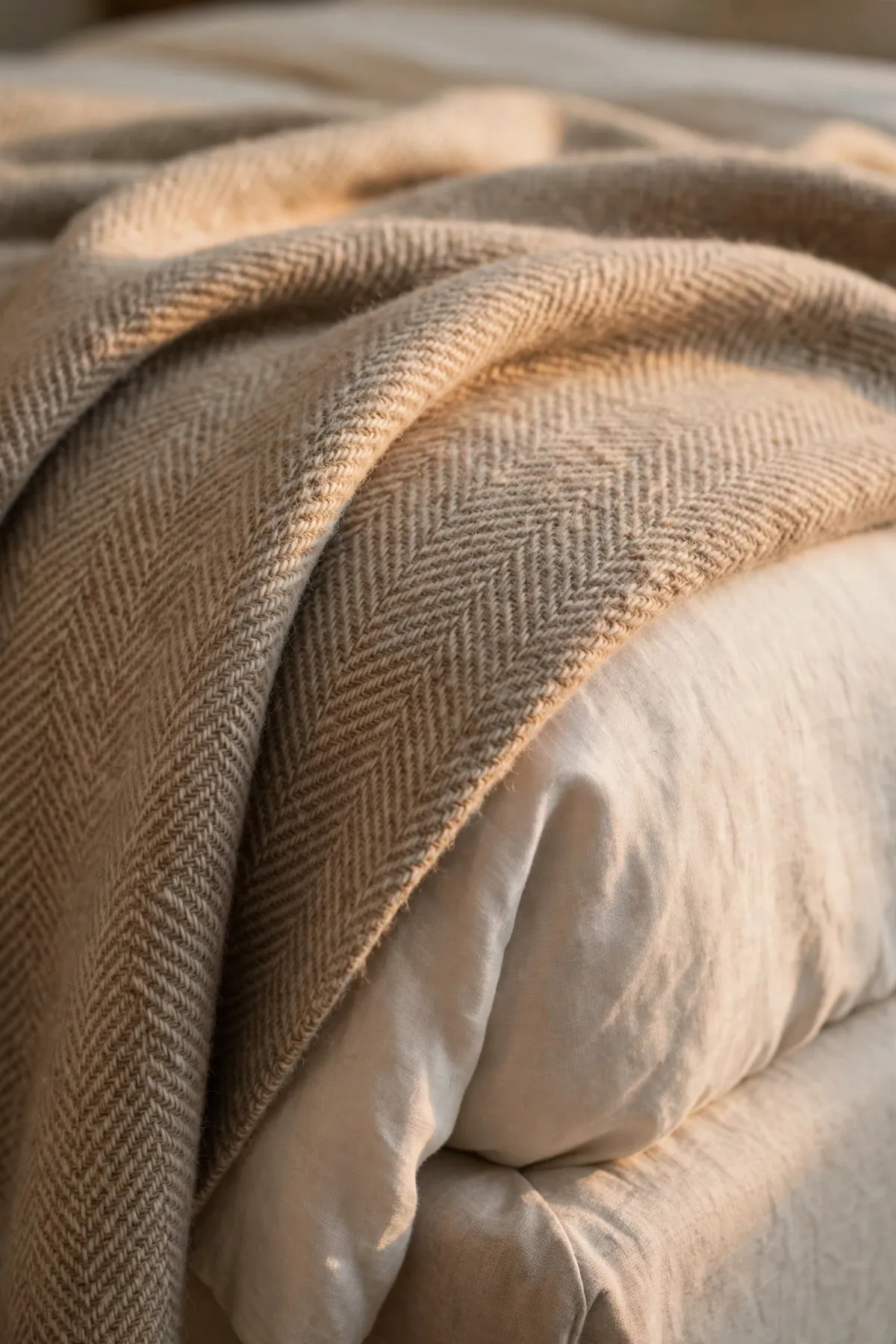
Finish with a throw folded lengthwise across the foot of the bed. In this style it should be wool — plaid, herringbone or a solid in forest green, burgundy or camel — because wool has the weight and texture that synthetic throws cannot imitate.
Fabric, headboard and the mattress underneath
For sheets, hotels typically use cotton percale or sateen in roughly the 300–500 thread-count range; beyond that, fiber quality matters more than a bigger number. Linen is the other classic choice — it wrinkles slightly, and that relaxed texture is part of the look.
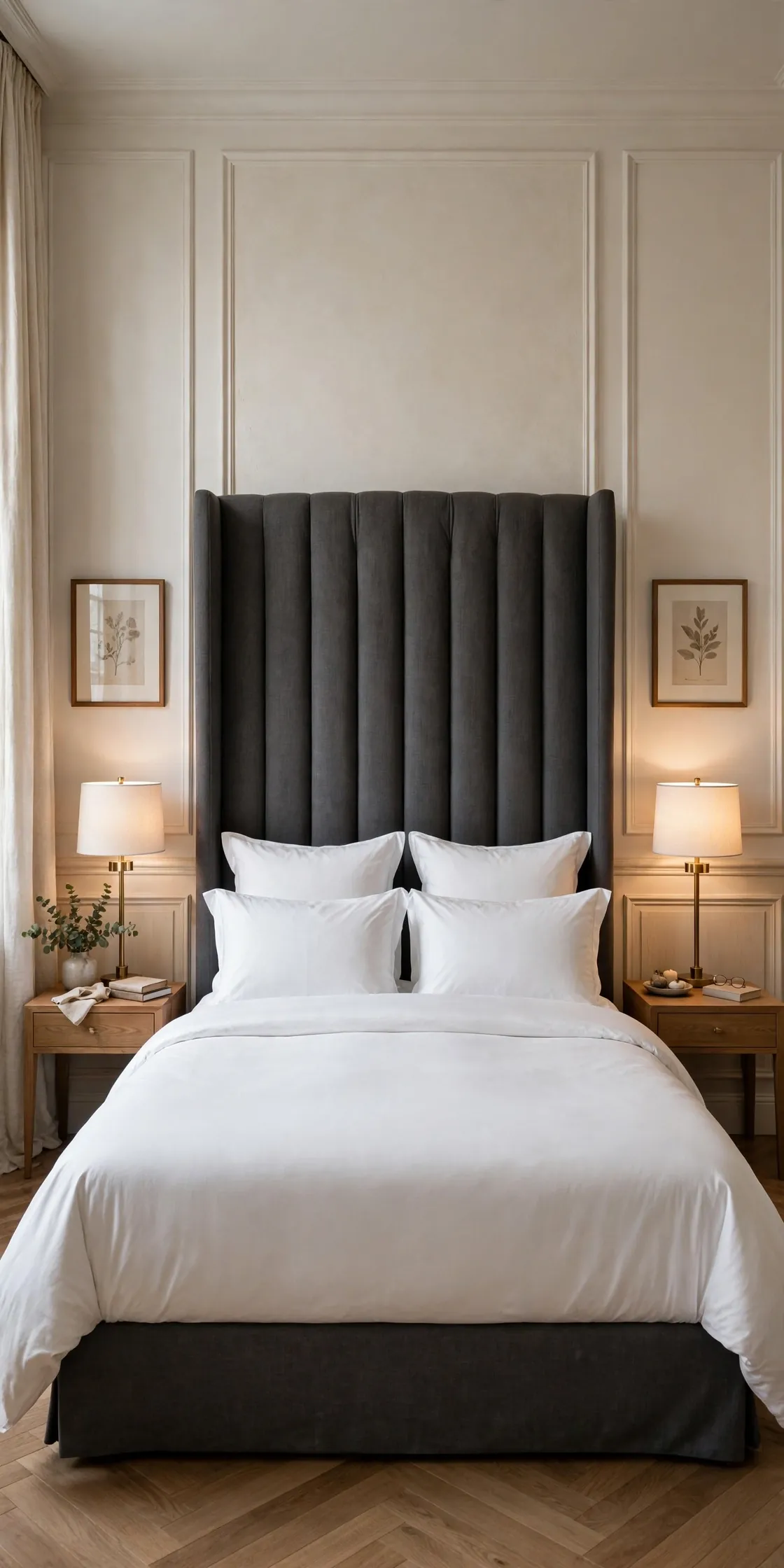
A tall upholstered headboard in linen, velvet or leather gives the bed its finished, anchored presence. If a full bed frame is out of budget, replacing only the headboard delivers most of the visual impact for a fraction of the cost.
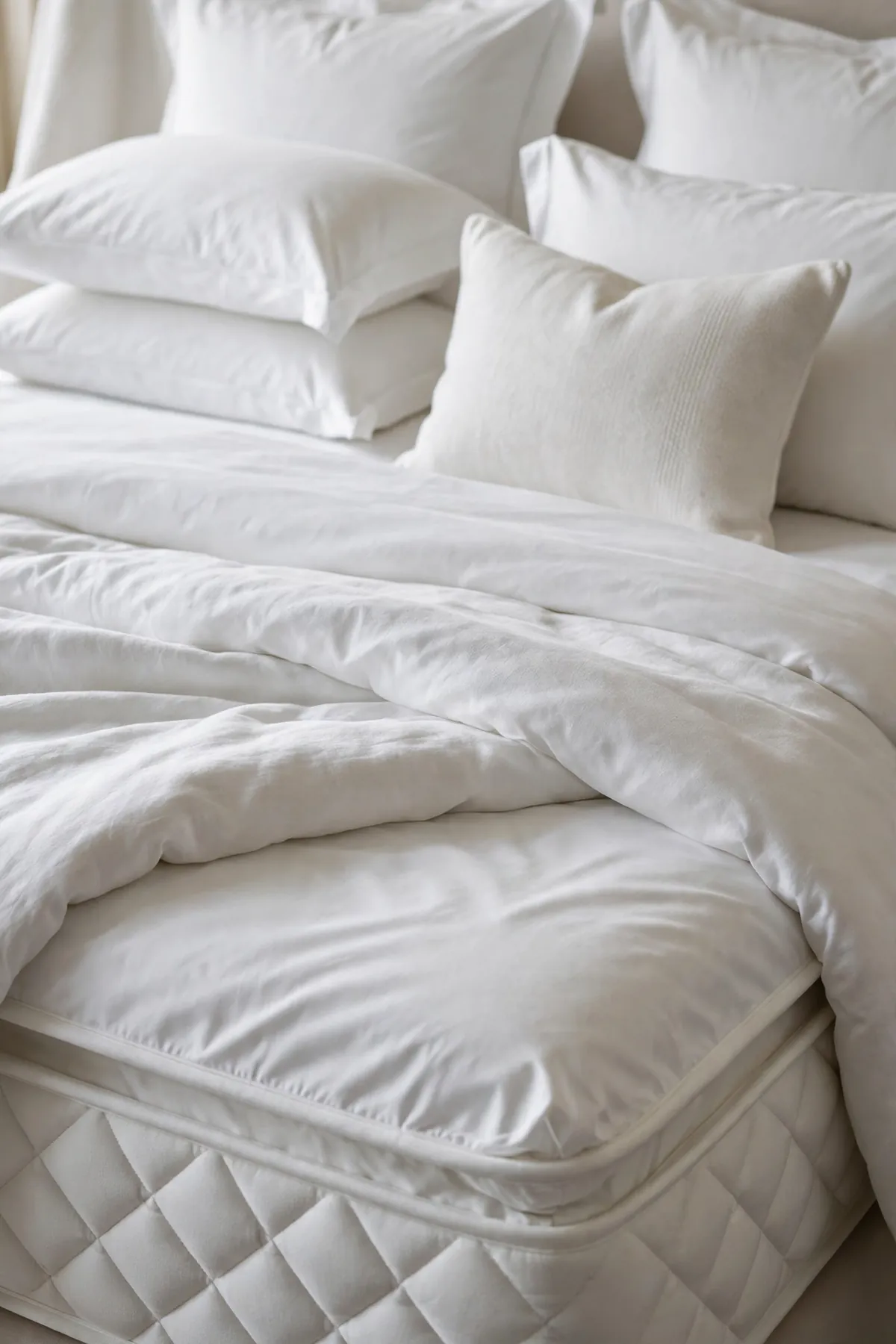
Underneath it all, spend on the mattress before anything decorative — it is the one piece of luxury nobody sees and you feel every night. If a new mattress is not possible yet, a quality topper closes most of the gap.
Element 3: Furniture and Wood Tones
Furniture is where this style separates itself from a themed copy. The look depends on permanence: pieces with weight, visible grain and real joinery, the kind that could plausibly have been inherited.
The wood rules
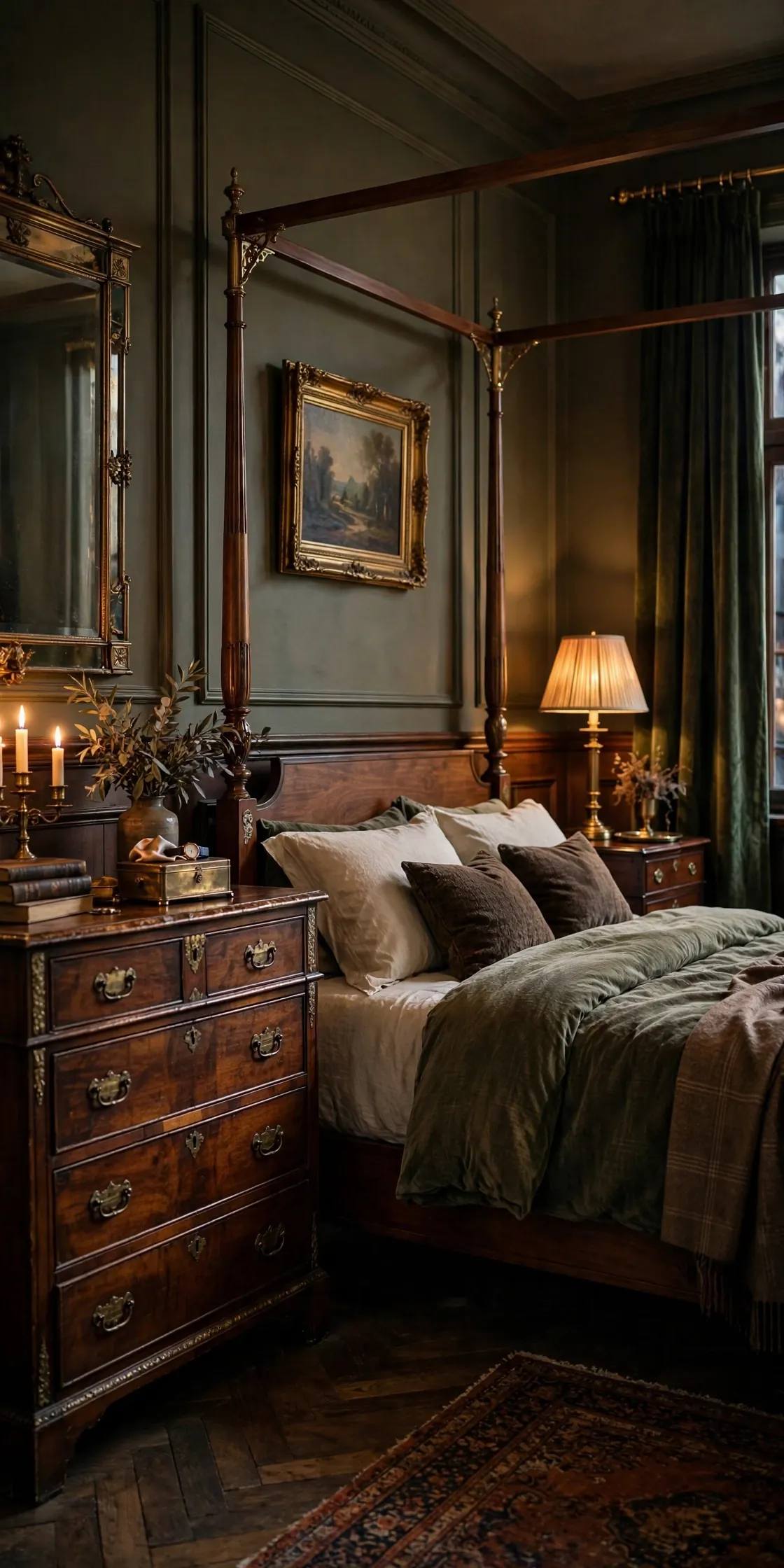
Walnut, mahogany and oak are the three anchor woods. Pick one tone family and hold it across the bed, dresser and nightstands. One wood repeated looks considered; two can work if one appears only in small accents; three or more looks accidental.
Avoid glossy lacquer and anything built from printed particle board — it reflects light like plastic because, effectively, it is. If the budget is tight, secondhand solid wood beats new flat-pack at the same price every time, and the patina comes free.
Scale, layout and storage
Proportion matters as much as material. Nightstands should stand roughly level with the top of your mattress — about 20–24 inches for most beds — so a lamp and a book sit at a natural height. Leave at least 24 inches of walking space around the bed.
Storage should be closed: a dresser with drawers and a wardrobe with doors, not open rails and visible piles. Calm is impossible when clutter is on display, so everything you own needs a place behind a door or inside a drawer.
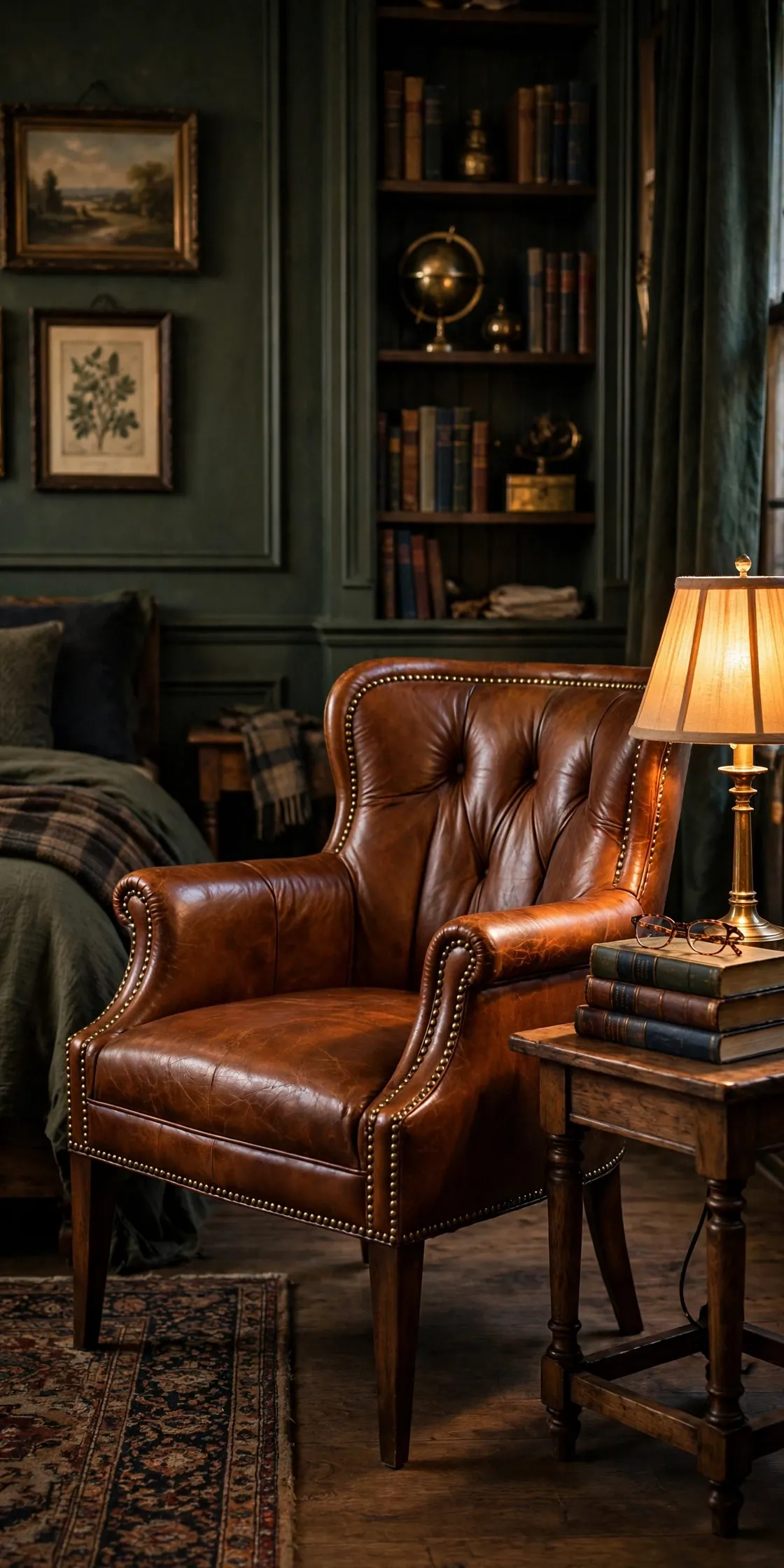
If the room has a spare corner, one leather chair — cognac or dark brown, ideally full-grain — with a small side table makes a reading spot and adds the second classic material. Leather, like wood, improves with age instead of wearing out.
Element 4: Lighting
Lighting is the cheapest element to fix and the one most rooms get wrong. A single ceiling fixture flattens everything; old money rooms are lit in layers, from low positions, at a warm color temperature.
Aim for three layers. Ambient light for general visibility, task light for reading — a lamp on each nightstand is the classic arrangement — and one accent source, such as a floor lamp in the corner or a shaded wall sconce.
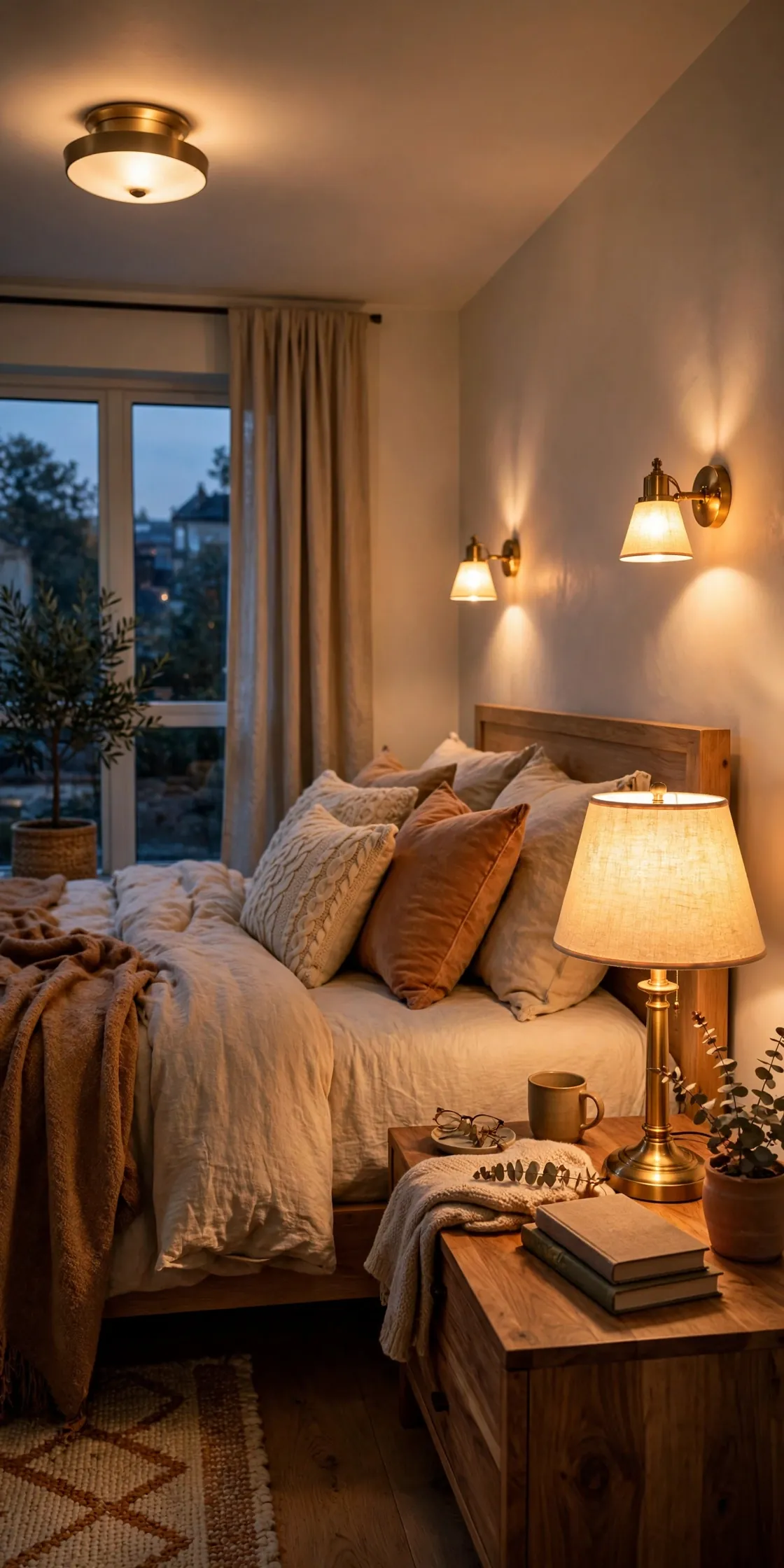
Keep bulbs around 2700K, the warm end of the scale, and choose fabric shades over bare bulbs or metal shades — they diffuse light into the soft pools that make dark colors look rich instead of murky.
Brass or bronze lamp bases tie the lighting back to the wood and leather. In a small room, wall sconces free up the nightstand entirely. Painting the walls dark? Plan the lighting first — dark walls absorb light.
Element 5: Textiles and Finishing Details
With the big elements set, textiles add the softness that keeps a masculine room from feeling hard, and the final details supply the “collected over time” quality the style is named for.
The rug and the curtains
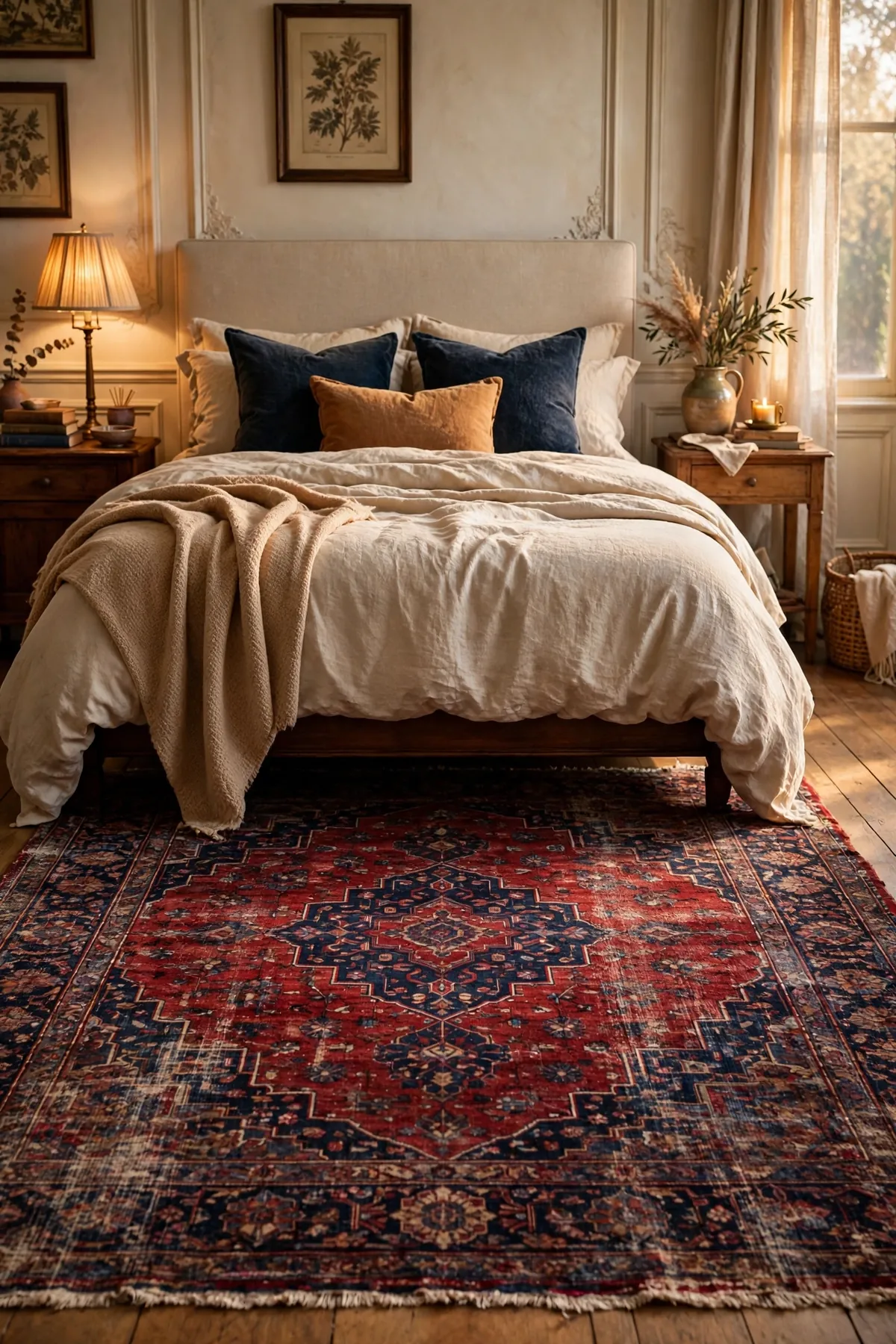
A rug is not optional. A Persian or Oriental-style rug in deep reds, navy and warm browns is the one place this style allows real pattern, and wool — hand-knotted if the budget ever allows, a good wool-look reproduction if not — is the material that lasts.
Size it generously: as a rule of thumb, at least 8×10 ft for a queen bed and 9×12 ft for a king, placed so it extends under the bed and out on both sides where your feet land in the morning. A rug that floats in front of the bed is the most common sizing mistake there is.
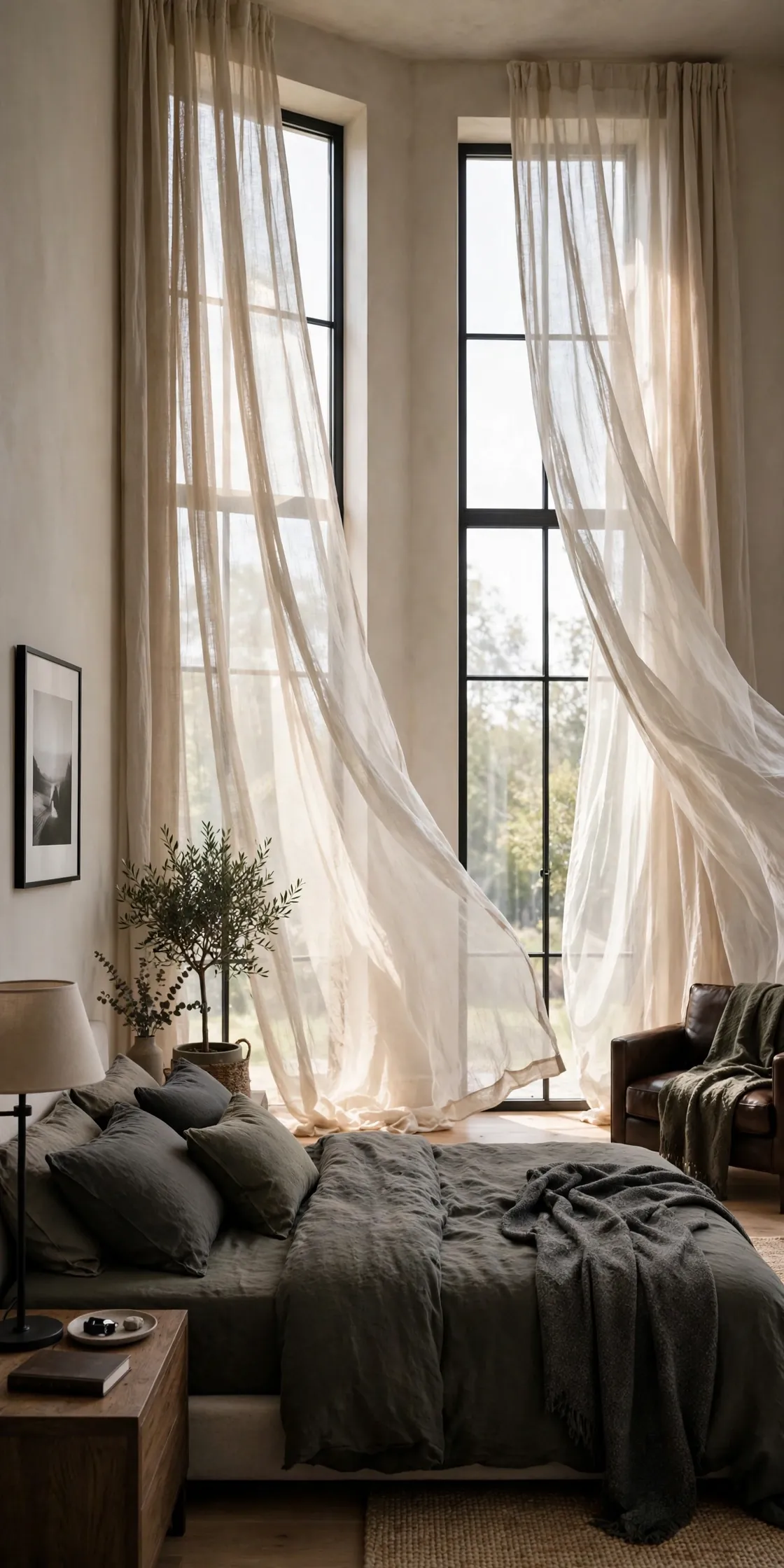
Curtains should be linen or a heavy cotton blend, hung close to the ceiling and falling to the floor — never stopped at the sill. If you need real darkness, layer a simple blackout blind behind them rather than replacing them.
The last ten percent
Walls get framed art, not posters: landscapes, architectural prints, black-and-white photography or a vintage map, in simple dark wood or thin black frames. One or two larger pieces look collected; a scatter of small prints looks temporary.

The nightstand follows a strict edit: the lamp, a stack of two or three books, and one personal object — a watch tray, a framed photo. Chargers and cables live in a drawer. Group small items on a single tray and they read as one intentional object instead of clutter.
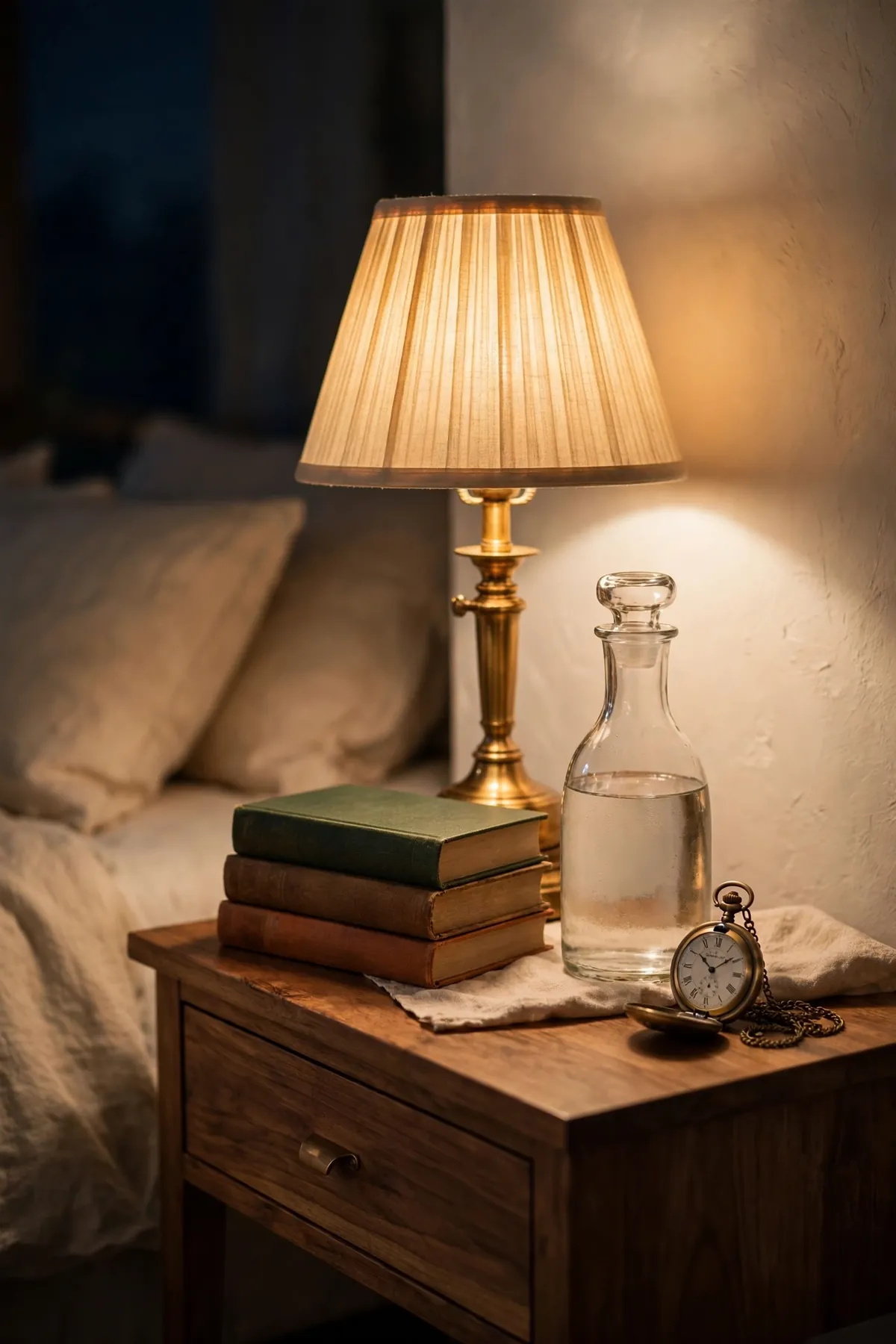
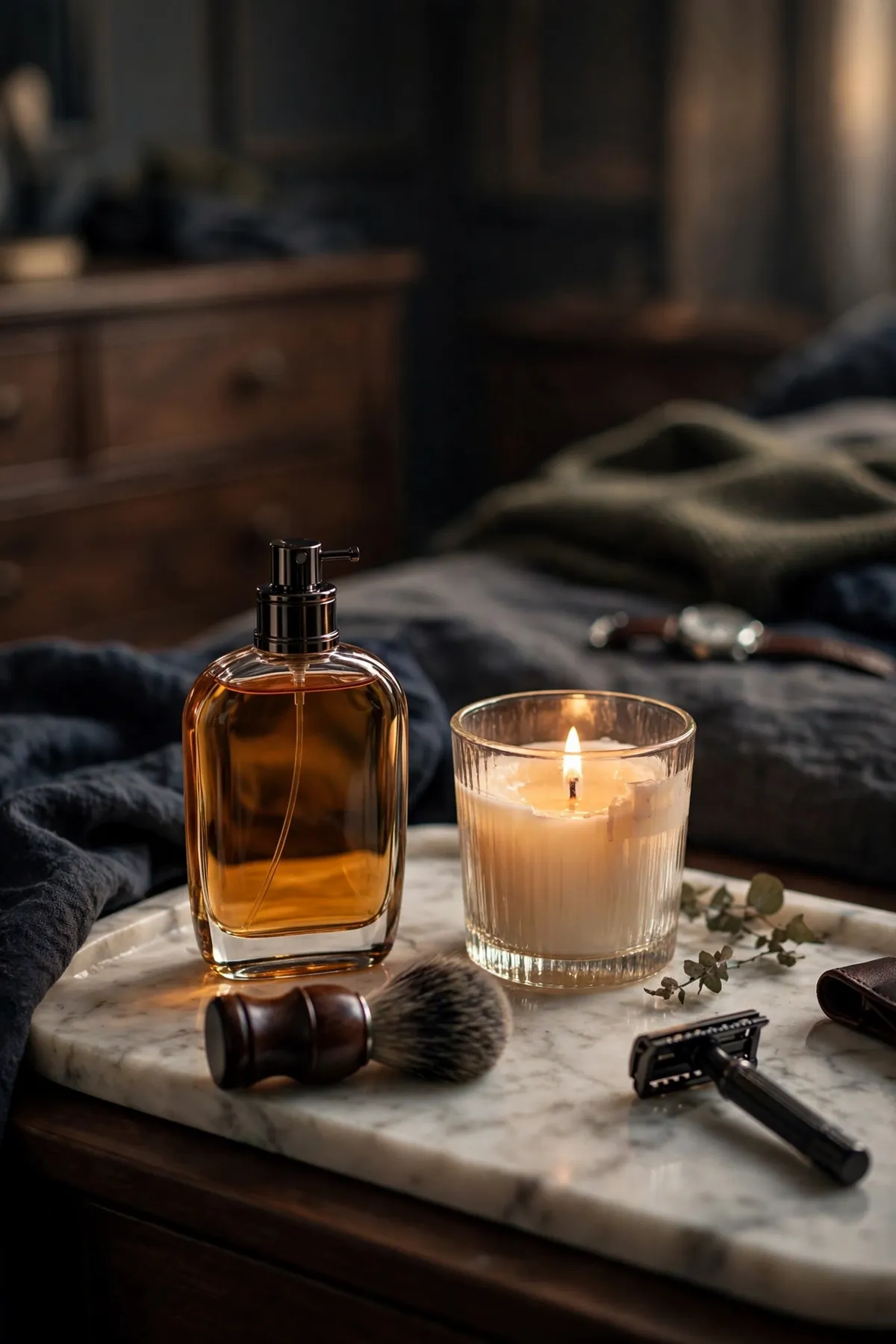
Finish with scent and history. A cedar, sandalwood or tobacco candle — one, kept subtle — and a few objects with a past: a vintage clock, worn hardback books, an old camera. These should arrive slowly, from flea markets and family shelves, not from one shopping trip.

The Budget: Where to Spend, Where to Save
This style is unusually budget-friendly if you spend in the right order, because its most expensive-looking ingredients — restraint, secondhand wood, warm light — are cheap. As a rough guide, the ranges below are approximate and vary widely by country and by new versus secondhand.
Spend on these
- The mattress — approximately $400–$1,200 for a good one; it decides how you sleep for a decade.
- Bedding — approximately $80–$250 for a proper cotton or linen set you will wash weekly for years.
- One solid wood anchor — the bed frame or dresser; secondhand, a quality piece often costs less than new flat-pack.
- The rug — the largest textile in the room; buy the biggest size you can, in wool or a dense wool blend.
Save on these
- Lamps — brass table lamps are everywhere secondhand; new shades make them look new.
- Art — buy prints unframed and frame them yourself in simple dark wood frames.
- The throw and cushions — one real wool throw, bought once, instead of several cheap ones.
- Paint — one accent wall uses a single tin; it is the highest-impact change per dollar in the whole blueprint.
Phase it: bedding and lighting in the first weekend, paint next, furniture and rug as the budget allows. The same buy-once logic applies to your wardrobe, by the way — it is exactly the thinking behind choosing old money shoes for men that last a decade instead of a season.
Mistakes That Kill the Look
Buying a matching furniture set. Identical bed, dresser and nightstands from one showroom range reads as a shop display. Collected rooms mix pieces within one wood family and one palette — related, never identical.
Mixing three wood tones. Light oak floors, a walnut bed and a black dresser fight each other. One dominant wood, one accent at most, keeps the room coherent.
One overhead light. A single ceiling bulb — especially a cool white one — undoes every other choice. Lamps at bed height with warm bulbs are not decoration; they are the atmosphere.
A duvet that is too small and no foot layer. A skimpy duvet and a bare bed foot look unfinished no matter how good the sheets are. Size up, fold back, add the throw.
Curtains at the window frame. Short curtains hung at frame height shrink the room. Ceiling to floor, every time — it is free height.
Filling every surface. Twenty small objects read as mess; three grouped objects read as style. Edit the nightstand and dresser ruthlessly, and hide the cables.
Skipping the swatch test. Deep green or navy chosen from a phone screen can turn almost black, or almost teal, in your light. Two days with a painted swatch is cheaper than repainting.
Frequently Asked Questions
What colors make a bedroom look old money?
Warm neutrals — cream, warm white, taupe, camel — with one deep heritage accent: forest green, navy, charcoal or burgundy. The palette works because it is drawn from natural materials: wood, wool, leather and stone.
Can I use these ideas in a small bedroom?
Yes — the blueprint scales down well. Keep the full-size layers on the bed, swap table lamps for wall sconces, use one nightstand plus a slim shelf if two will not fit, and keep at least 24 inches of walking space. Texture, not pattern, creates depth in a small room.
How much does an old money bedroom cost?
It depends mostly on furniture. Paint, bedding and lighting — the fastest transformation — can be done for a few hundred dollars, approximately. Adding a quality mattress and one solid wood piece takes the total into the low thousands, especially if you buy secondhand.
Should the bedding be white?
White or cream is the classic choice because it always looks crisp and lets the wood and wall color lead. If white feels stark, oatmeal and soft stone tones in linen give the same calm with a warmer edge.
I rent and cannot paint. Where do I start?
Skip the walls entirely and work the other four elements: hotel-style bedding, a large rug, warm lamps and closed storage transform a rental room without touching the paint. Deep colors can still enter through the throw, cushions and art.
Built this way, a bedroom stops following trends altogether — it simply looks established, and it keeps looking that way for decades. Start with the bed this weekend; the rest of the blueprint can unfold at whatever pace your budget allows. If you want to go deeper on the classic end of decorating, The Design Confidential’s old money style guide is a solid companion read.