
The most reliable men’s streetwear outfit ideas are not individual outfits at all — they are repeatable formulas. Learn six or seven combinations built from relaxed trousers, a heavyweight tee, one structured layer, and clean sneakers, and you can get dressed in minutes without ever looking sloppy or overdone.
That formula-first approach is true to where streetwear came from. The look grew out of surf, skate, and hip-hop scenes in the 1980s and 1990s, when Stüssy (founded in 1980), A Bathing Ape in Tokyo (1993), and Supreme in New York (1994) turned practical clothes into a uniform.
The clothes were never the hard part. Proportion, restraint, and knowing which piece should do the talking — that is the hard part. This guide gives you the system first, then the formulas.
The System: Four Principles Behind Every Good Fit
Before memorizing any outfit, understand why the good ones work. Almost every streetwear look that photographs well — and holds up in real life — is following the same four rules underneath.
1. Proportion Is the Outfit
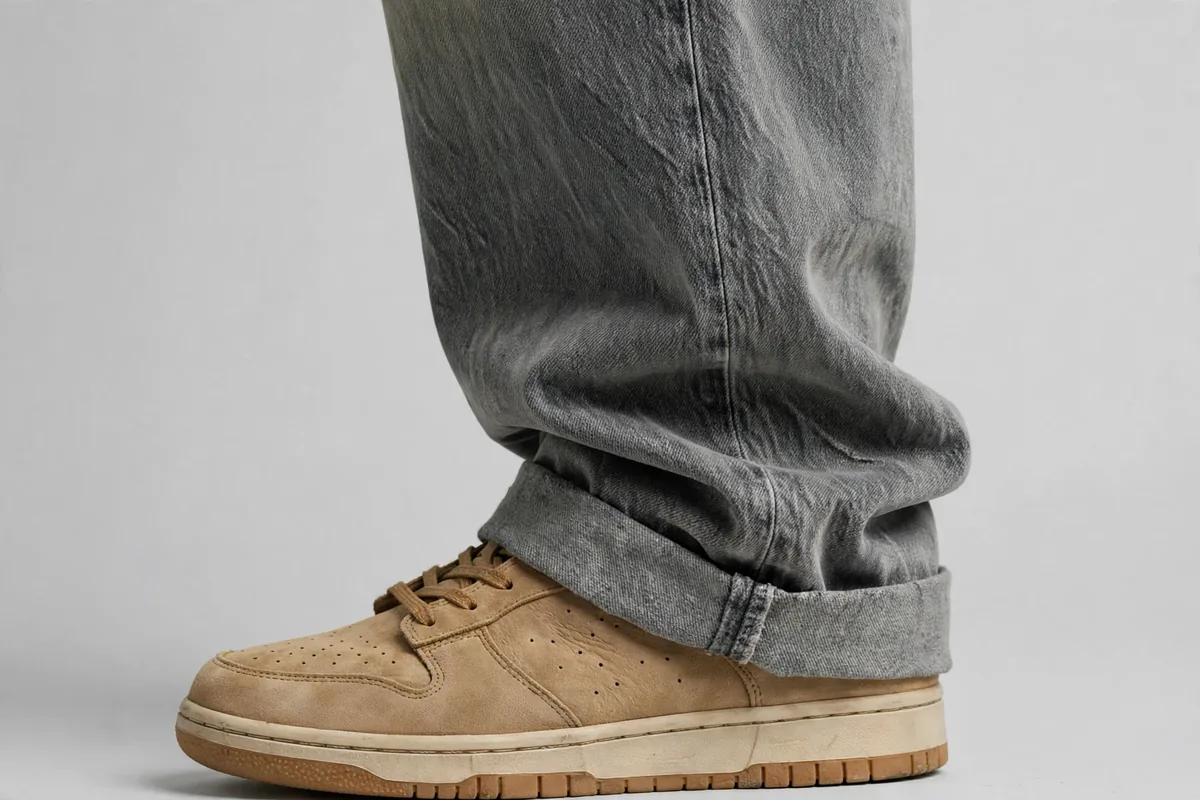
Current styling guidance returns to one idea again and again: deliberate contrast. Loose on top with a cleaner leg, or wide trousers with a more fitted, tucked top, creates a shape. Loose everywhere simply creates volume with nowhere for the eye to land.
That is why wide-leg trousers have replaced skinnies in so much recent coverage, but they are almost always paired with a cropped, tucked, or structured top half. The contrast is the style. Remove it, and even expensive pieces read as accidental.
2. Color Follows a 60-30-10 Split
A useful rule borrowed from design: roughly 60 percent of the outfit in one base neutral, 30 percent in a second neutral, and 10 percent in a single accent. The trousers or outer layer carry the base, the top carries the second tone, and the accent stays small — a cap, a sneaker, a chain.
The grounded palette that keeps recurring in 2026 trend coverage is charcoal, stone, olive, washed black, navy, cream, and brown. Build inside that family and almost everything you own will combine with almost everything else.
3. Texture Does the Work Logos Used to Do
When color stays quiet, surface keeps an outfit interesting. A ribbed knit, a washed or ripstop cargo, corduroy, contrast stitching, or a heavy cotton tee with some body all add depth without a single loud graphic.
This is also why fabric weight matters. A thin, collapsing t-shirt looks cheap under any jacket. A heavyweight tee holds its boxy shape, which is half the silhouette you are actually buying.
4. One Statement Per Outfit
One graphic. One bold sneaker. One standout jacket. Pick your one, then deliberately quiet everything around it. Styling guides for cargo pants make the same point: when the cargo is the focal point, the top half should stay simple, and the same logic applies in reverse.
The Small Rotation Everything Is Built From
You do not need a rail of limited drops. Most of the formulas below run on a compact rotation that, bought carefully, costs roughly $150–$300 in total (approximate, depending on brand and country) — and far less if you thrift the outer layers.
- Two heavyweight tees — one white or cream, one black or washed dark
- One plain hoodie in grey, black, or navy
- One structured layer — an overshirt/shacket, bomber, or coach jacket
- Two bottoms — relaxed or wide-leg jeans, plus cargo pants in olive, stone, or black
- One pair of clean, versatile sneakers you actually maintain
- One small crossbody bag and one simple watch or chain
Notice what is missing: logos doing the styling for you. If a piece only works because of the branding on it, it will stop working the moment that branding dates.
Seven Outfit Formulas, by Occasion
Each formula below is written the same way: where it is for, exactly what goes into it, the colors that keep it safe, and why it works. Swap the colors inside a formula freely — the proportions are the part to copy exactly.
Formula 1: The Layered Tee — Campus and Everyday Errands
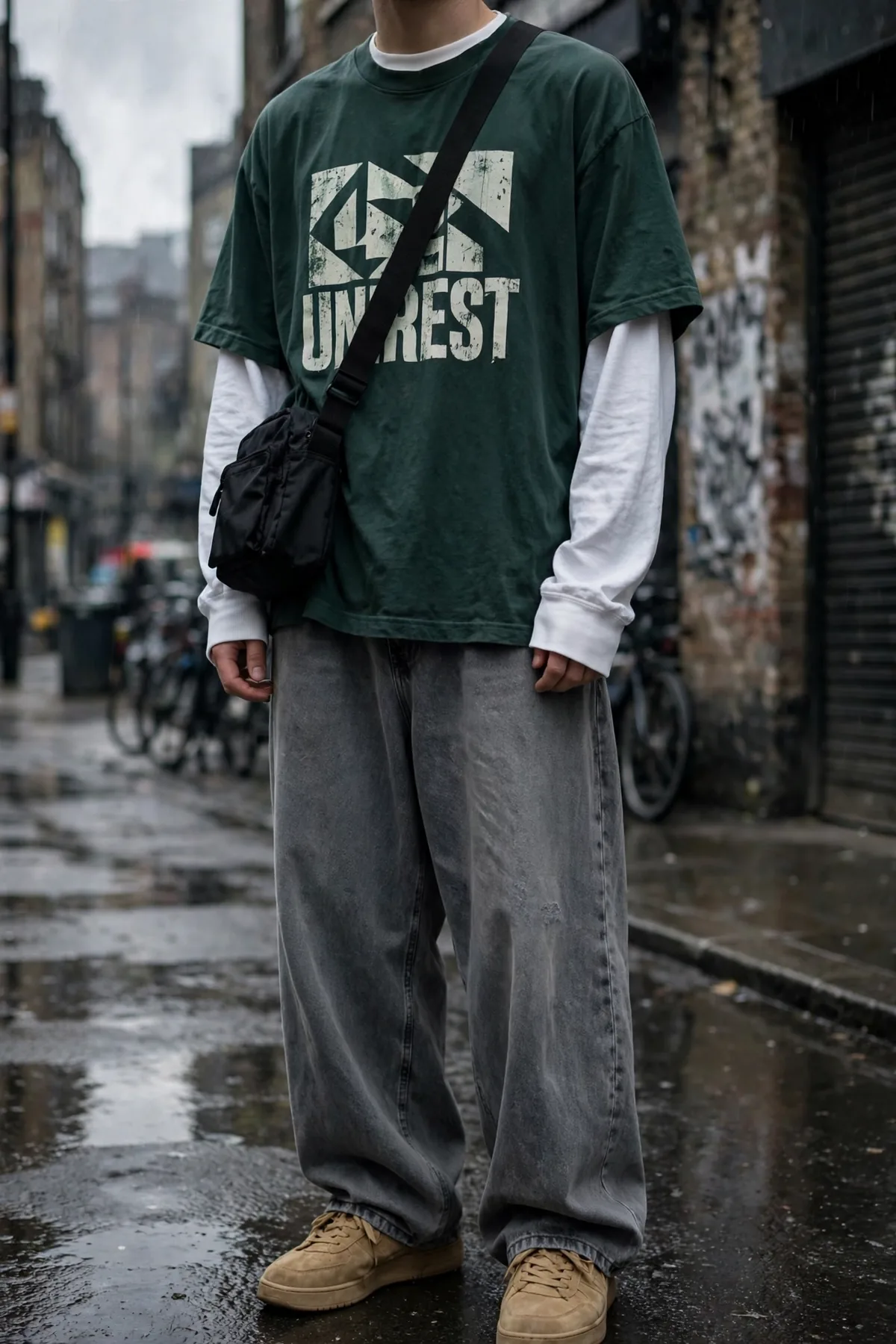
Occasion: Uni days, casual workplaces, long afternoons in the city. Pieces: a boxy graphic tee worn over a plain long-sleeve base so the cuffs and hem show, relaxed grey or washed-black jeans, and low-top sneakers.
Colors: keep the base layer white or cream under a darker tee — forest green, charcoal, or black. Why it works: doubling jersey layers is a low-effort way to add depth in warmer months when a jacket is too much, and the visible base layer makes a basic tee look assembled rather than thrown on.
Formula 2: The Overshirt Build — Coffee, Casual Dinners, First Dates
Occasion: anywhere you need to look considered without looking dressed up. Pieces: a brown or tan overshirt worn open over a plain white tee, dark straight or relaxed jeans, a simple belt, and clean sneakers or suede shoes.
Colors: brown, white, and indigo or black denim is a combination menswear advice returns to constantly because it rarely fails. Why it works: the overshirt supplies the structure the soft tee lacks. Tuck just the front of the tee, push the sleeves up once, and the whole outfit gains a waistline and a frame.
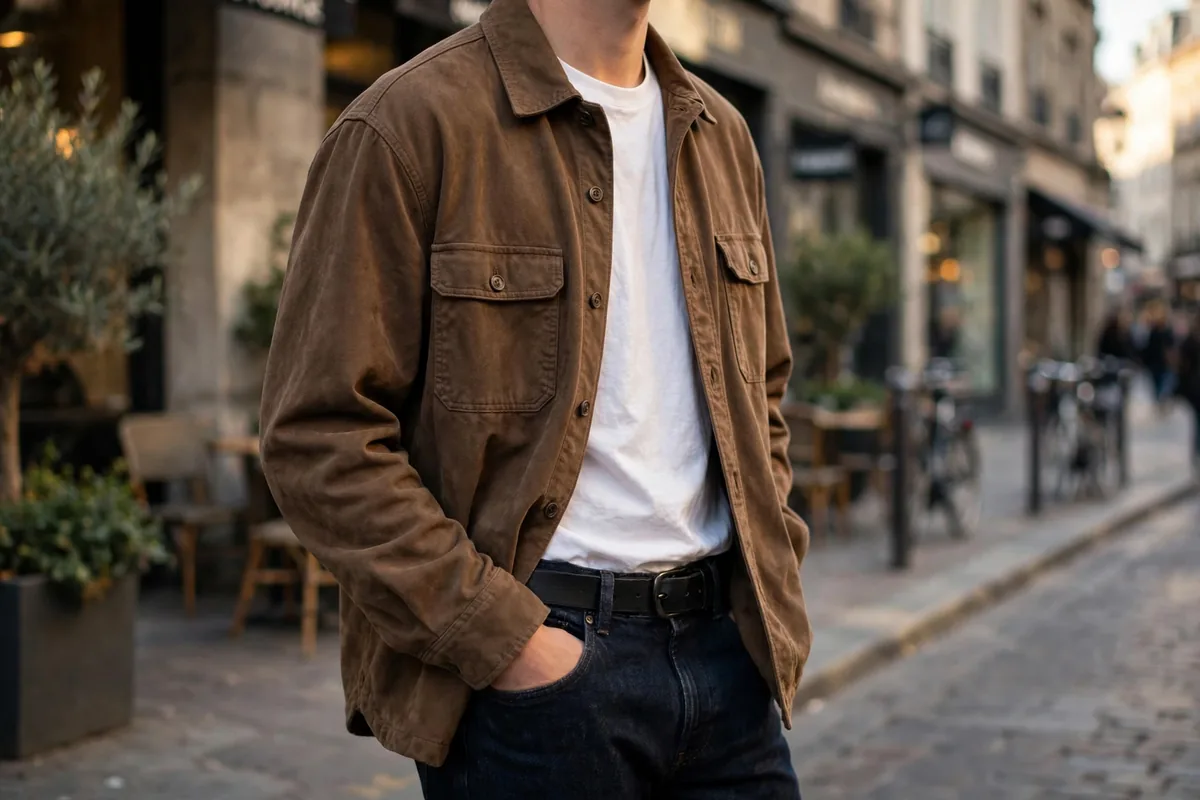
For colder weeks, this same instinct — one warm layer doing the heavy lifting over simple basics — is the backbone of most good men’s fall outfit ideas too, just with heavier fabrics and boots in place of sneakers.
Formula 3: The Long Coat Contrast — Evenings When You Want Polish
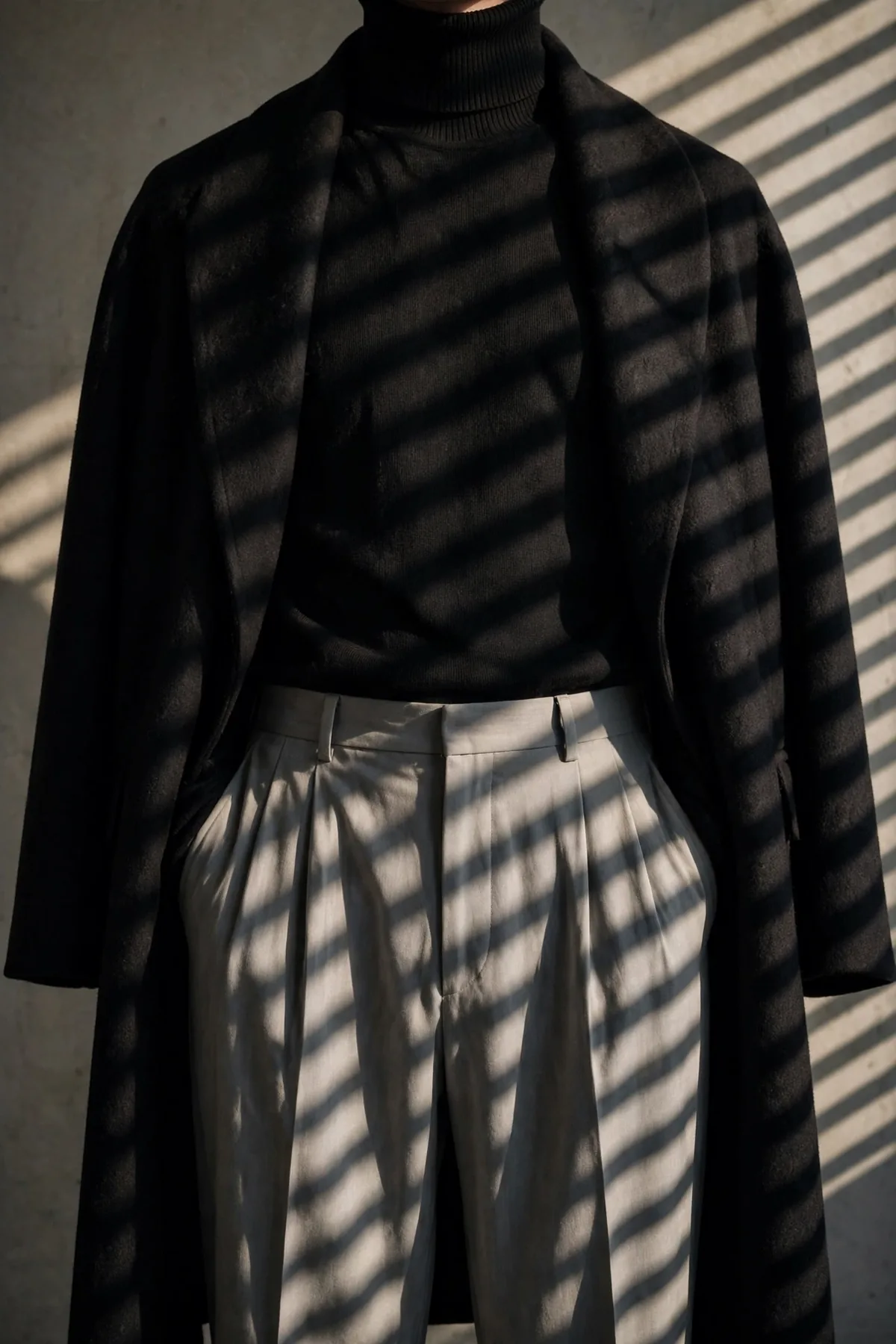
Occasion: dinners, galleries, evenings in the city, and any setting where a hoodie would feel underdressed. Pieces: a black fitted knit or turtleneck, a long dark coat worn over it, light grey pleated trousers, and a plain belt.
Colors: black on top, charcoal or black coat, grey below — tonal, with the trousers as the one lighter note. Why it works: putting a hoodie or knit under a longer coat is a contrast current styling coverage keeps highlighting, because the formal length sharpens the casual piece instead of fighting it.
Formula 4: The Knit and Wide-Leg — Cold Weekends, Done Calmly
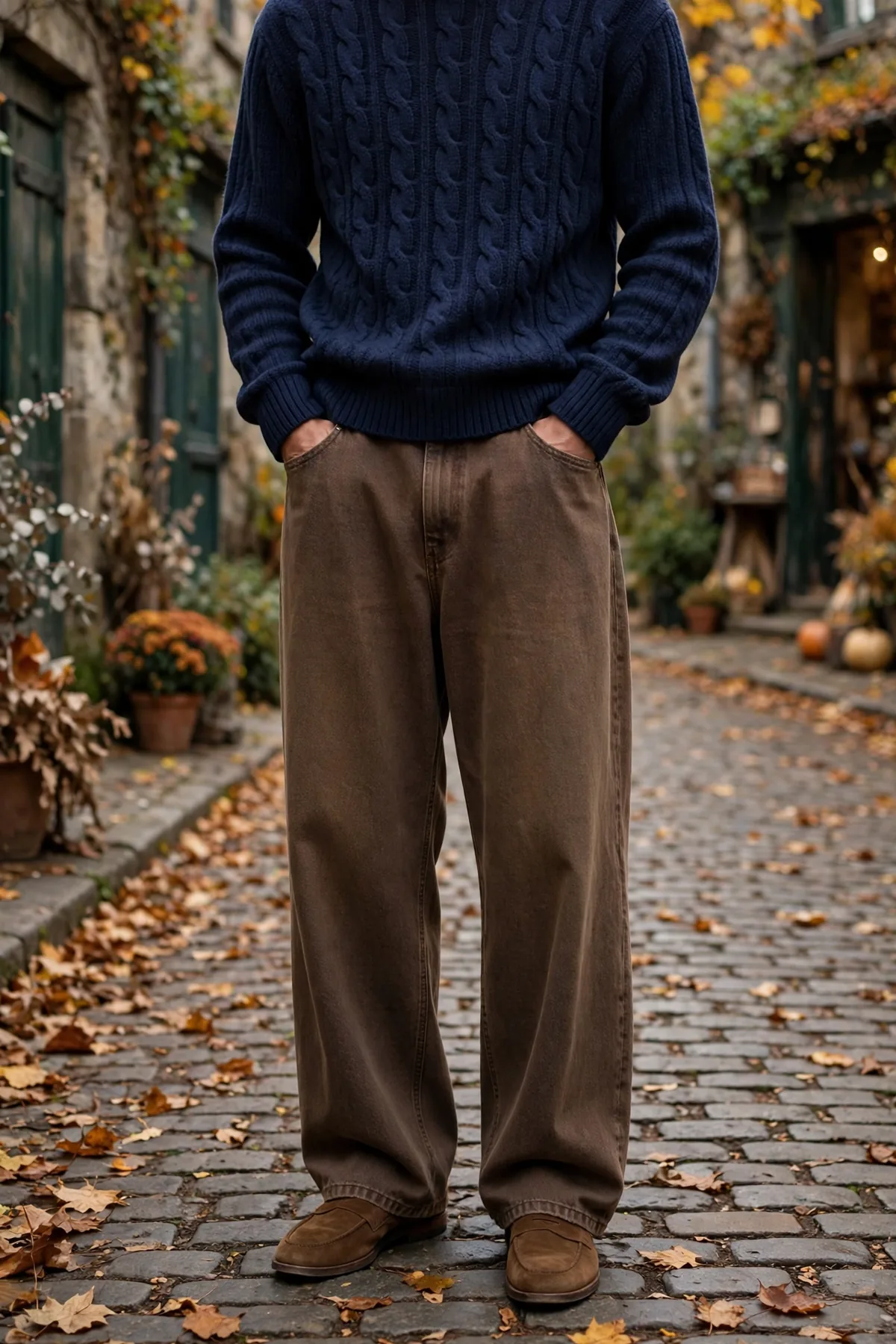
Occasion: slow weekends, travel days in cold weather, casual lunches. Pieces: a textured navy knit sweater, front-tucked into wide-leg jeans or trousers in brown, stone, or washed denim, finished with simple sneakers or boots.
Colors: navy and brown is one of the most dependable pairings in menswear, and here it does quiet, expensive-looking work. Why it works: the knit replaces the graphic as the interest. Texture up top, volume down below, and the front tuck supplies the proportion contrast the silhouette needs.
Formula 5: The Dark Night Formula — Evenings Out
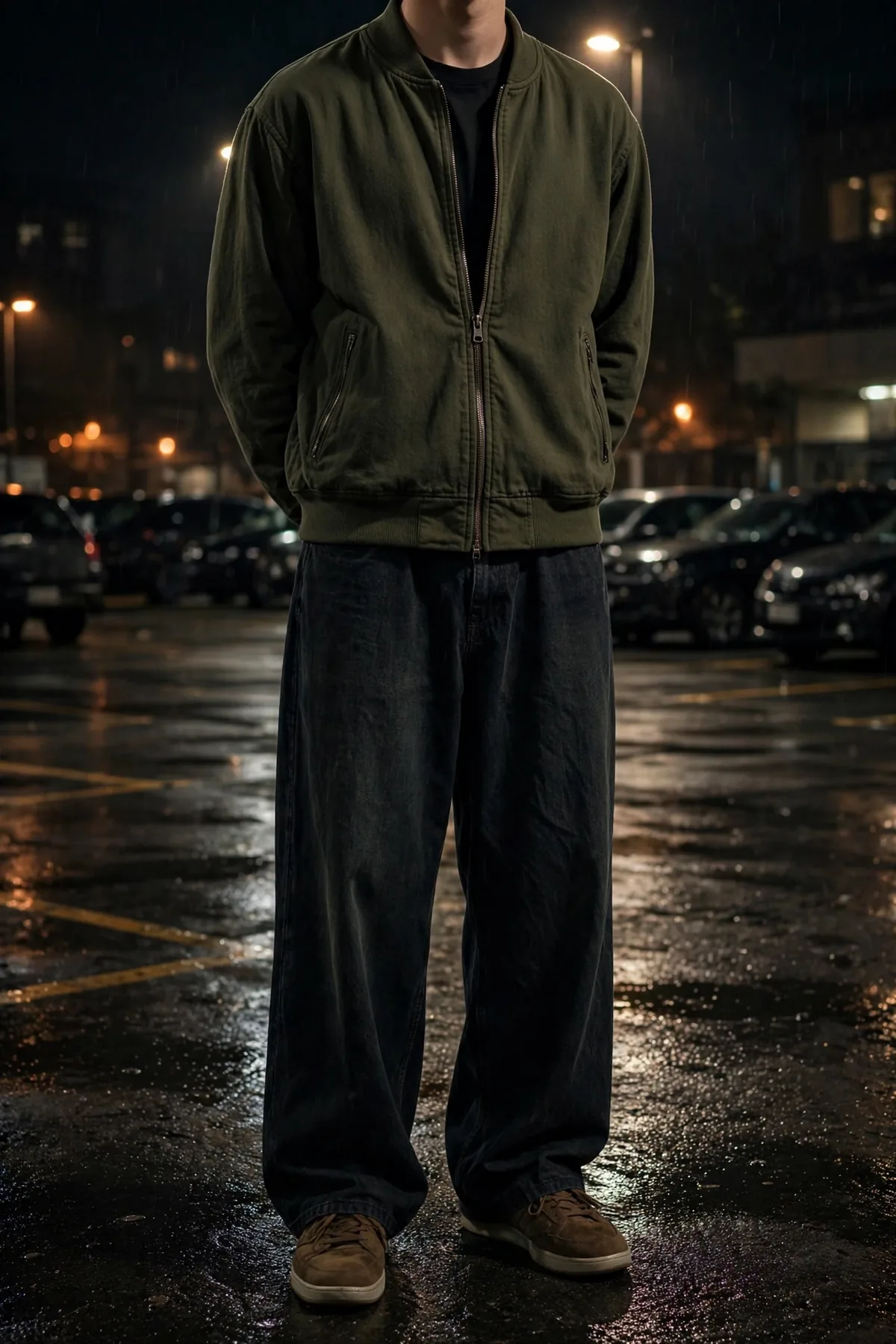
Occasion: night markets, concerts, late dinners, and photos after dark. Pieces: a dark olive zip-up jacket over a black tee, dark wide-leg jeans, and brown or black sneakers.
Colors: olive, black, and one warm brown note in the shoes. Why it works: at night, contrast drops and silhouette takes over. A single muted color against a black base reads sharp under artificial light, whereas bright colors and busy graphics tend to look messy in evening photos.
Formula 6: The Travel and Utility Formula — Airports and Long Days Out
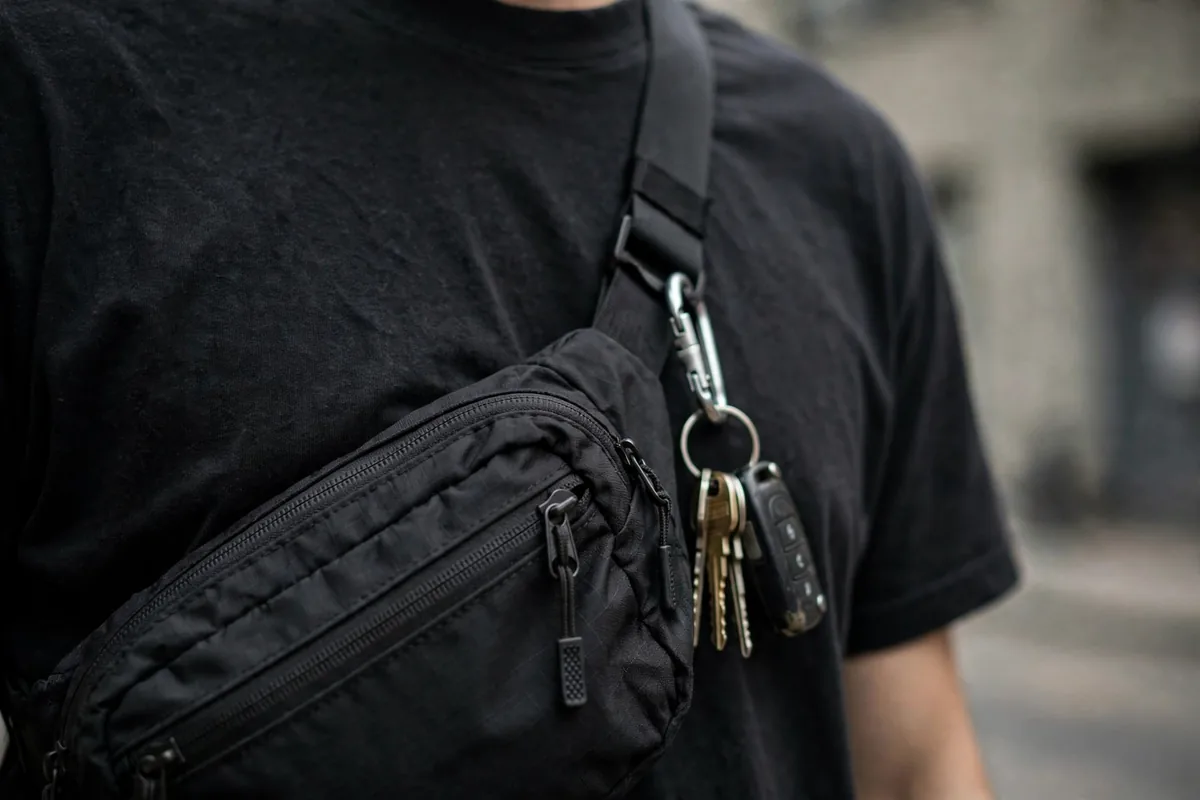
Occasion: flights, road trips, festivals, and days when you will be walking for hours. Pieces: a plain tee or hoodie, relaxed cargo pants in olive, stone, or black, supportive sneakers, and a small crossbody bag worn across the chest.
Colors: one neutral family throughout, so layers can come off without breaking the outfit. Why it works: the pockets and bag do the carrying, keeping hands free all day — see Levi’s own cargo styling notes for more ways to dress the same trouser up or down.
One discipline matters here: never stuff the pockets full. Bulging pockets destroy the clean line you chose cargos for in the first place.
Formula 7: The Tonal Black Base — When You Cannot Decide
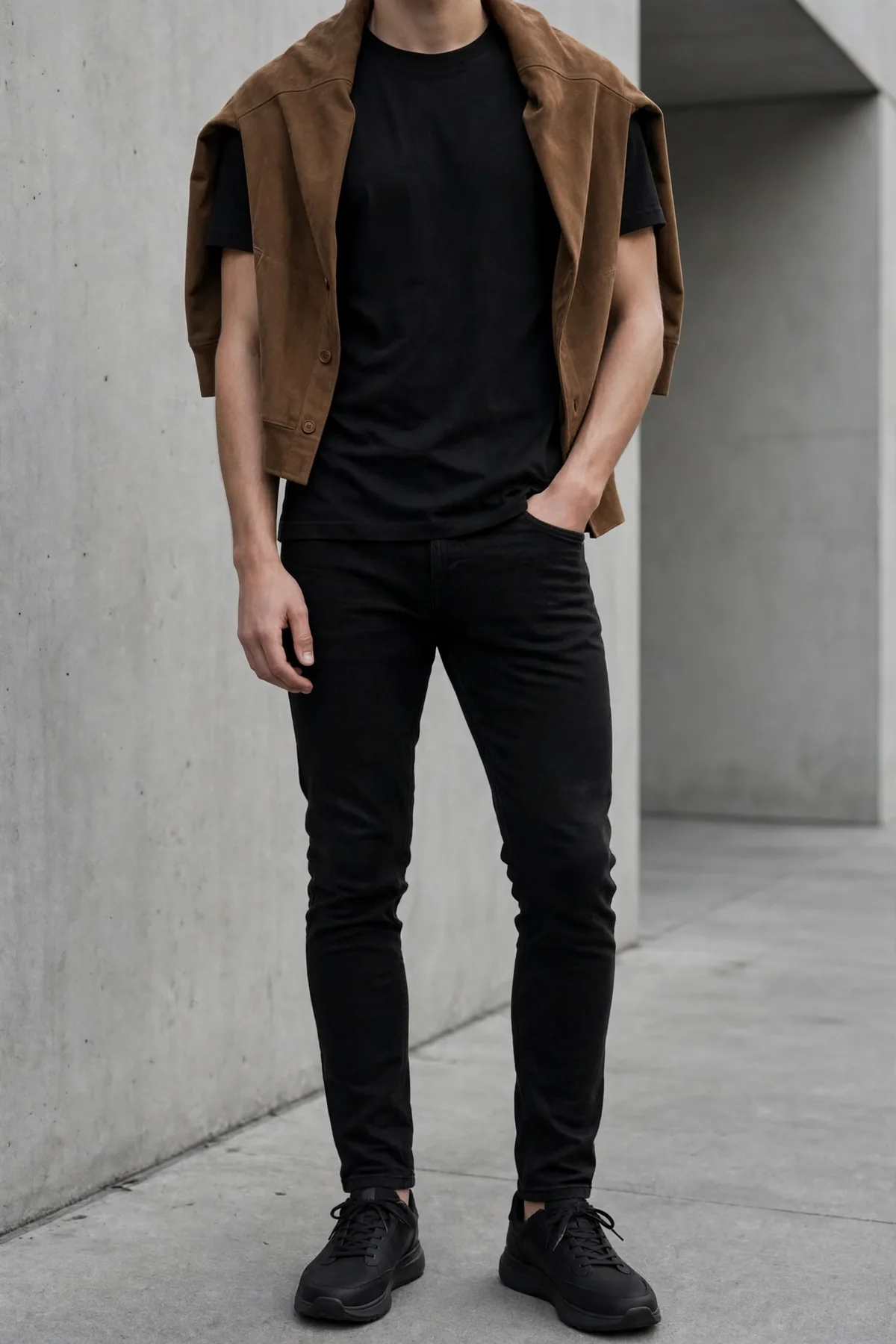
Occasion: genuinely anything casual, on the days your brain is elsewhere. Pieces: black tee, black relaxed jeans, black or white sneakers — then one contrasting layer on top, such as the brown overshirt from Formula 2 or the olive jacket from Formula 5.
Colors: monochrome first, one guest color second. Why it works: tonal dressing is repeatedly described as one of the sharpest, most repeatable formulas in modern streetwear because coordination is built in. Vary the textures — matte denim, a ribbed knit, a smoother jacket — so the single color does not go flat.
Prefer a more refined direction overall? The same black base, swapped into tailored trousers and leather shoes, is where streetwear hands over to the quieter world of old money outfit ideas for men — useful to see side by side, because the difference is mostly structure, not budget.
Finishing Moves That Cost Almost Nothing
Footwear is where these formulas are won or lost. Trend coverage is blunt about it: when the rest of an outfit is simple, the shoe carries it, and a bold sneaker against neutral clothing is far more reliable than making every piece shout at once.
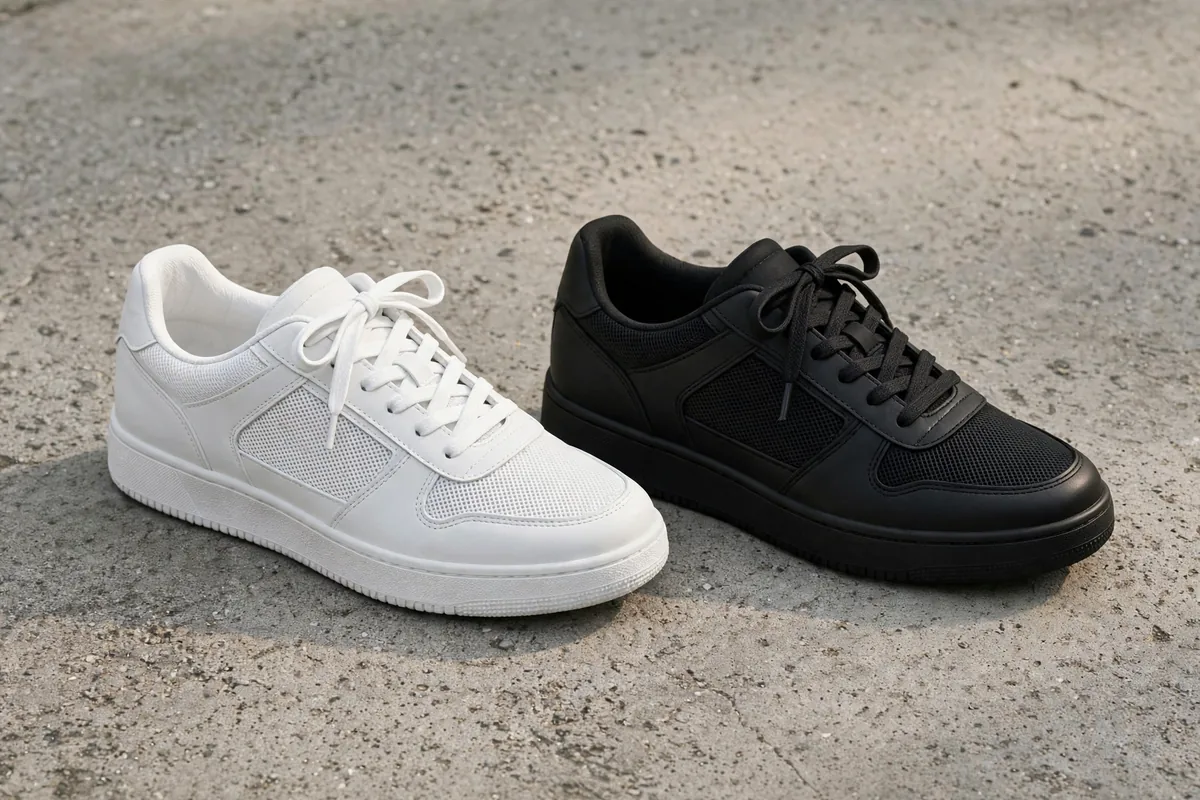
Keep one pair genuinely clean. Wipe them down after a few wears, let them dry properly, and retire them from “good outfit” duty when the uppers are beyond saving. Two minutes of care protects every formula above it.
Accessories follow the same restraint: one or two pieces, maximum. A cap can add structure to a soft hoodie silhouette, and a watch, a single chain, or a ring adds a finish — but stacking several competing pieces clutters a look that was built on clean lines.
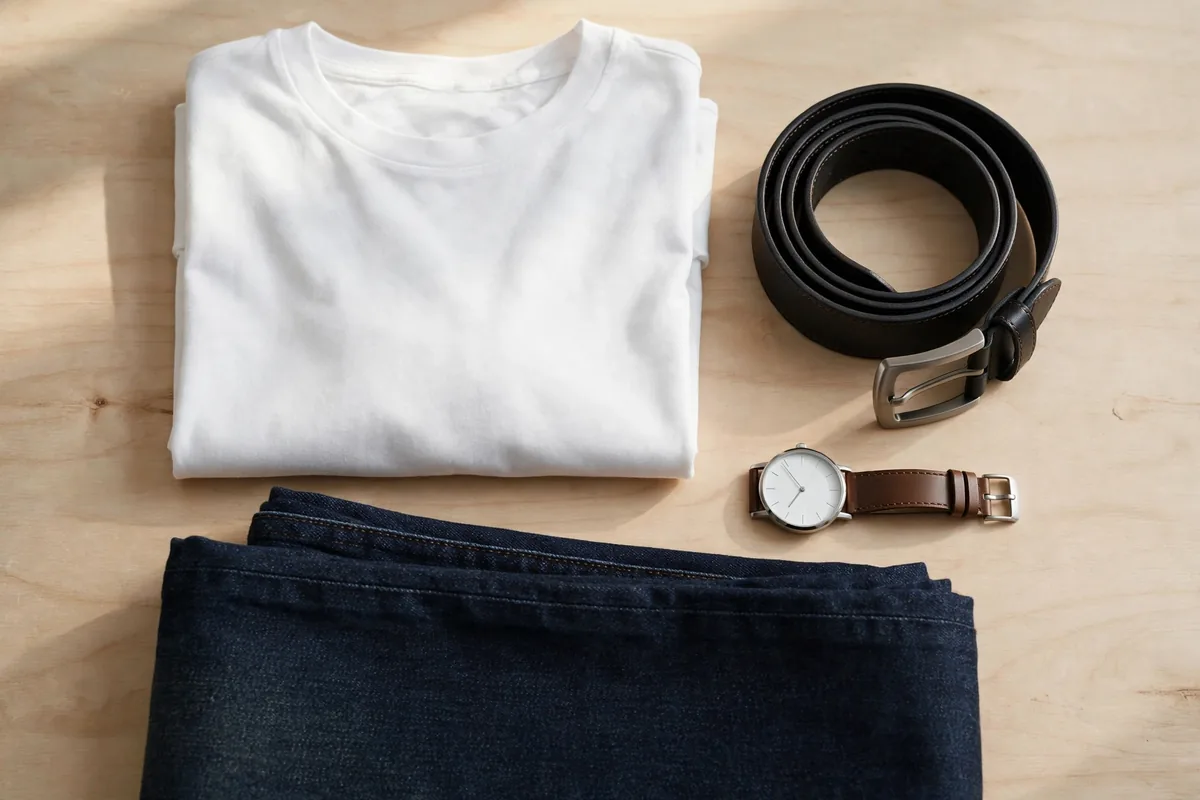
Finally, do the two-minute check before you leave: front tuck or clean hem, one cuff if the trouser pools, sleeves pushed up once, pockets empty of bulk. These tiny adjustments are what separate an outfit from a pile of correct clothes.
Mistakes That Make Streetwear Look Sloppy
Going Oversized Everywhere
An oversized hoodie over wide cargos with a bulky jacket has no anchor point, so it reads as shapeless rather than relaxed. Keep one piece closer to the body — or at least structured — in every single outfit.
Stacking Graphics and Logos
A graphic tee, logo trousers, a branded cap, and loud sneakers are four statements competing in one frame. The result is visual noise. Let one piece talk; everything else is the backing band.
Ignoring the Hem
Most “something looks off” outfits are a length problem. Trousers pooling over the shoe, or a tee hanging to mid-thigh, break the proportion contrast the whole style depends on. A cuff, a hem, or a front tuck fixes most of it.
Treating Dirty Sneakers as a Detail
They are not a detail — they are the foundation people read first. Scuffed, grey-looking shoes quietly downgrade a knit, a coat, and good denim all at once. Clean them or replace them; there is no styling workaround.
Buying Pieces Instead of Formulas
A rail of single, exciting items that combine with nothing is the most expensive mistake here. Buy the missing half of a formula you already own before you buy anything new and interesting.
Frequently Asked Questions
Can men in their 30s and 40s still wear streetwear?
Yes — lean on the calmer formulas. The overshirt build, the knit and wide-leg, and the long-coat contrast all read mature because they use structure, muted colors, and minimal sneakers instead of graphics and hype pieces.
How should baggy or wide-leg jeans actually fit?
Loose through the thigh, with either a slight taper or a clean, intentional stack at the ankle. Shorter men should avoid fabric pooling over the shoe — a single cuff or a hem keeps the leg line long and the outfit sharp.
Do I need expensive brands or limited drops for this?
No. Streetwear’s own history is built on basics made desirable by styling and scarcity, not on fabric luxury. Fit, fabric weight, and cleanliness decide how these outfits read. Approximate basics from high-street or thrifted sources, styled by formula, will outperform one expensive logo piece worn without a system.
Can streetwear work in a creative office?
In most creative or relaxed workplaces, yes. Use the polished end of the range: a clean tee or knit with structured trousers, a refined overshirt or coat, and simple footwear — and skip distressed denim, loud graphics, and anything you would wear to a skate park.
What is the single best outfit to start with if I own almost nothing?
Formula 7, the tonal black base. A black heavyweight tee, black relaxed jeans, and clean sneakers combine with everything, hide a multitude of fit experiments, and accept almost any jacket, overshirt, or knit you buy next.
The Short Version
Streetwear rewards a system, not a shopping habit. Learn the four principles, keep a small rotation of basics, and rotate the seven formulas by occasion — changing one layer, one color, or one shoe at a time.
Start with two formulas this week and wear them properly: proportions checked, sneakers clean, one statement only. That restraint, repeated, is what makes an outfit look like yours rather than a trend you borrowed.