

A cozy dreamy bedroom is not bought as a set — it is built by tuning five things: warm, low light, a soft muted palette, layered textures you can feel, diffused fabric that softens edges, and quiet scent and sound. Get those right and even a small rental or dorm room will feel calm, cloud-like, and personal without new furniture or a big spend.
That is the shift this guide makes. Instead of chasing ten matching products, you will work sense by sense, in the order your body actually notices a room.
The Sense-by-Sense Blueprint at a Glance
Keep your palette to three or four tones total. Repeat them in bedding, curtains, rug, and small objects so the room reads as one calm idea.
Layer 1: Light — Dim, Warm, and Low
Overhead white light is the fastest way to kill a dreamy mood. It flattens texture, washes out soft colours, and tells your brain it is still daytime.
For bedrooms, lighting guidance consistently points to warm white around 2700K to 3000K. That range mimics sunset and candlelight and is far less disruptive to melatonin than cooler 4000K-plus light.
The Sleep Foundation’s guide to light colour and sleep notes that warm red, orange, and yellow tones have less impact on circadian rhythm than blue or cool white light, and that darkness is still best for actual sleep.
Practical takeaway: use dreamy light for the wind-down, not all night. Enjoy the glow in the evening, then switch it off or set a timer for sleep.

Build three low pools of light
Replace one bright source with two or three dim ones. A bedside lamp at 400 to 600 lumens, a fairy-light strand as accent, and a soft lamp in the reading corner will feel richer than a single ceiling light.
Place light low and to the side, never directly over the pillow. Light that washes a wall or filters through fabric looks softer than light that shines straight into your eyes.
Fairy lights, done properly
Choose warm-white LED sets, not cool white or multicolour. LED fairy lights run cool, use very little power, and give that tiny-star effect without the heat of old incandescent mini bulbs.
Drape one strand loosely along the headboard or picture rail, not across every wall. A single, intentional line looks designed. Five competing strands look tangled.
For a star-canopy effect, run two strands in soft swags above the bed and let them dip slightly in the middle. Keep the pattern airy, with space between the swags.
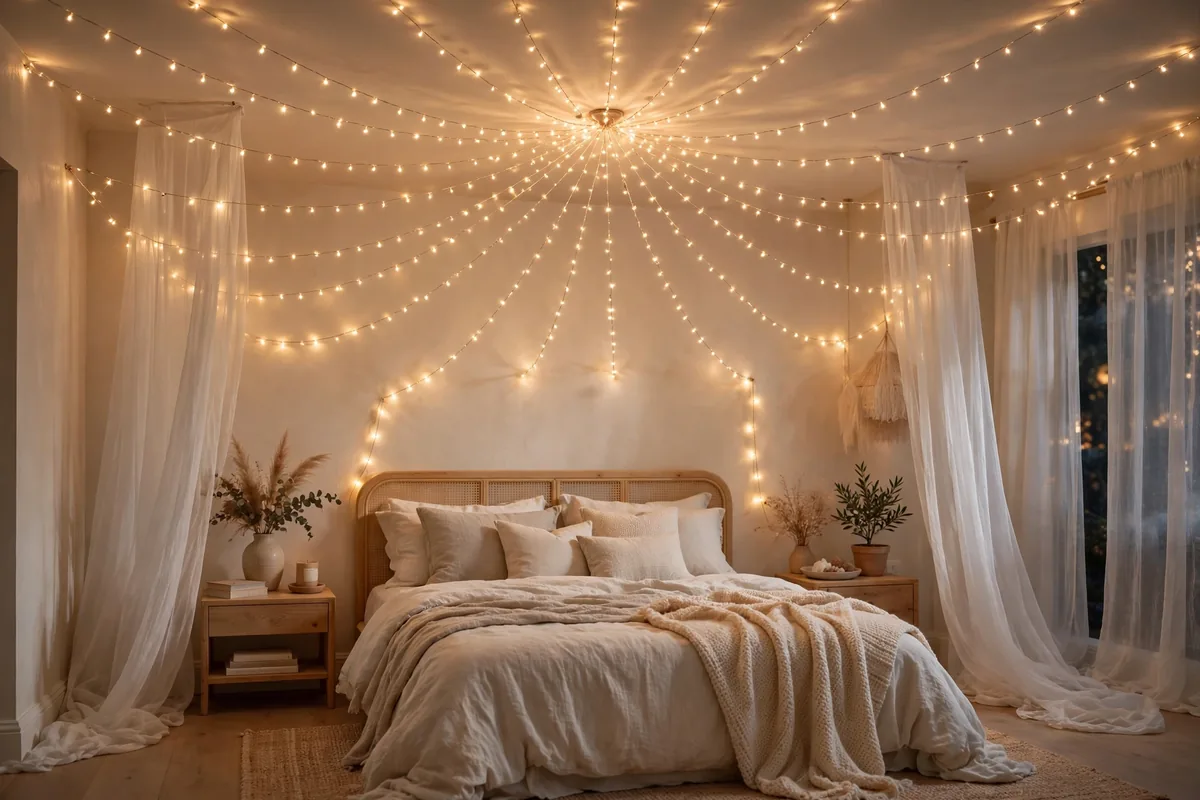
Safety matters here. Use certified LED sets, keep cords clear of piled bedding, do not cover bulbs with paper or thick fabric, and use clips rather than nails or staples through the wire.
Add a timer or smart plug set for roughly three to four hours in the evening. It creates a wind-down ritual and means you are not sleeping under decorative lights all night.
Layer 2: Colour — Muted First, Contrast Last
Dreamy colour is mostly about saturation, not a specific hue. A dusty, grey-softened version of almost any colour will feel calmer than its vivid version.
The most reliable bases are warm cream, warm grey or greige, sage green, dusty blue, and blush softened with grey. All of them sit quietly behind texture instead of shouting over it.
Bedroom colour research points the same way: low-saturation blues, greens, and warm neutrals are rated as less arousing, while vivid reds and oranges raise alertness.

A simple palette formula that works
Pick one base for 60 percent of the room: bedding and curtains, for example, in cream or warm white. Add one soft colour for 30 percent: sage, dusty blue, or muted pink in pillows and a rug.
Reserve the final 10 percent for depth: a slightly darker throw, warm wood, or a charcoal book spine. That small contrast stops a pale room from looking washed out.
Layer 3: Touch — Build a Cloud Bed, Not a Pillow Pile
Texture is where the word dreamy becomes physical. Your eye reads layers, but your hands and body confirm them when you sit, lean, and get into bed.
Designers build a bed from the bottom up for a reason. Each layer has a job, and skipping the middle layers is why many beds look flat in photos and feel flat in person.
The cloud-bed sequence
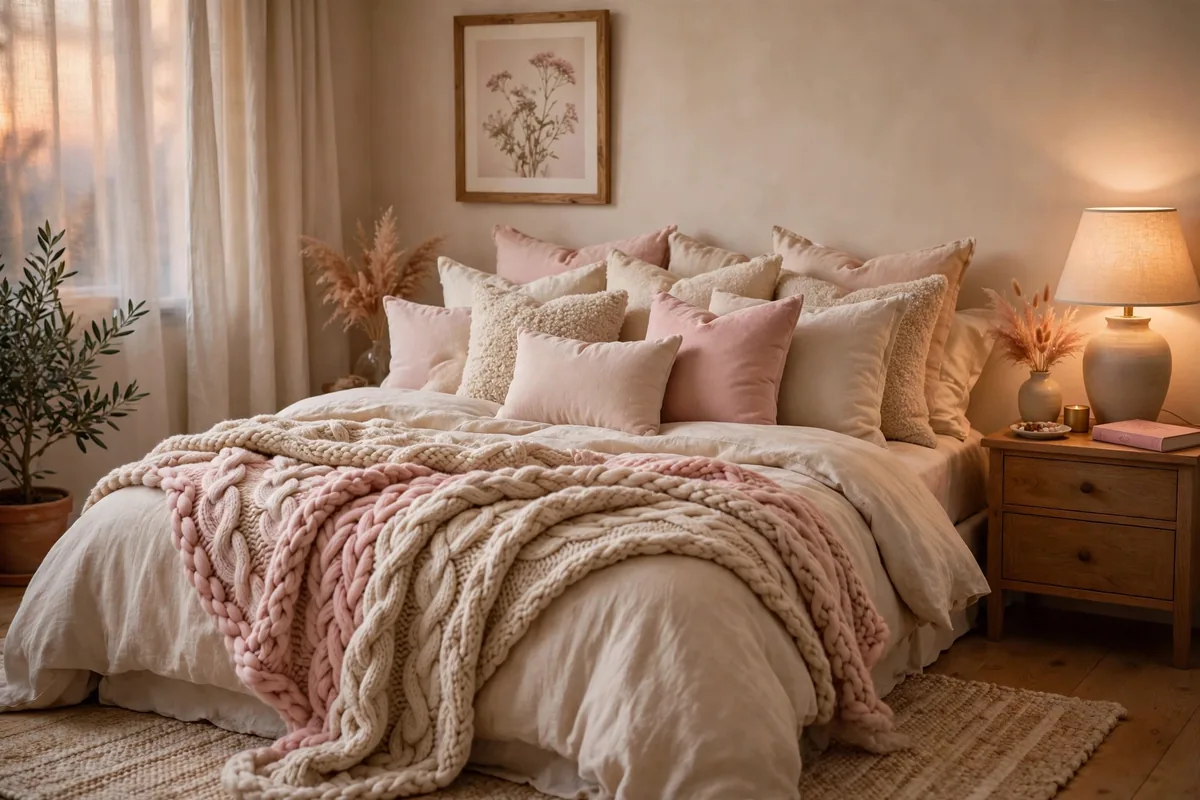
Start with a fitted sheet, then a flat sheet if you use one. Add a thin quilt or coverlet as the middle layer — this is the layer most people miss, and it adds woven texture without bulk.
Next comes the duvet or comforter, your main volume. Fold the top third back toward the foot so the sheet and quilt peek through. That fold is a small move with an outsized visual payoff.
For extra loft, some hotels and stylists place two lightweight duvet inserts inside one cover. It works, but only do it in cooler months or with breathable fills, or the bed will sleep too hot.
Finish with pillows tall to short: sleeping pillows or large Euro shams at the back, standard pillows in the middle, and one lumbar or small accent pillow at the front. Odd groupings tend to look more relaxed than strict pairs.
Texture contrast, not colour contrast
Keep colours close and let materials do the talking. Smooth cotton, washed linen, a woven quilt, and a chunky knit throw in neighbouring tones create depth without visual noise.
Add one contrasting hand-feel at the foot: a knit, boucle, or faux-fur throw draped loosely, not folded into a tight rectangle. Let one edge spill slightly for that lived-in softness.
Do the same on the floor. A soft rug where your feet land in the morning changes the first seconds of your day.

Place a rug so it extends from under the bed on both sides if space allows. In a small room, even a runner on the main side anchors the bed and muffles sound.
Layer 4: Air and Edges — Sheer Fabric Does the Softening
Hard edges make a room feel awake: bare window frames, sharp headboard lines, empty corners. Sheer fabric blurs those edges and diffuses light at the same time.
A sheer panel does not block daylight the way blackout fabric does. It spreads it, turning a harsh shaft of sun into a soft wash and giving daytime privacy without darkening the room.

You do not need a four-poster bed. A ceiling hook and a lightweight voile panel, a tension rod, or a removable adhesive hook in a rental can hold a drape that falls behind or over the head of the bed.
Let the fabric stay loose, with gentle folds. Pulled drum-tight, a sheer looks like a screen. Relaxed, it moves slightly with air and catches evening fairy light beautifully.
Pair sheers with a practical layer behind them if you need darkness: a simple blackout blind for sleep, sheer in front for the daytime look. You get both function and softness.
Layer 5: Scent, Sound, and Living Detail
A room can look dreamy and still feel flat if it smells stale or sounds echoey. These last two senses are quiet, but they decide whether you actually want to linger.
Scent: one note, kept faint
Choose a single calm scent family — lavender, vanilla, cedar, or clean linen — and use it in one place only, such as a small diffuser on the dresser or a sachet in the pillow drawer.
Keep it faint. A bedroom scent should be noticed when you walk in, then disappear into the background. If you can still consciously smell it after ten minutes, it is too strong for sleep.
Sound: soften the echo
Soft rooms are quiet rooms. Rugs, quilts, curtains, and upholstered pieces absorb sound, which is why a layered bedroom feels calmer even before you play any music.
If outside noise is the problem, the textiles above help at the margins, but a consistent low sound — a fan on low or a sleep-sound app at low volume — often masks irregular noise better than silence.

Add one living element if light allows it. A trailing pothos on a shelf is forgiving, trails beautifully, and softens the line between furniture and wall. In low light, a good faux trail gives the look without the upkeep.
One or two plants are enough. A jungle competes with rest, collects dust on every leaf, and turns a calm corner into a chore.
The Personal Layer: Collected, Not Matched
This is the layer that stops the room looking like a catalogue. A dreamy bedroom should be recognisably yours within five seconds of walking in.
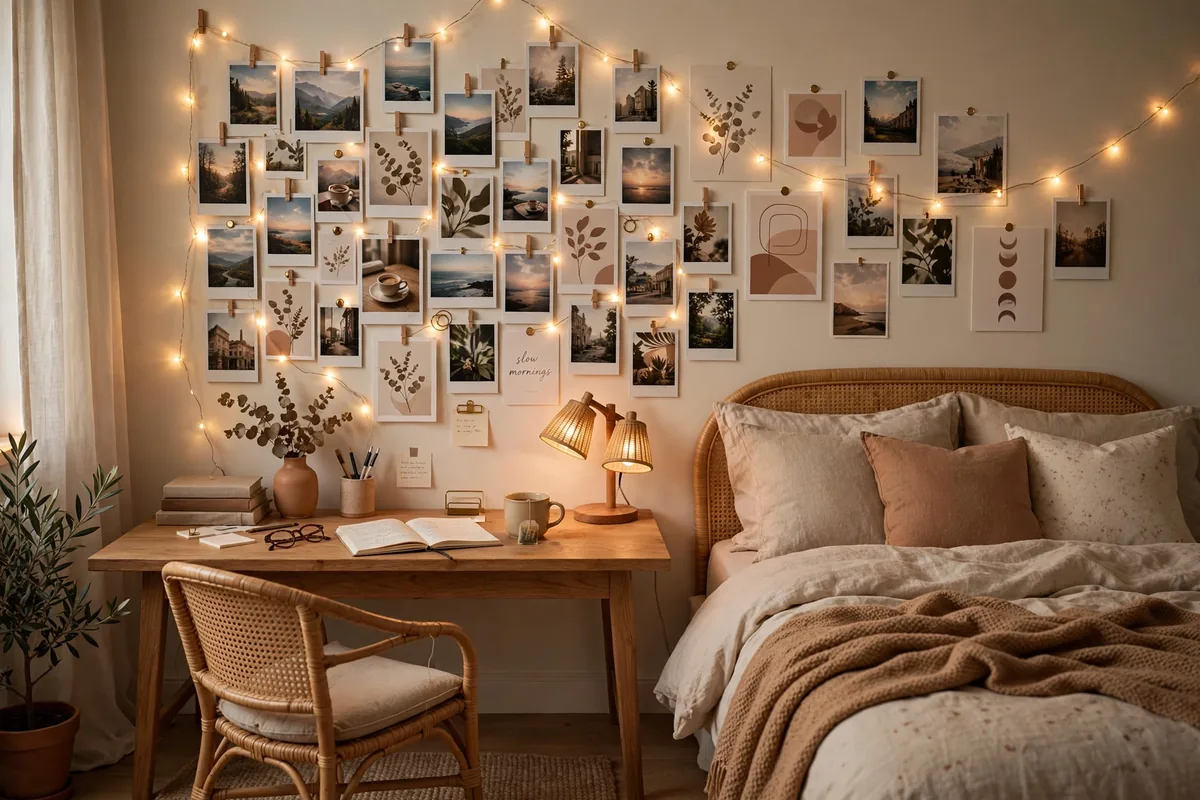
Build a small photo cluster rather than a full wall if you are starting out: six to ten prints, postcards, or notes at slightly varied heights, threaded with one fairy strand or clipped to a string.
Leave breathing space around the cluster. An organic, collected layout with small gaps feels personal. A floor-to-ceiling grid can feel like a mood board you have to maintain.
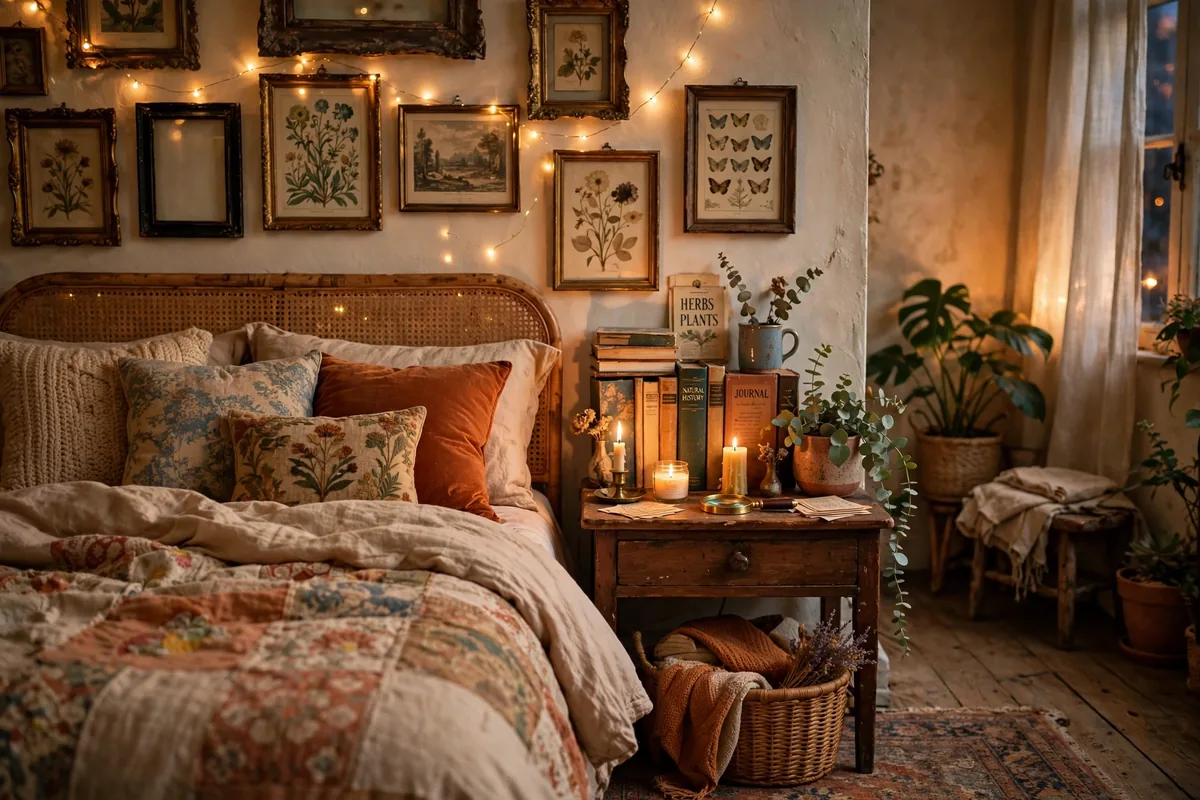
Carve out one non-bed spot if you have even a square metre to spare. A floor cushion, a small chair, and a lamp create a second place to land in the room.

If it becomes your favourite spot, explore these cozy reading corner ideas for small spaces for seating, lighting, and storage that fit tight rooms.
Seasonally, just swap the throw and one pillow cover to rust or burgundy — a trick these cozy fall bedroom decor ideas use well.
A One-Weekend Roadmap
Evening one — light and clear. Swap in warm bulbs, add your fairy strand, and clear surfaces back to daily essentials. Live with the glow for a night before buying anything else.
Morning two — bed and floor. Rebuild the bed with what you own, add the throw, and place the rug. Photograph it at night — that photo tells the truth.
Afternoon two — fabric and personal. Hang the sheer, place the plant, and put up the photo cluster. Stop there — edit over a week, not in one haul.
Mistakes That Quietly Break the Look
Cool white fairy lights. They read as office or holiday lighting, not rest. Check the Kelvin or the words warm white before you buy, and test one strand first.
Too many colours at full strength. Five pastel shades at once can still clash. Desaturate everything, limit the palette, and let texture provide the variety.
Piling on pillows you have to move nightly. If making the bed takes ten minutes and clearing it takes five, you will stop doing it. Three pillow layers is a practical ceiling for most people.
Draping fabric over lights. Sheers and fairy lights look magical near each other, but fabric should diffuse light from beside or behind a panel, never be wrapped tightly over bulbs. Keep clearance and check for warmth after fifteen minutes.
Ignoring the floor and the doorway view. Most people judge the room from the door. If the first sight is a bare floor, tangled cords, and a bright ceiling light, the bed layers will not save it.
Buying the decor before the basics. Small ornaments cannot compensate for flat bedding and harsh light. Spend first on light temperature, one middle bedding layer, and one rug.
Frequently Asked Questions
What is the fastest way to make a bedroom feel dreamy?
Turn off the overhead light and add one warm source at bedside height plus a warm fairy strand along the headboard. Then fold the duvet back and add a throw. That ten-minute change alters light and texture, the two senses you notice first.
What colours work best if I cannot paint?
Use bedding and curtains as your paint. Cream or warm white for the large pieces, one muted colour like sage or dusty blue for pillows and rug, and a darker throw for contrast. It gives the same low-saturation effect without touching the walls.
Are fairy lights safe to use around bedding and curtains?
Certified LED fairy lights run cool and are widely used in bedrooms, but keep cords and bulbs clear of piled blankets, use clips not staples, inspect for damage monthly, and put them on a timer rather than leaving them on unattended all night.
How do I get the cloud-bed look without buying a new duvet?
Add the missing middle layer — a thin quilt or even a second flat sheet — fold the duvet top down, and fluff and shake the insert daily so the fill redistributes. Plumper pillow inserts and a textured throw do more for the look than a pricey new cover.
Can this aesthetic work in a small or rented room?
Yes, and small rooms often suit it best. Use vertical space for photos and plants, removable hooks for sheers and lights, light bedding colours to keep it airy, and a rug placed partly under the bed to connect the zone without new furniture.
Final Thought
Start with light, then touch, then colour. That order is the whole secret, and it costs less than starting with decor.
Add the sheer, the plant, and the personal pieces slowly, editing as you go. The room is finished not when it matches a photo, but when you walk in at night and your shoulders drop.