
The men’s fall outfit formula, in one sentence: wear three thin layers in a dark, earthy palette — a breathable base, a textured knit or flannel in the middle, and a structured jacket or coat on top — over dark jeans or chinos, finished with boots or clean minimal sneakers. That single system is what makes men’s fall outfit ideas work. Everything below is just that formula adjusted for temperature, occasion, and color.
Fall dressing fails when men guess. Temperatures swing 15–20 degrees between morning and afternoon, so one heavy jacket leaves you sweating by lunch and freezing by dark. Layers solve that: each piece comes off or goes back on without wrecking the outfit.
The Fall Layering System: Base, Mid, Outer
Think of every outfit as three jobs. The base layer sits against your skin and manages comfort. The mid layer adds insulation and texture. The outer layer blocks wind and pulls the look together.
The rule that makes it work: start thin against the body and build outward. Each layer should look complete on its own, because at some point in the day you will probably be wearing it on its own.
The Base Layer (Against the Skin)
Merino wool is the strongest fall base. It regulates temperature in both directions, resists odor for days, and feels soft instead of scratchy — which is why hikers and travelers swear by it. A merino long-sleeve tee or henley in charcoal, navy, or cream works under almost everything.
Good alternatives: a plain cotton crewneck tee for mild days, a fine-gauge turtleneck when it gets properly cold. Avoid thick cotton that holds sweat — once it gets damp, it stays cold against your skin.
The Mid Layer (Warmth and Texture)
This is where fall outfits get their character. A crewneck sweater, a brushed flannel shirt, or a wool overshirt traps warmth between the base and the jacket — and its texture is what makes a simple outfit look deliberate.
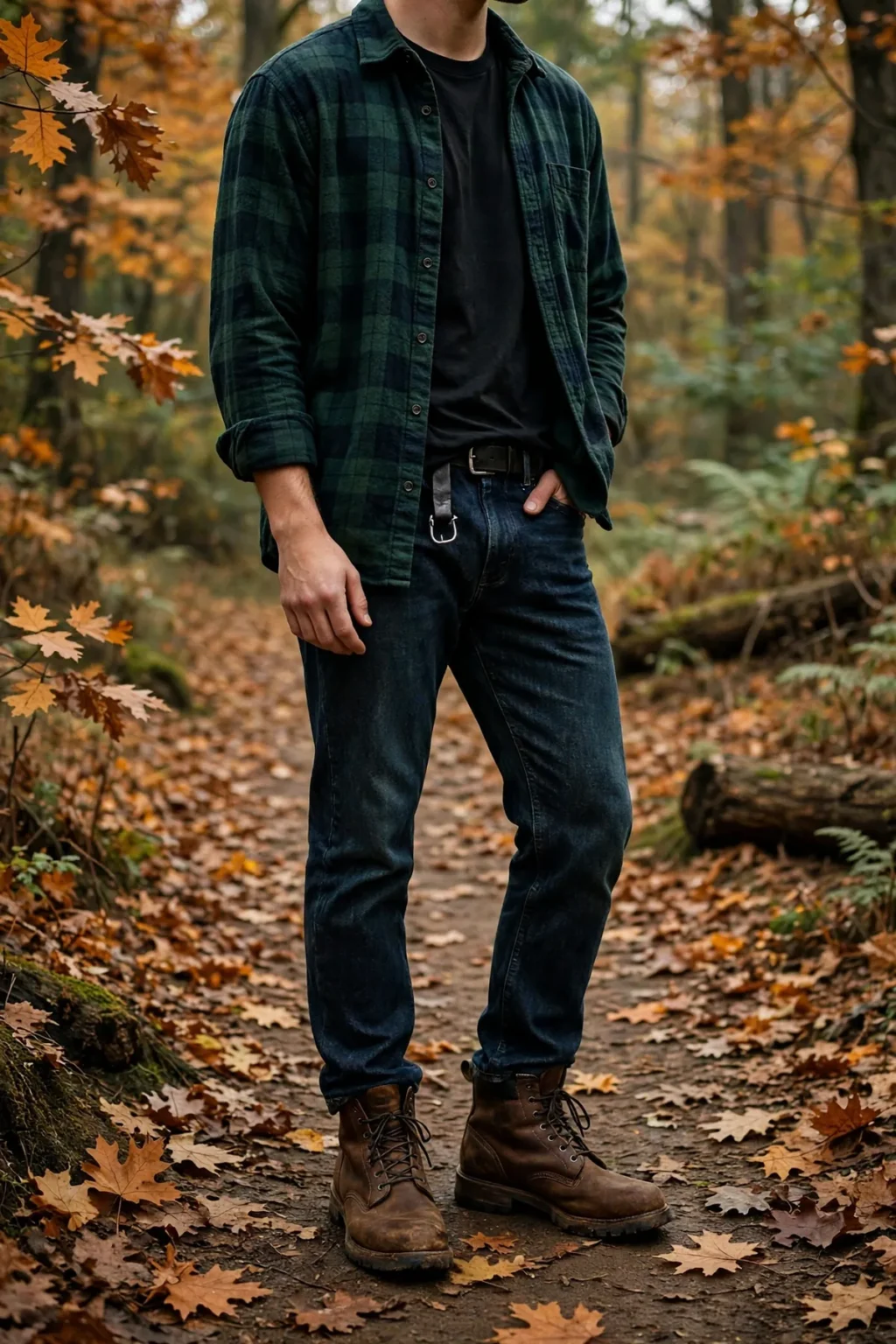
Flannel earns its place here: brushed cotton flannel is soft, breathable, and warm without bulk, and it works buttoned up, open over a tee, or under a coat. Keep plaids muted — deep red, forest, charcoal — and the rest of the outfit solid.
The Outer Layer (Weather and Structure)
The outer layer is chosen for the morning low, not the afternoon high. Early fall calls for unlined pieces — a denim trucker, canvas chore coat, or an overshirt you can tie at the waist when it warms up. Deep fall needs wool: an overcoat or heavy overshirt that seals the layers underneath.
Layering by Temperature
60–70°F (16–21°C) — two layers. A tee or light knit plus one overshirt, flannel, or unlined jacket. This is early-fall dressing: the outer piece is removable and mostly there for the morning.
50–60°F (10–16°C) — three layers. Base tee, a real knit or flannel mid layer, and a proper jacket or light coat. Most classic men’s fall outfit ideas live in this band.
Below 50°F (under 10°C) — three layers plus wool. Merino base, heavier knit, wool overcoat, and a scarf if the wind picks up. Swap sneakers for boots; cold ankles undo an otherwise warm outfit.
8 Complete Outfit Formulas
Each formula below names the occasion, the exact pieces, the colors, and why the combination works. Copy them directly or swap one piece at a time — the formulas are built from interchangeable parts, so a single change creates a new outfit.
Formula 1: The Cold-Evening Standard
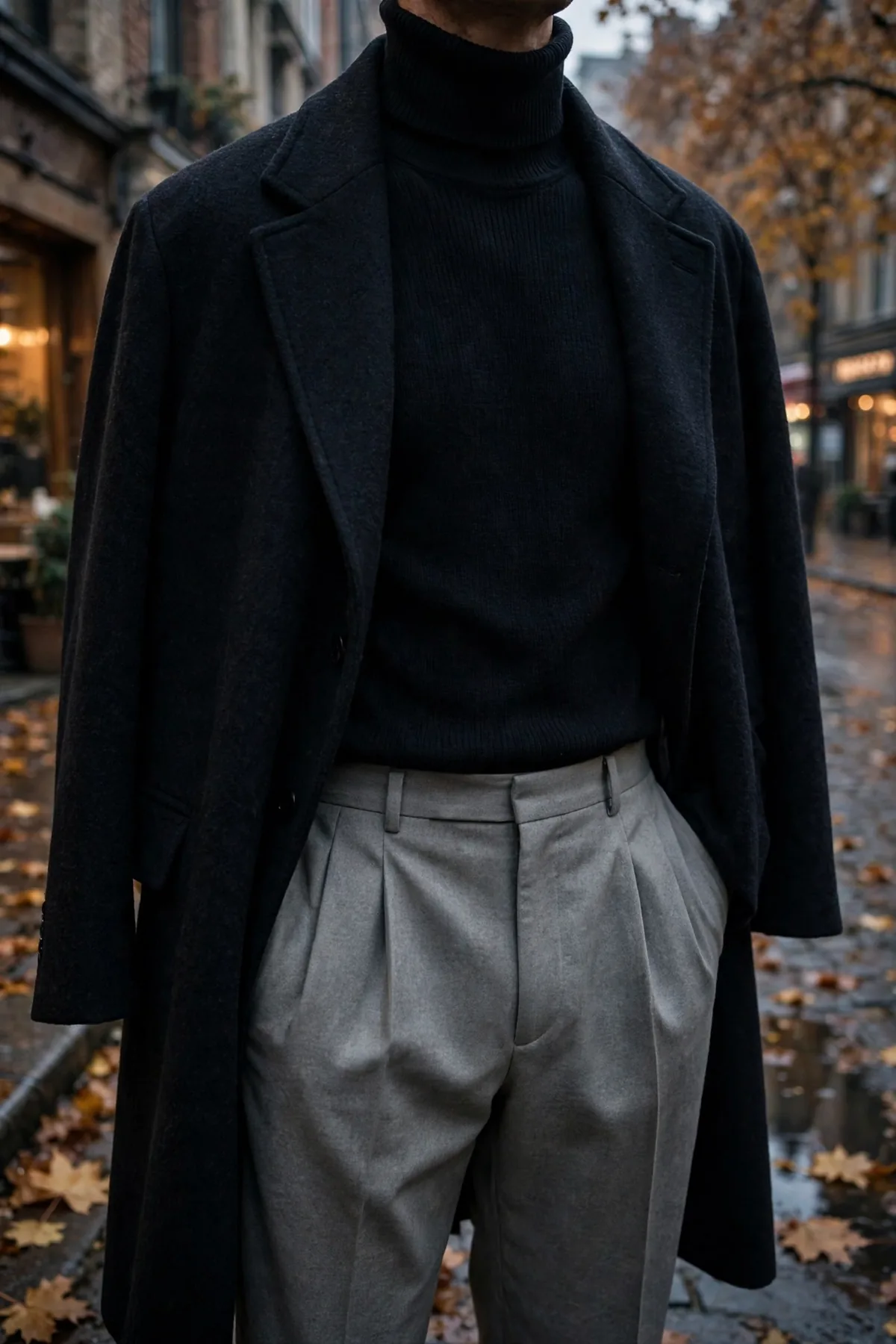
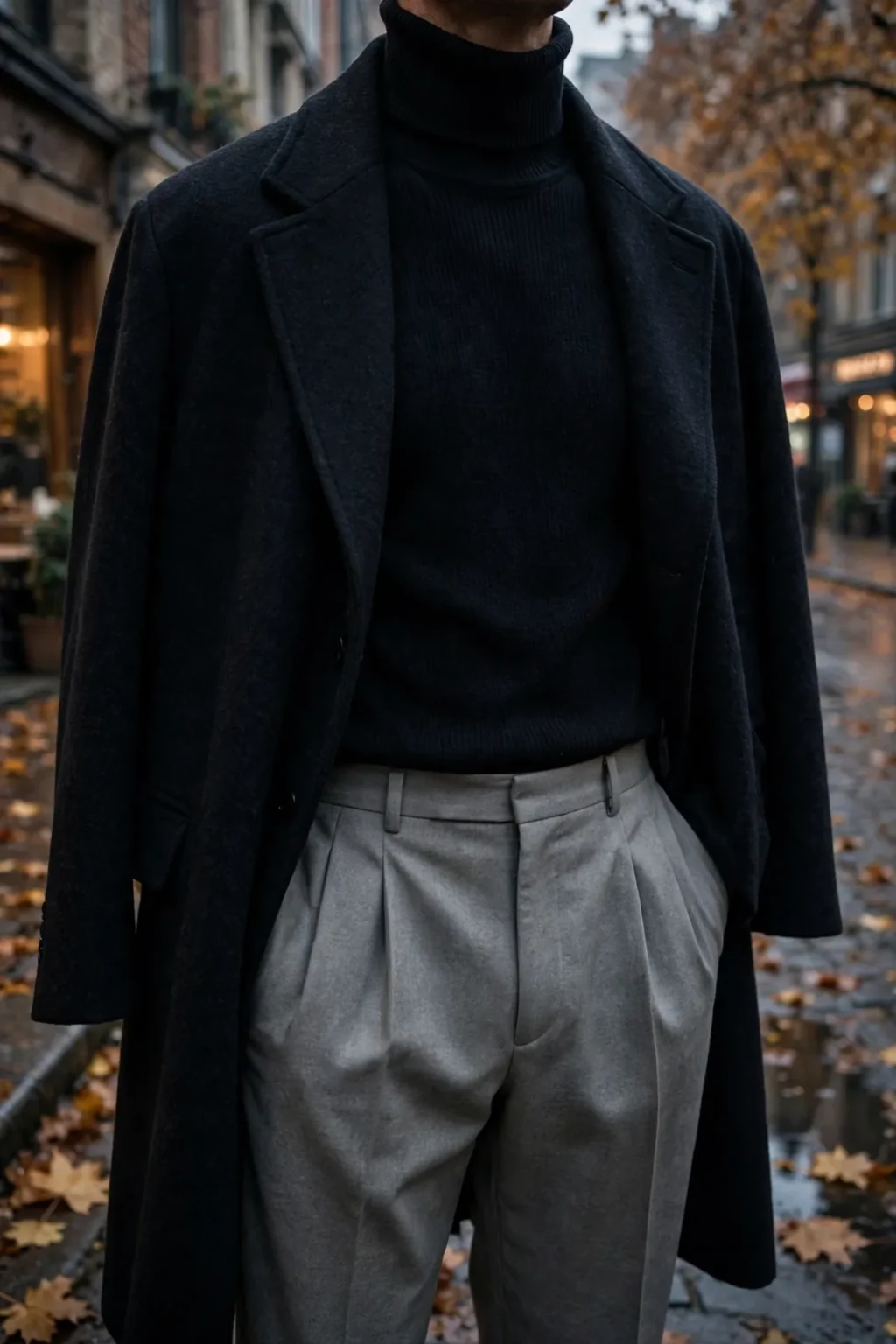
Occasion: Dinners, dates, evenings out. Pieces: black fine-gauge turtleneck, long charcoal or black wool overcoat, grey pleated trousers, black leather boots. Colors: black on grey — monochrome with one step of contrast.
Why it works: the turtleneck replaces both a shirt and a scarf, the coat’s length creates a clean vertical line, and the lighter trousers stop the outfit from going flat. This is also the foundation of dark, bookish evening dressing — pair it with the right cut and footwear from our guide to old money shoes for men and the whole look reads intentional, not costumed.
Formula 2: The Everyday Overshirt
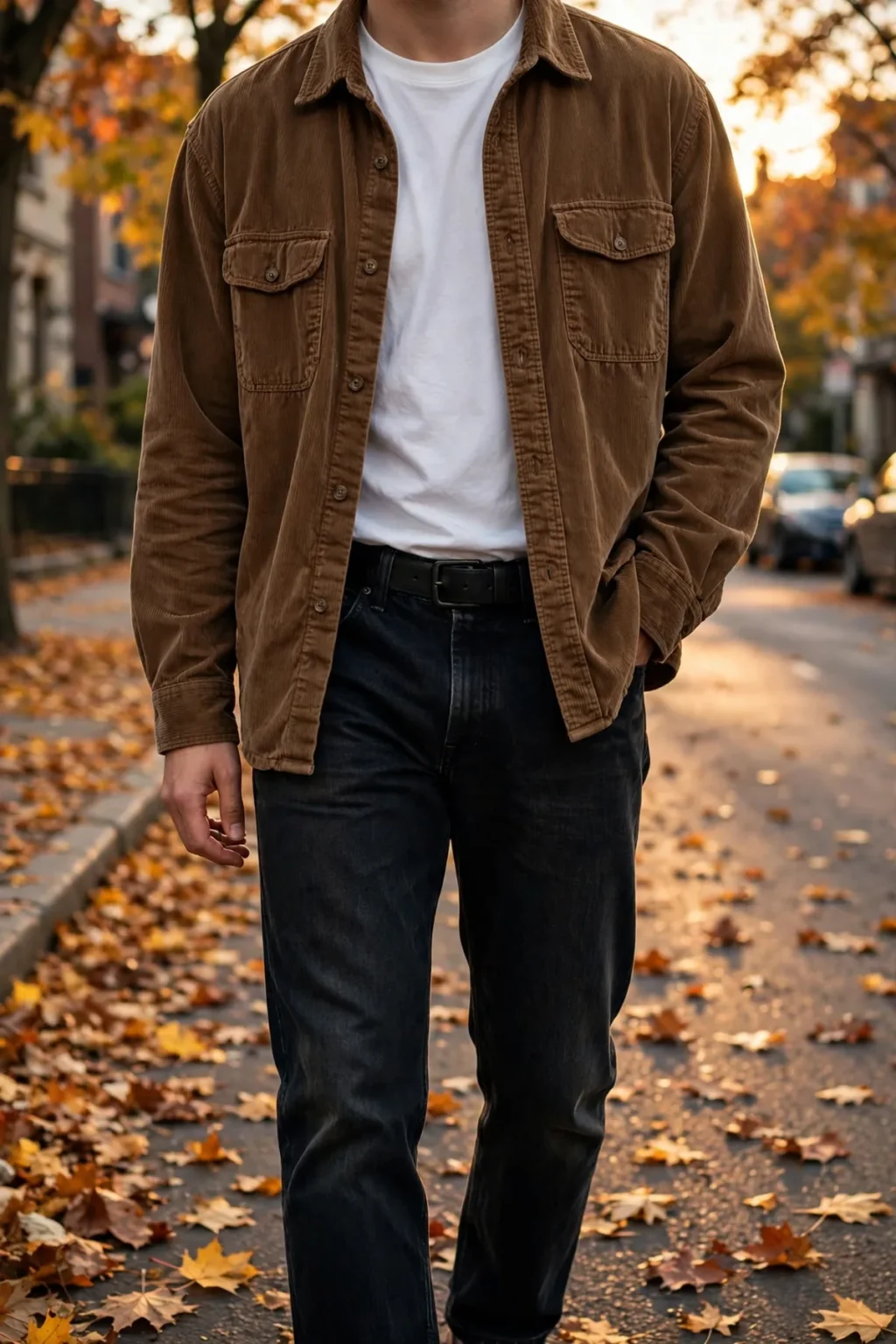
Occasion: Campus, errands, casual Fridays. Pieces: brown wool-blend shacket worn open, plain white tee, dark indigo jeans, suede boots or clean sneakers. Colors: warm brown over a white-and-indigo base.
Why it works: the overshirt does double duty as shirt and light jacket, which is exactly the 60–70°F problem solved. The white tee keeps the dark palette from looking heavy, and a loose front tuck gives it shape.
Formula 3: The Weekend Knit
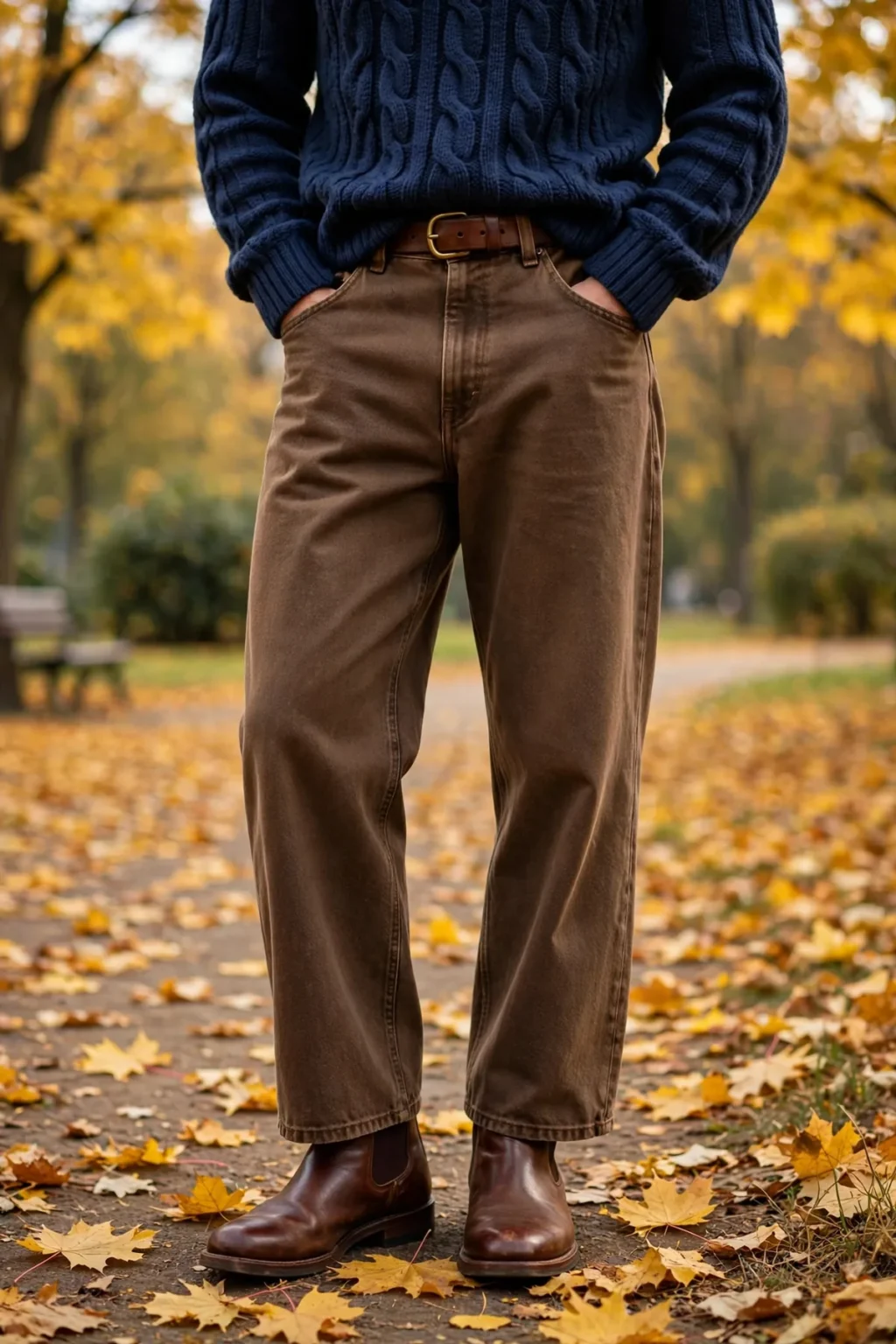
Occasion: Slow weekends, coffee runs, travel days. Pieces: navy crewneck knit sweater, brown wide-leg jeans or corduroys, simple sneakers. Colors: navy and brown — the most reliable pairing in menswear, because brown is orange’s muted cousin and sits opposite blue on the color wheel.
Why it works: the knit carries all the texture, so nothing else needs a pattern or logo. A loose half-tuck keeps the wide leg from swallowing the sweater’s hem.
Formula 4: The Layered Tee (Early Fall)
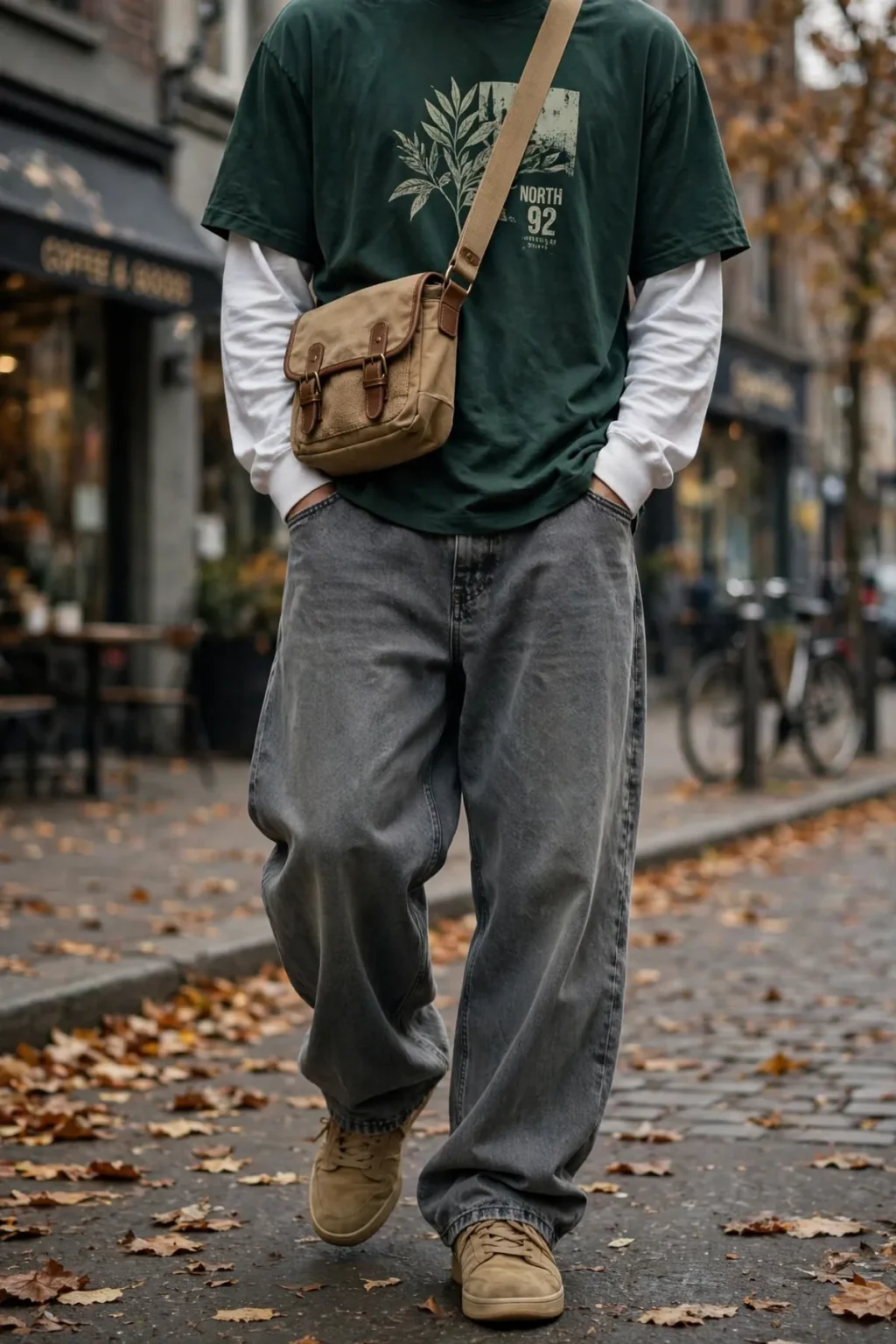
Occasion: Mild days, casual streetwear settings. Pieces: white long-sleeve tee as the base, dark green short-sleeve tee over it, baggy grey jeans, tan sneakers. Colors: forest green, white, grey.
Why it works: the white base showing at the sleeves and hem is a deliberate frame, not an accident — it adds a visible second layer without any real bulk. This is the lightest formula on the list, built for the top of the temperature range.
Formula 5: The After-Dark Zip-Up
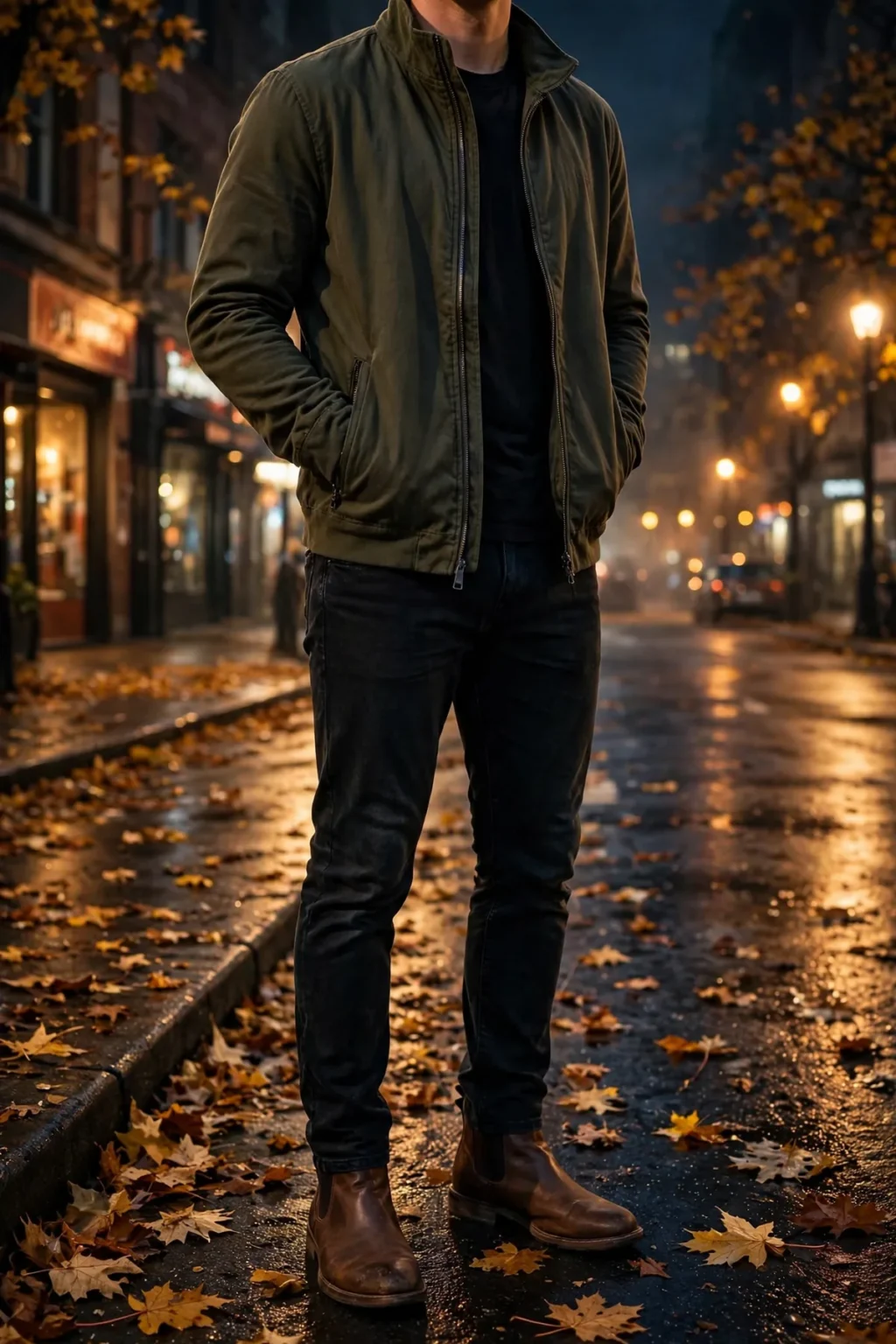
Occasion: Cold nights, late plans. Pieces: dark olive zip-up jacket, black tee underneath, dark wide-leg jeans, brown sneakers or boots. Colors: olive and black, kept deliberately dark.
Why it works: dark tones hold up under artificial light, and the zip front lets you vent heat indoors without removing the layer. Keep accessories at zero — the silhouette is the whole statement.
Formula 6: The Polished Commute
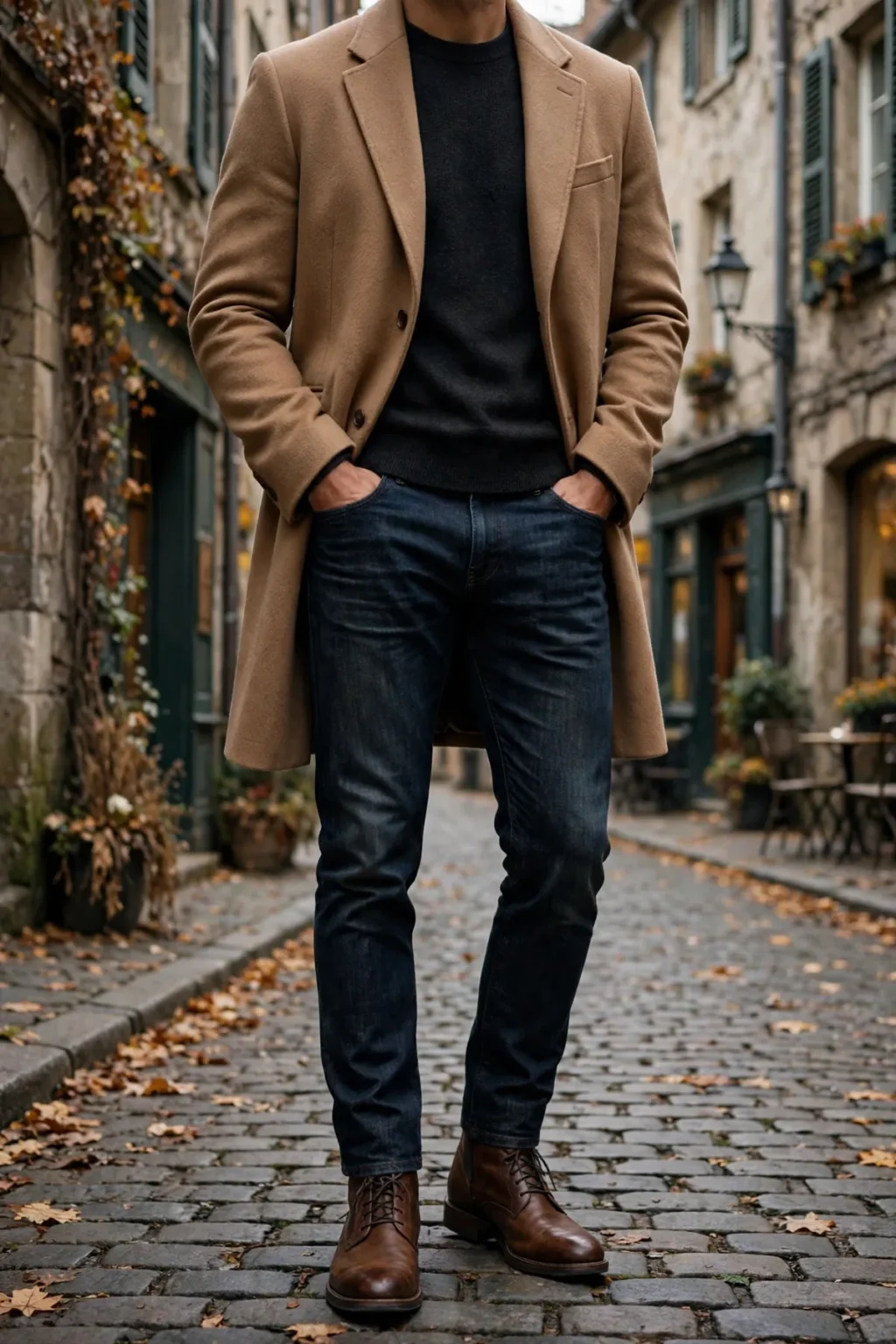
Occasion: Office days, smart-casual dinners. Pieces: camel wool overcoat, dark crewneck sweater, dark denim, brown leather boots. Colors: camel against navy, charcoal, or black underneath.
Why it works: camel is a warm neutral that makes dark basics look considered rather than plain. The coat does the dressing-up; everything under it can stay simple. Finish with a clean, classic cut — our breakdown of old money haircuts for men covers the styles that match this level of polish.
Formula 7: The Two-Piece Minimum
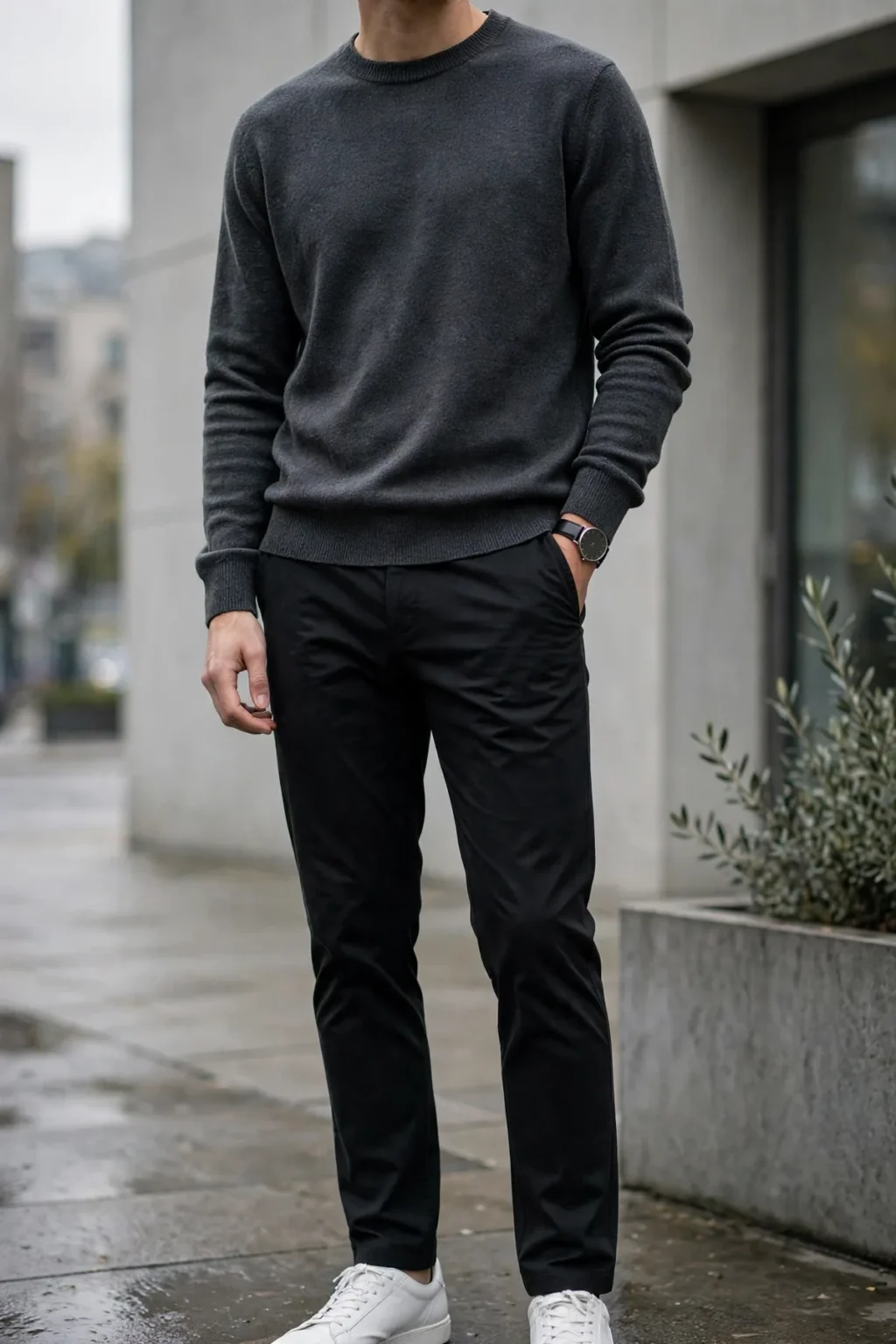
Occasion: Any day you want zero decisions. Pieces: charcoal crewneck sweater, black chinos, minimal white or black sneakers, a watch. Colors: charcoal and black — tonal, one step apart.
Why it works: tonal dressing always reads more expensive than high-contrast dressing, because nothing fights for attention. The only real requirement is fit: the sweater should skim your frame, not cling or billow.
Formula 8: Tonal Browns and the Denim Alternative
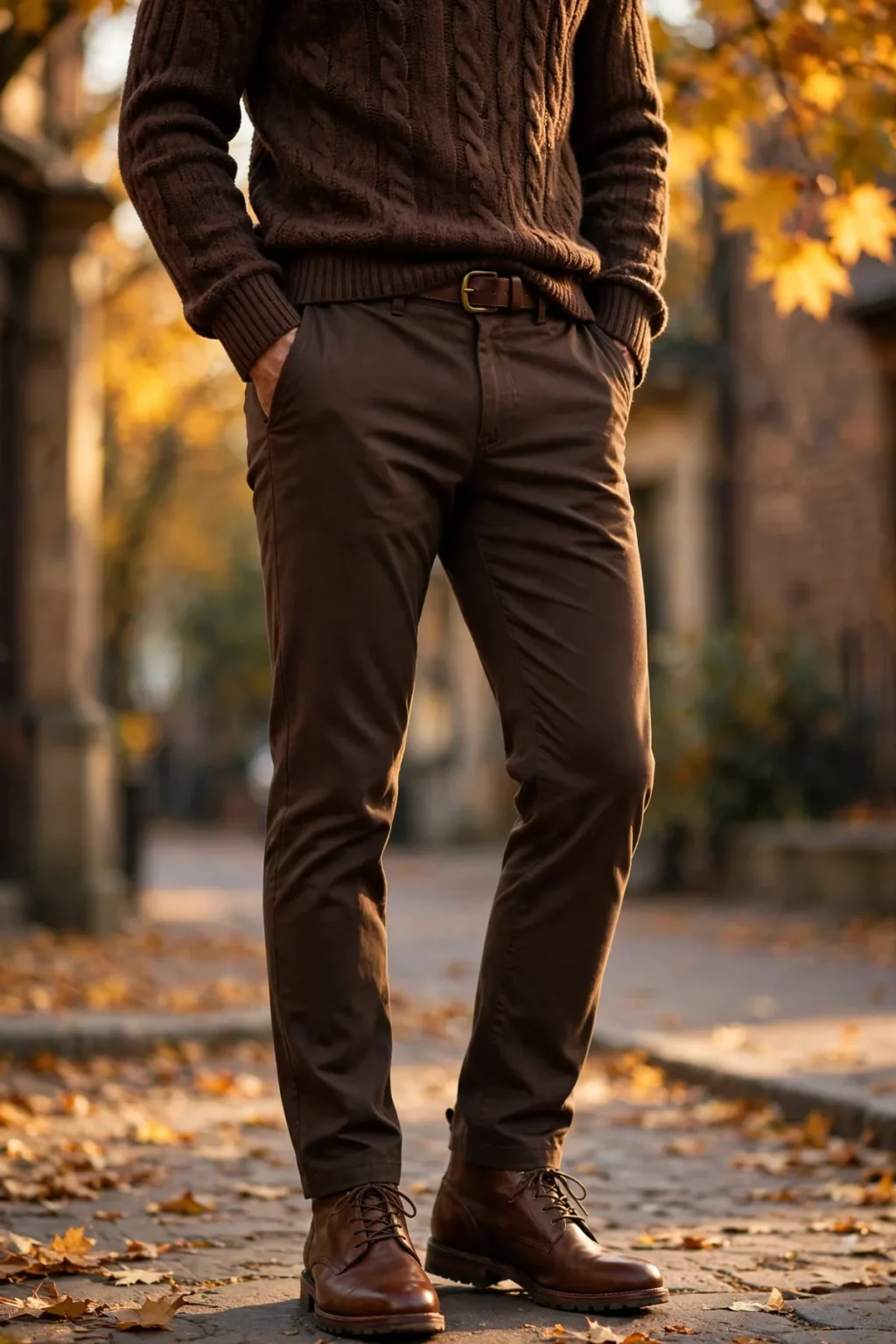
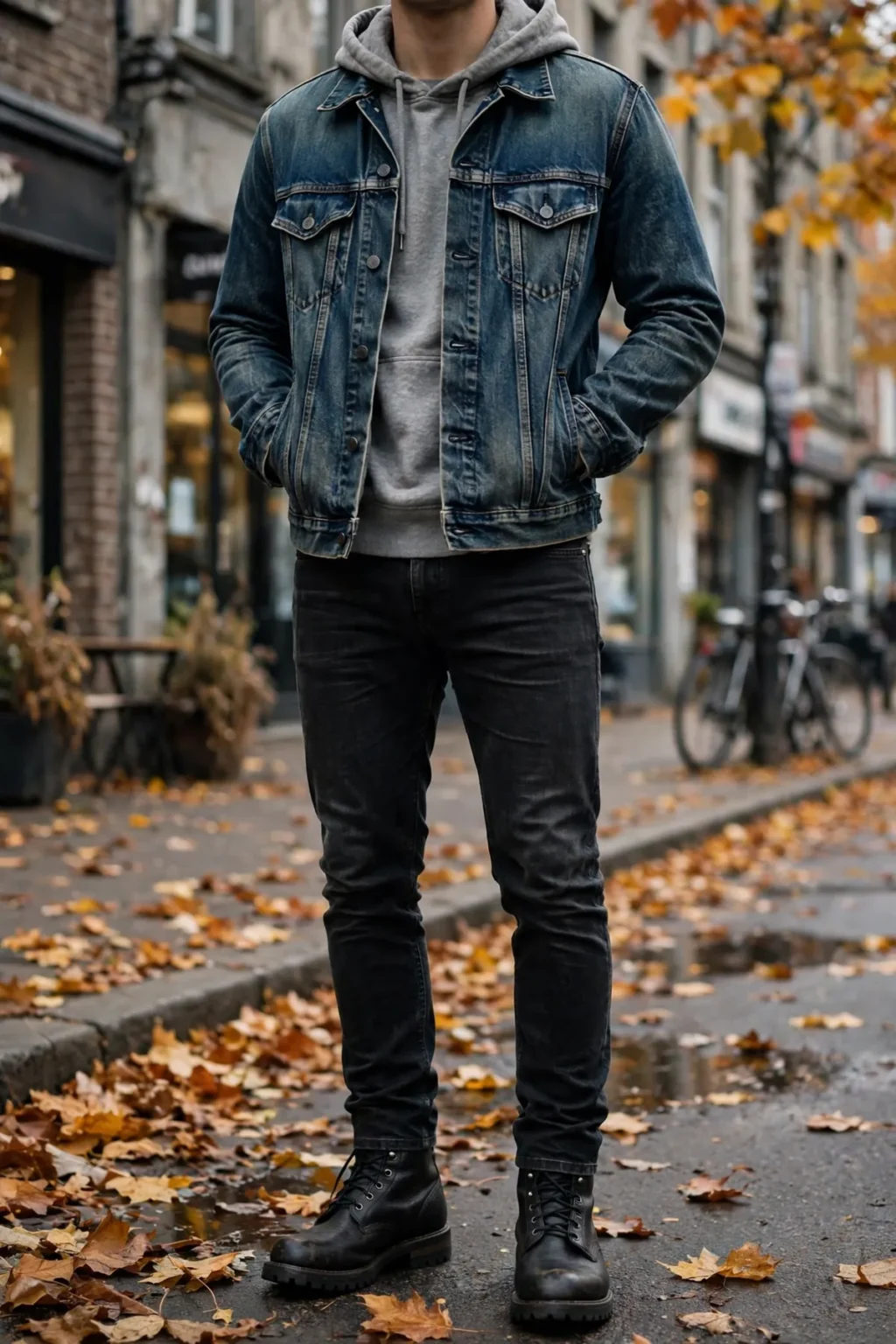
Occasion: Weekend lunches, casual dates, photos. Pieces (option A): chocolate-brown knit, darker brown chinos or cords, brown leather boots. Pieces (option B): dark-wash denim trucker jacket, grey hoodie or black tee, black jeans. Colors: one family, varied shades.
Why it works: both versions use shade variation instead of color contrast. In the brown outfit, lighter on top and darker below keeps it from reading as a uniform. In the denim outfit, the jacket must be clearly lighter or darker than the jeans — match them too closely and it turns into a costume.
Fall Colors and Fabrics That Actually Work Together
Build the wardrobe around a base palette first: navy, charcoal, black, and dark denim. These four neutrals carry nearly every outfit. Then add two seasonal accents — burgundy and olive are the easiest — plus one warm neutral, camel or cream, to lighten dark combinations.
Pairings with a track record: navy with camel or cognac brown; charcoal with burgundy; olive with cream or rust; chocolate brown with denim blue. The logic is simple — deep colors of similar weight look rich together, and one warm tone against one cool tone gives contrast without clashing.
Two color rules prevent most mistakes. First, the boldest color should be the smallest piece: a burgundy knit under a navy coat, not burgundy trousers with a burgundy coat. Second, cap the outfit at two or three colors plus neutrals; beyond that it stops looking deliberate.
The Four Fabrics Worth Understanding
Flannel is brushed cotton (or wool) with a soft, slightly fuzzy surface. The brushing traps air, which is where its warmth comes from — it insulates far better than a plain cotton shirt of the same weight.
Corduroy is defined by its raised ridges, called wales. Narrow wales (more ridges per inch) look smoother and dressier; wide wales read rugged. As trousers or an overshirt, corduroy adds texture that plain cotton cannot, and it breathes while it warms.
Merino wool is the technical one: fine fibers that regulate temperature, wick moisture, and resist odor. It is the best base-layer and sweater material for fall because it handles both the cold morning and the warm room.
Tweed is a rough, flecked wool traditionally used for sport coats and outerwear. Its multi-tone weave hides dirt, shrugs off light weather, and pairs naturally with flannel and corduroy. For a deeper breakdown of seasonal fabrics, Gentleman’s Gazette’s fall essentials guide covers the classic options in detail.
The capsule principle ties it together: if every piece sits inside this palette and fabric family, almost everything matches everything else. A dozen well-chosen pieces quietly produce a month of different outfits.
5 Fall Dressing Mistakes That Ruin Good Pieces
1. Dressing for One Temperature
The most common error: choosing an outfit for the 8 a.m. chill and suffering at 2 p.m., or the reverse. If your outfit cannot lose a layer gracefully, it is not a fall outfit — it is a gamble.
2. One Thick Layer Instead of Three Thin Ones
A single bulky puffer is warm but shapeless, and useless the moment you step indoors. Three thin layers trap more air, adjust in seconds, and keep their shape on your body.
3. Summer Fabrics and Colors Past September
Linen, seersucker, and bright or neon colors fight the season visually and fail practically — linen in October is cold by 6 p.m. Retire them and let texture, not brightness, do the work.
4. Ignoring the Bottom Half
Light-wash jeans and summer sneakers under a wool coat break the outfit in half. Dark denim, corduroy, or wool trousers plus boots or suede shoes keep the weight of the outfit consistent top to bottom.
5. Patterns at the Same Scale
A plaid flannel over a checked shirt clashes because the patterns compete. Pair a large pattern with a small one, or — simpler — keep one patterned piece per outfit and everything else solid.
Frequently Asked Questions
What are the essential fall pieces every man should own?
A merino or cotton crewneck sweater, a flannel shirt, an overshirt or chore jacket, a wool overcoat, dark jeans, corduroy or chino trousers, and leather boots. Those seven pieces generate every formula in this guide.
How many layers should men wear in fall?
Match layers to temperature: two layers around 60–70°F, three layers around 50–60°F, and three layers plus a wool outer below 50°F. The outer layer is picked for the coldest part of your day; the base for the warmest.
Can men wear sneakers in fall?
Yes — clean, minimal sneakers in leather or suede work with most casual formulas. Switch to boots when it rains or drops below roughly 50°F, because wet canvas and exposed ankles will make the rest of the outfit irrelevant.
Which colors go best with navy in fall?
Camel, cognac brown, burgundy, cream, and charcoal. Navy and brown is the most dependable pairing in menswear — the warmth of brown balances navy’s coolness, and both colors are easy to find in fall fabrics.
How do I build fall outfits on a budget?
Buy the palette, not the trend. Secondhand wool coats, flannel shirts, and knit sweaters are plentiful and cheap because they last for years. Spend your money on the pieces you wear most — boots and one good knit — and let thrifted layers do the rest.
The Bottom Line
Men’s fall outfit ideas stop being hard once you treat them as a system instead of a shopping list. Three layers, a disciplined palette, and fabrics with real texture will carry you from the first cool morning to the edge of winter — with the same small set of clothes.