
A cozy reading corner needs five things, in this order: a quiet spot, a chair that supports you for an hour, warm light aimed at the page, a surface within reach, and soft layers around you.
Get those five right and even a three-by-three-foot corner works. Most failed nooks are not too small — they are simply missing one layer, usually decent light or a back that gives up after twenty minutes.
This guide follows that blueprint layer by layer, then shows how it adapts to different styles and budgets.

The Blueprint at a Glance
Think of a reading corner as a stack, not a shopping list. The spot comes first because it decides what chair fits, where light can go, and whether anyone will leave you alone there.
The seat comes second, because comfort turns a pretty corner into a daily habit. Light is third — and it matters more than any cushion you will ever buy.
Storage and atmosphere come last. Throws and candles cannot rescue a badly placed chair, so build in order and you will not waste money decorating a corner nobody sits in.
Layer 1: Pick the Spot First
Hunt for dead space, not spare rooms. The gap beside a wardrobe, a stair landing, the end of a hallway, or the corner beside a window are all classic candidates.
A working nook fits into roughly 9 to 12 square feet — about three feet by three feet at minimum. That is enough for one chair, a slim table, and a lamp, with no building work.
Test the spot at the time you actually read. A corner that glows at 10 a.m. can be gloomy by 4 p.m. in winter, so sit there with a book at your usual hour before committing.
Quiet beats brightness. A slightly darker corner away from the television and kitchen traffic will get used far more than a bright one in the middle of the household’s busiest route.
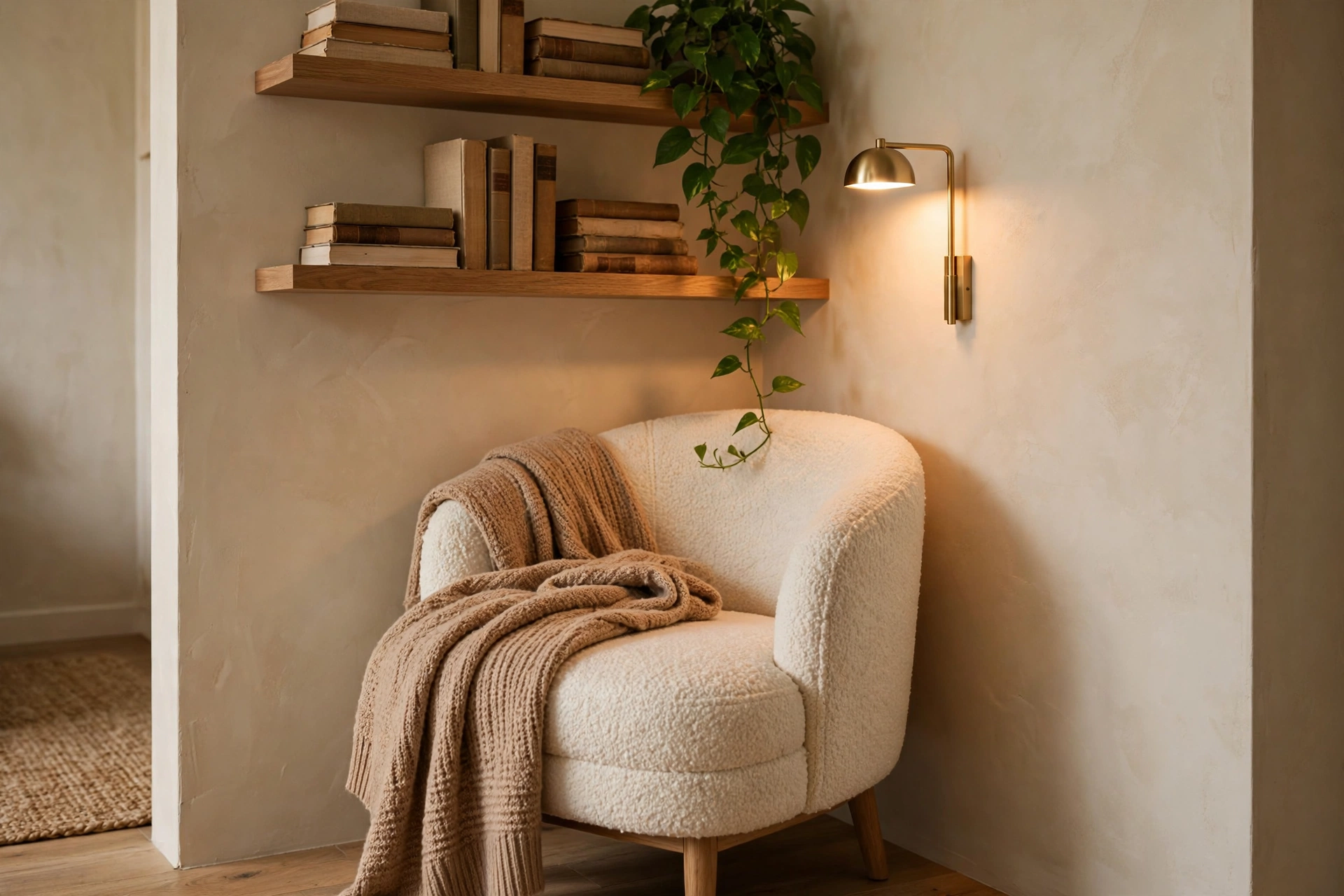
In small spaces, think vertically. Floating shelves or a narrow bookcase only 8 to 12 inches deep holds a rotating stack of books without stealing the floor space your feet need.
If the spot feels exposed, fake the enclosure. A tall plant, a sideways bookshelf, or a curtain gives the corner two “walls” — and that sense of being held is what makes a nook feel like a nook.
Layer 2: The Seat Decides Everything
The chair carries more of the experience than everything else combined. If you are shifting around after fifteen minutes, the corner has failed, and no throw blanket can fix it.
For an upright chair, look for a seat depth of roughly 50 to 55 centimetres. Sit right back: there should be a gap of two to three finger-widths between the seat edge and the back of your knees.
Your feet should rest flat on the floor, knees bent at roughly 90 to 100 degrees. If your feet dangle, add a footstool — a far cheaper fix than replacing the chair.
A backrest angle of about 100 to 110 degrees suits most readers. Deeper reclines feel wonderful for ten minutes, then your head tips forward and your neck pays for the rest of the chapter.
Support the small of your back at about belt-line height. Many pretty accent chairs are hollow there, so add a small firm cushion. It often makes the difference between one chapter and five.

Prefer curling up with your feet tucked beside you? Choose depth instead: a deeper lounge chair or window bench lets your knees bend naturally, which is how most people actually read at home.
High backs earn their keep on long sessions because they support your head. It is why wingbacks survived for centuries — the wings block draughts and give your head somewhere to rest.
Layer 3: Light the Page, Not the Room
Reading light has one job: even, glare-free light on the page. Ceiling lights rarely do it, because they leave you reading in your own shadow.
For an evening nook, aim for warm white around 2700K to 3000K. It keeps print clear without the blue-heavy alertness of daylight bulbs, which can work against winding down before sleep.
For brightness, a focused lamp of roughly 450 to 800 lumens is a useful guide. Lighting references put comfortable reading at around 50 foot-candles at the page, which a close, well-aimed lamp delivers easily.
Position beats power. Place the lamp beside you and slightly behind your shoulder, on the opposite side to your dominant hand, so your hand and head cast no shadows across the text.
Keep the bulb out of sight, with the bottom of the shade near your seated eye level. An adjustable arm or a dimmer lets you fine-tune as daylight fades.

In a tight corner, mount the light on the wall. A swing-arm sconce frees the floor space a lamp base would steal, and swivels toward the page in a way a ceiling light never will.
Add one softer source nearby — a candle or string lights. A bright page in a pitch-dark room tires your eyes faster, so the gentle ambient glow helps your comfort, not just the photos.
Reading on a tablet or e-reader? The same glare rules apply, plus one habit worth borrowing: the American Optometric Association’s eye strain guidance, including the 20-20-20 rule — every 20 minutes, look 20 feet away for 20 seconds.
Layer 4: Everything Within Arm’s Reach
A nook breaks the moment you stand up mid-chapter. Your current book, the next book, a drink, glasses and a bookmark should all live within one easy reach of the chair.
Keep the side table slim — around 14 inches wide is plenty for a mug and a paperback. A C-shaped table that slides over the chair arm uses even less space.
Keep only a small stack in the nook itself. A towering, guilt-inducing to-be-read pile turns a retreat into a chore list, so rotate a few titles in from shelves elsewhere.
Layer 5: Atmosphere Is Texture and Ritual
Start underfoot. A rug, even a small one, marks the boundary of the nook, softens the sound of the room, and tells your brain this patch of floor has one purpose.
Layer textiles of different weights — a knit throw, a linen cushion, something with a nap like velvet or wool. Mixed textures read as “cozy” faster than matching sets do.
Finish with one ritual: a candle you only light for reading, or tea you only drink in that chair. Within a couple of weeks, sitting down starts to feel like switching off.
One Blueprint, Different Moods
The five layers never change — only the styling does. Here is how the same blueprint adapts to the looks readers ask about most.
The Window Seat
Daylight is the gift here, and a deep bench or storage ottoman makes use of space that is otherwise wasted. Add a firm seat cushion first, then pillows against the wall for your back.
Plan the evening shift too: a small wall or clip lamp on your reading side, and sheer curtains to cut afternoon glare without losing the brightness you chose the spot for.
The Fireside Wingback
The oldest version of the blueprint, and still the most forgiving. Angle the chair toward the heat rather than square to the wall, and let a wool rug define the hearth zone.

Never rely on the fire alone for light. Flames flicker, which is lovely for atmosphere and tiring for small print, so keep a steady warm lamp behind your shoulder.
The Floor-Level Corner
No chair budget, or no chair space? Layer two rugs, add large floor cushions and a bolster against the wall, and the blueprint still works — the wall becomes your backrest.
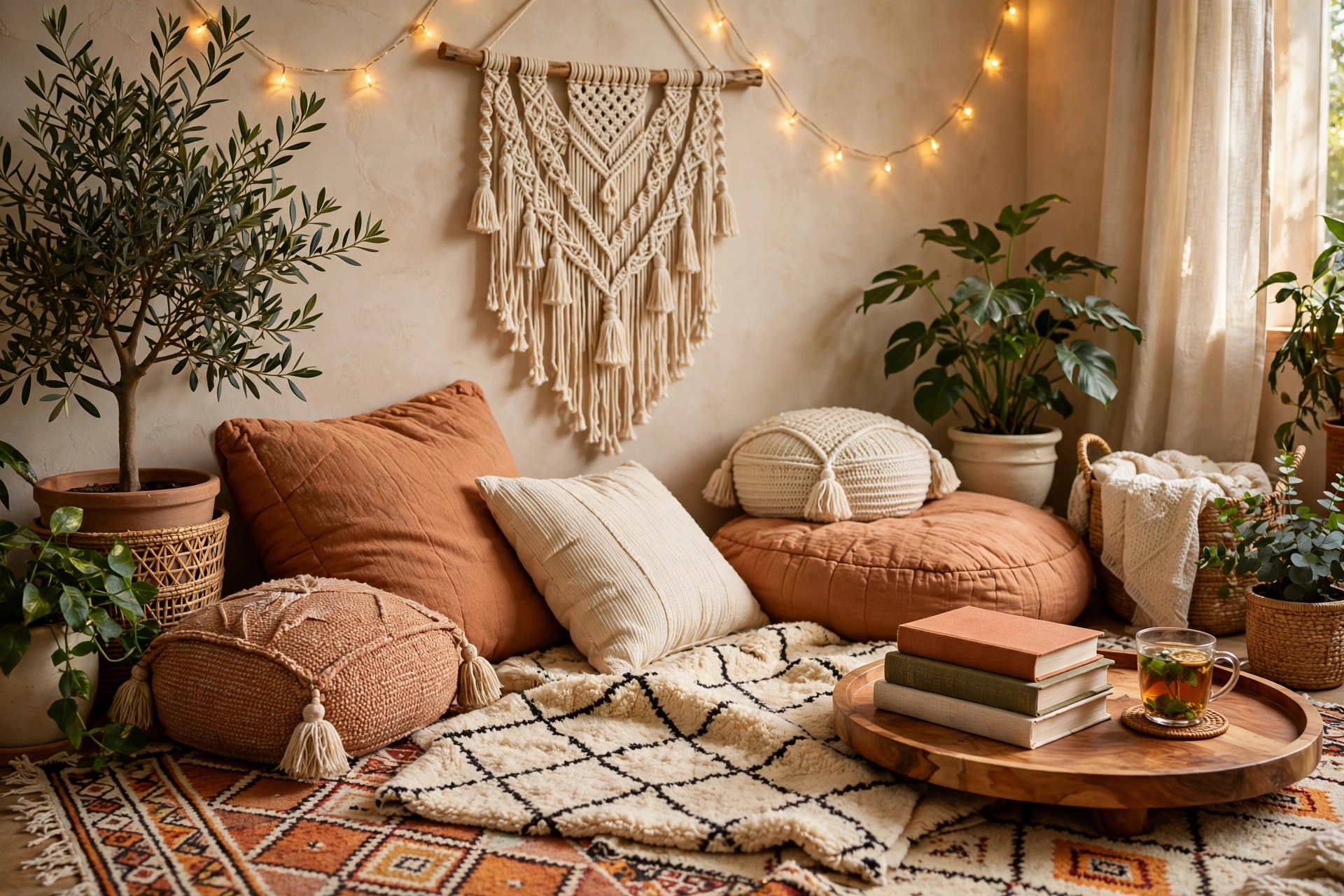
Support is the watch-out. Prop a firm cushion at belt-line height, keep sessions a little shorter than in a chair, and use a low tray so drinks are not balanced on the rug.
The Calm, Minimal Corner
A Scandinavian-style nook proves cozy does not need clutter. One wooden chair, one sheepskin throw, pale walls and a single good floor lamp can feel more restful than a corner stuffed with accessories.

The discipline is in the editing: one small stack of books, refreshed often. When everything visible is chosen, the corner stays calm instead of becoming a dumping ground.
The Dark, Library Corner
For a moodier take, surround the chair with books rather than ornaments. Tall shelves, a leather chair and a brass lamp pooling light over the page create an old-library feeling in one corner.

Pair it with titles that suit the mood — start with these dark academia books worth reading, and borrow the shelf styling from our dark academia room decor ideas.
The Children’s Tent Corner
For young readers, enclosure matters most: a tent or canopy turns reading into a den, and children protect dens fiercely. Keep the shelf low and forward-facing, so covers — not spines — do the persuading.

Use battery string lights inside, never mains cables a child can pull. Washable cushions and a shakeable rug keep the corner inviting instead of grubby.
The Balcony Corner
Outdoors, the blueprint shrinks to seat, shade and light. A hanging chair or folding lounger, an outdoor rug and plants for enclosure turn even a narrow balcony into an evening reading spot.

Solar string lights and one rechargeable lantern handle the lighting without an outdoor socket. Bring cushions and books indoors at night — one damp week undoes an otherwise perfect setup.
What It Costs: Three Honest Tiers
The prices below are approximate, based on typical secondhand and high-street prices at the time of writing. They vary by country, so treat them as guides, not quotes.
The floor version — approximately $50. A thick floor cushion and bolster, a clip-on lamp, and a crate or tray table. With a rug you already own, this tier is genuinely comfortable.
The standard version — approximately $150 to $200. A secondhand armchair you have sat in and tested, a floor lamp with a warm bulb, a small side table and a modest rug.
The treat version — approximately $400 and up. A new high-back chair chosen for fit, a footstool, a better-made lamp and shelving you will keep for years, through several homes.
Spend extra money in blueprint order: chair first, then lamp. Textiles are cheap to upgrade later, but a bad seat and bad light are the two things styling cannot disguise.
Mistakes That Quietly Ruin a Corner
Decorating before testing. Buying cushions and art for a spot you have never sat in for an hour. Live with the chair and lamp for a week first.
One harsh ceiling light. A single cool-white overhead bulb flattens the mood and still leaves the page in shadow. An aimed warm lamp beats it every time.
A chair chosen for looks alone. Low, armless or very deep decorative chairs photograph well and ache quickly. If your feet cannot rest flat, keep looking.
Books out of reach. Shelves across the room turn every finished chapter into an errand. Keep the next book in the corner, always.
Letting the chair become storage. Laundry colonises an inviting seat within days. Clear it every evening — an empty chair is an invitation, a buried one is just furniture.
Inviting the phone in. A nook that allows scrolling becomes another screen spot. Charge the phone elsewhere and most readers notice the difference within a fortnight.
Frequently Asked Questions
How much space do I really need?
About three feet by three feet is the practical minimum — roughly 9 square feet. That fits a compact chair, a slim table and a wall-mounted light. Enclosure and quiet matter far more than extra footage.
What colour light is best for evening reading?
Warm white, around 2700K to 3000K, suits most evening readers. It keeps print clear without the alert, blue-heavy feel of daylight bulbs, which can work against winding down before sleep.
Is a floor-cushion nook bad for my back?
Not if you set it up properly. Sit against a wall or sturdy bolster, place a firm cushion behind the small of your back, and change position often. Keep floor sessions slightly shorter at first.
Can I build one in a rented home?
Yes — nothing in the blueprint needs building work. Use freestanding shelves, a clip or floor lamp, removable hooks and a rug to define the space. Everything can leave with you when you move.
How do I stop it becoming a clutter corner?
Give it a two-minute reset rule: books back on the shelf, mug to the kitchen, chair left empty each night. A corner stays special when only reading things are allowed to live there.
Your Corner, Starting Tonight
You do not need to buy the finished picture in one go. Tonight, move a chair to your quietest corner, borrow a lamp, angle it over your shoulder, and put one book within reach.
Read there for a week before spending anything serious. Then upgrade whichever layer annoyed you most — that order is the whole blueprint, and it rarely leads anyone wrong.