
An old money haircut is not one specific style — it is a standard: tapered or scissor-cut sides, a natural part, moderate length on top, and a finish that looks like hair rather than product. If nobody can tell when you last sat in the barber’s chair, you have it right.
That is why old money haircuts for men barely change across decades. The side part, the Ivy League and the classic taper survive because they grow out gracefully, suit most face shapes, and never fight with what you wear.
This guide works backwards from the barber’s chair. First the exact words to say, then the right cut for your hair type, then the mistakes that quietly ruin the look.
What to Ask Your Barber: The 60-Second Brief
Most disappointing haircuts are communication failures, not skill failures. Barbers work in specifics — lengths, guards, and transitions — while most clients speak in vibes. Close that gap and the result improves immediately.
Say this in the chair:
- “Scissor cut on top, classic taper on the sides and back — no skin fade.”
- “Keep about [two / three] inches on top, shorter at the crown, longer at the front.”
- “Follow my natural part. Don’t carve in a hard part.”
- “Leave the edges soft — no sharp line-up around the ears and neckline.”
- “Show me how much product you’re using so I can copy it at home.”
Bring one photo of the cut you want, ideally on a man with hair similar to yours. A photo settles arguments that vocabulary cannot, and every barber interviewed in grooming guides says the same thing: the picture is the brief.
Guard numbers, translated
Each clipper guard number equals that many eighths of an inch: a #2 leaves 1/4 inch (6 mm), a #3 leaves 3/8 inch (10 mm), a #4 leaves 1/2 inch (13 mm). Classic cuts live in the #2–#4 range on the sides.
Know the difference between a taper and a fade before you ask. A taper shortens hair mainly around the sideburns and neckline and keeps visible length; a fade blends down toward skin over a larger area. Old money territory is taper, almost every time.
For Straight Hair: Structure Does the Work
Straight hair shows every line a barber cuts, which is a gift: clean geometry reads as polish. It also means sloppy blending has nowhere to hide, so scissor work matters more than clipper speed.
The Classic Side Part
Who it suits: nearly everyone, especially oval and square faces. The part follows your natural growth line, the top runs two to four inches, and the sides taper down without ever reaching skin.
Say this: “Side part on my natural part line, scissors on top, taper the sides with a #3 blending into a #2 at the edges.” Upkeep: a trim every three to four weeks; style with a pea-sized amount of matte pomade on damp hair.

The Ivy League
Who it suits: men who want the side part’s polish at half the length. Also called the Harvard clip, it is a longer crew cut: roughly half an inch to an inch at the crown, up to 1.5–2 inches at the front so the hair can still part or sweep.
Say this: “Ivy League — scissors on top, front left near two inches, crown shorter, sides tapered with a #2 to #4.” Upkeep: every three to four weeks; a fingertip of light cream and a comb is the whole routine. See The Trend Spotter’s Ivy League guide for length variations.
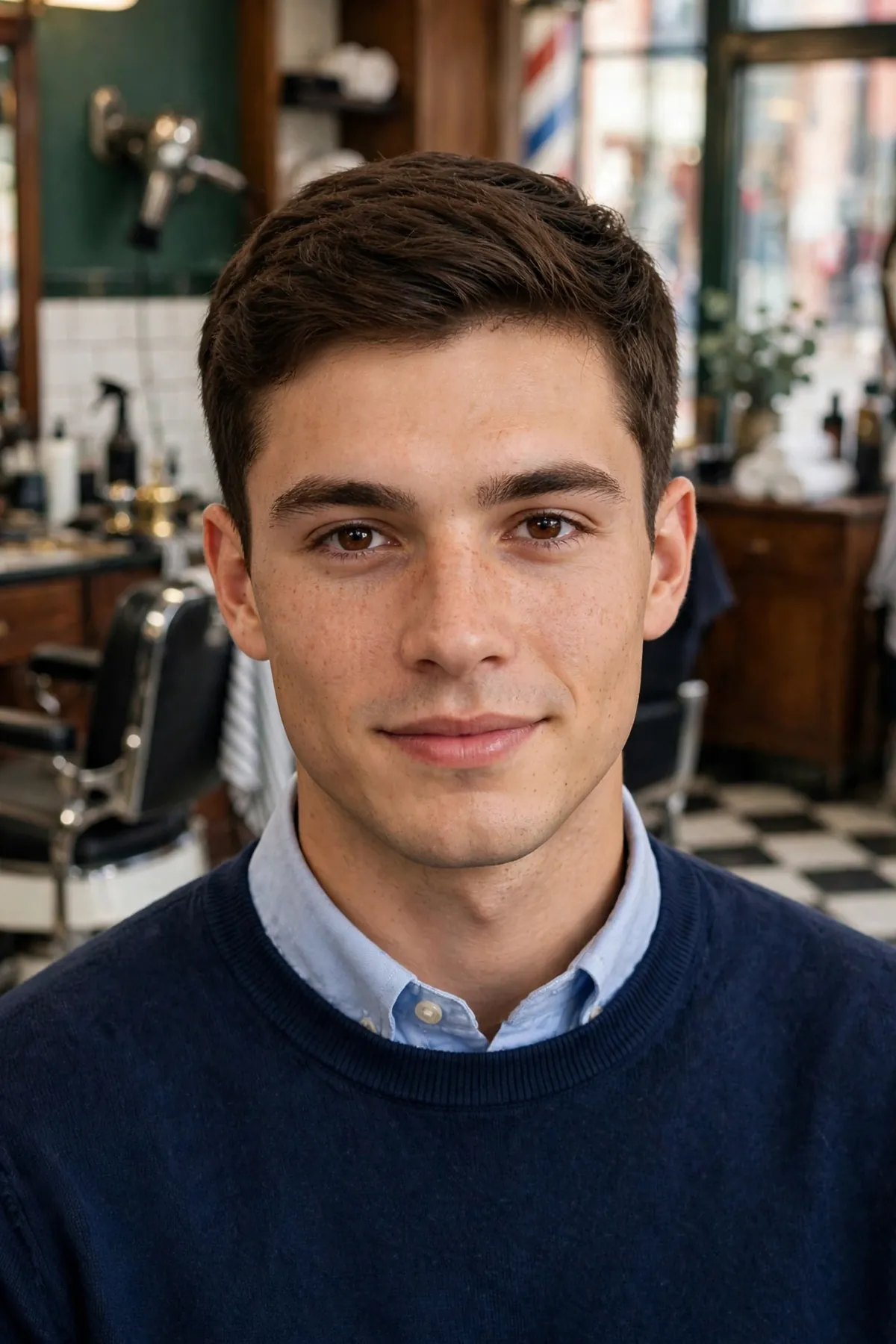
The Slick Back
Who it suits: thick, straight hair and strong features. It needs three to five inches on top so the hair lies back under its own weight, with tapered sides that keep the silhouette narrow.
Say this: “Leave the top long enough to comb straight back, taper the sides, and keep the back blended — no disconnect.” Upkeep: medium-hold pomade with a natural (not wet) shine, worked through towel-dried hair from front to crown; trim every four weeks.

Short Back and Sides
Who it suits: the man who wants zero decisions. This is the traditional barbershop standard — tidy length on top, back and sides trimmed short and blended, nothing disconnected anywhere.
Say this: “Short back and sides, scissors on top, natural taper at the neckline.” Upkeep: it holds its shape for about three weeks; after that the neckline gives it away, so book the next appointment before you leave.

For Wavy and Curly Hair: Keep the Length, Control the Edges
Texture is an asset here, not a problem to flatten. The classic approach keeps enough length for the wave to form, then cleans up the perimeter so the overall shape stays deliberate.
The Classic Taper with a Natural Top
Who it suits: wavy hair of almost any thickness, and square faces that benefit from softer edges. The sides shorten gradually by scissor-over-comb, so no clipper line ever interrupts the wave pattern on top.
Say this: “Classic taper, scissor-over-comb on the sides, leave the top long enough for the wave to sit naturally.” Upkeep: light cream on damp hair, air-dried; a tidy-up every four weeks keeps the neckline honest.

Side-Swept Waves
Who it suits: natural wave worn at medium length, particularly on oval and heart-shaped faces. The top sweeps to one side following the wave’s own direction; fighting that direction is where most men lose.
Say this: “Medium length on top, swept to the side, sides tapered but not tight — I want the wave to do the work.” Upkeep: a light hold cream only; heavy pomade weighs waves flat and reads as grease by midday.

The Grown-Out Flow
Who it suits: wavy or straight hair with patience. The top grows to four to six inches and sweeps back with natural movement, while the sides are trimmed and blended at every visit so the grow-out never looks accidental.
Say this: “I’m growing the top out — clean up the sides and neckline, take weight out of the ends, but don’t touch the length.” Upkeep: maintenance trims every four to five weeks during the grow-out; sea salt spray or light cream for texture.

The Grown-Out Curtain
Who it suits: straight to wavy hair on oval and oblong faces. Parted in the middle or just off-centre, the front sections frame the face — a shape with roots well before its 1990s revival.
Say this: “Centre part, length kept above the ears, back trimmed clean, no layers cut into the front.” Upkeep: it only reads refined while the ends stay fresh, so trim every four weeks; a small amount of cream keeps the parting soft rather than stringy.

For Fine or Thinning Hair: Shorter Reads Fuller
The governing rule is contrast: the closer the lengths across your head, the less visible thinning becomes. Long, thin hair combed over thin spots does the opposite of what you intend — barbers who specialise in thinning hair give the same advice.
The Crew Cut
Who it suits: mild recession, thinning crowns, and strong jawlines. The top stays around one to two inches — the sweet spot for coverage — with the front kept slightly longer and textured so it never looks flat.
Say this: “Crew cut, textured on top, #4 blending down to a #2 taper at the sides, front left a touch longer.” Upkeep: every two to three weeks; a little matte paste pushed forward or to the side is all it needs.

The Neat French Crop
Who it suits: receding temples and fine hair. The short forward fringe softens the hairline and covers the temples without a comb-over’s obviousness, and the texture on top creates the impression of density.
Say this: “French crop, fringe short and textured — broken up, not a heavy blunt line — with a low taper on the sides.” Upkeep: the fringe needs attention every three weeks; style forward with matte clay, never a shiny gel, which highlights thinning.

The Soft Taper Fade
Who it suits: men who want a cleaner edge than a pure taper gives, without crossing into street-style contrast. The fade stays low — around the ears and neckline only — and never climbs above the temple.
Say this: “Low taper fade, starting at a #1 around the edges, top kept classic and full.” Upkeep: shorter edges show growth fastest, so expect a tidy-up every two to three weeks; on thin hair, avoid taking the sides to skin, which makes the top look thinner by comparison.

For Thick Hair and Rounder Faces: Height and Control
Thick hair needs weight removed in the right places, and round faces need vertical lines. These cuts deliver both — volume placed on top, discipline at the sides — without tipping into trend territory.
The Subtle Pompadour
Who it suits: thick hair and round or oval faces that gain from added height. Forget the rockabilly tower: the classic version lifts the front moderately and sweeps it back, with neat tapered sides.
Say this: “Short pompadour — moderate height at the front, blended back, tapered sides, natural finish.” Upkeep: blow-dry the front upward with a brush for two minutes, then set with medium-hold pomade; trim every three to four weeks.

The Controlled Quiff
Who it suits: thick, straight-to-wavy hair and men who want one notch more personality than a side part. The front stands up and slightly back; restraint is the entire difference between classic and trendy here.
Say this: “Quiff with moderate height — if it looks sculpted, it’s too much. Taper the sides, keep the finish matte.” Upkeep: blow-dry the front up and back, finish with a small amount of medium-hold product; avoid it entirely if your face is oblong, since height lengthens it further.
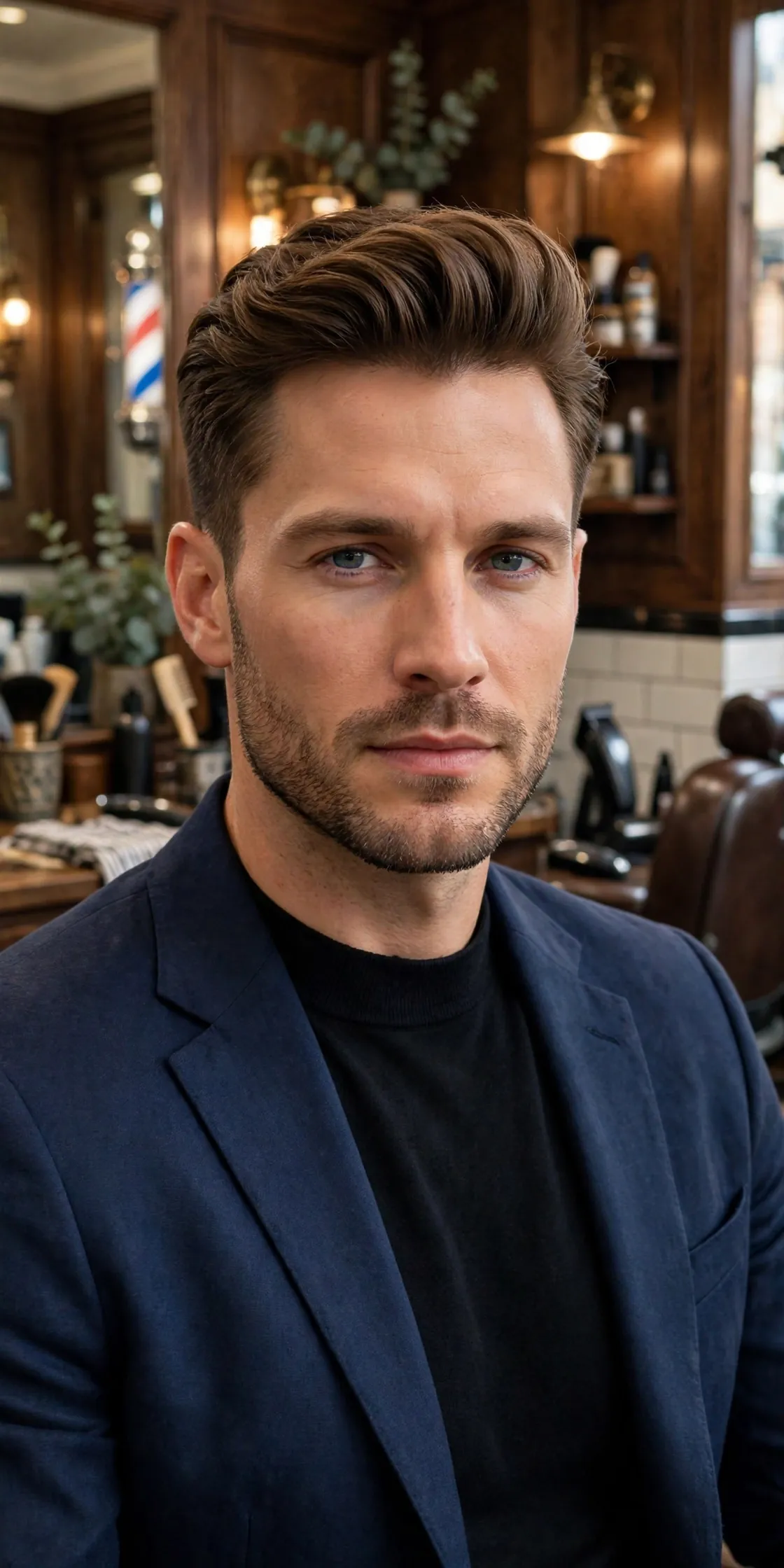
Low Fade with a Textured Top
Who it suits: younger men and thick hair that turns unruly at the edges. The fade stays low and conservative; the top is point-cut for texture so it sits flat instead of puffing out.
Say this: “Low fade, nothing above the temple, textured top with the bulk taken out.” Upkeep: matte clay worked through dry hair for separation; the low fade needs refreshing every two to three weeks to stay crisp.

The Conservative Undercut
Who it suits: thick hair that needs serious weight off the sides. It earns the “old money” label only in its mildest form: sides short but never to skin, top at three inches or more, and a blended transition instead of a hard disconnect.
Say this: “Undercut, but conservative — #2 on the sides, no skin, blend the transition, top long enough to part.” Upkeep: the sides grow out fast and lose the shape first, so plan on three-week appointments.

Match the Cut to Your Face Shape
Oval: balanced proportions — almost every cut in this guide works. Avoid heavy fringes that hide the forehead and waste the advantage.
Round: you need height and angles. Choose the quiff, subtle pompadour, or a side part with volume, and keep the sides tight; avoid uniform length all over, which adds width.
Square: the jaw is already doing the work. A crew cut, classic taper, or side part with softer edges frames it without making the face look boxy.
Oblong: skip the height. Side parts, fringes, and medium lengths worn to the side add width instead; pair a fuller beard with the cut if you wear one, for the same reason.
Five Mistakes That Ruin the Look
1. Asking for a fade when you want a taper. They are different instructions and produce different haircuts. If you want visible length at the edges and a soft neckline, the word is taper.
2. Getting a hard part carved in. A razor line looks sharp for a week, then grows out into a visible stripe that needs constant maintenance. A natural part, found by your barber, ages far better.
3. Using too much product — or the shiny kind. Wet-look shine reads young and, on fine hair, exposes the scalp. Start with a pea-sized amount of matte product; you can always add, never subtract.
4. Stretching appointments to six or eight weeks. These cuts are maintenance cuts. The neckline and the area around the ears announce neglect first, usually around week four.
5. Copying a cut your hair cannot hold. A slick back on fine, wavy hair or a flow on tight curls will fight you every morning. Pick from the group that matches your hair type, not the photo you liked most.
Frequently Asked Questions
How often should I get an old money haircut trimmed?
Every three to four weeks for tapers and scissor cuts, and every two to three weeks if your style includes a fade. Hair grows roughly half an inch a month, and these cuts depend on clean edges.
What if my barber does not know the cut by name?
Describe the mechanics instead: top length in inches, guard numbers on the sides, taper or fade, and where the part sits. Then show the photo. Names vary by shop and country; measurements do not.
Do these haircuts work on curly hair?
Yes, with adjustments: keep more length so the curl can form, ask for scissor-over-comb instead of tight clipper work on the sides, and choose the taper, side-swept, or flow shapes rather than anything that requires hair to lie flat.
How much hair do I need before the appointment?
For an Ivy League, arrive with at least an inch and a half on top; a side part needs two inches or more to hold the part; a slick back needs three to five. Growing from a buzz cut to a side part takes roughly three to four months.
What single product should I buy first?
A matte, medium-hold pomade or styling cream. It covers the side part, Ivy League, taper, and slick back, and the matte finish keeps the result looking like hair instead of styling.
The Bottom Line
The haircut is the frame; the rest of the outfit sits inside it. Pair a clean classic cut with the right footwear — our guide to old money shoes for men covers the timeless end of the shoe rack — and with layered, season-appropriate clothing like these men’s fall outfit ideas.
Then do the least glamorous part: book the next appointment before you leave the shop. Consistency, repeated every three weeks, is the entire secret behind old money haircuts for men.